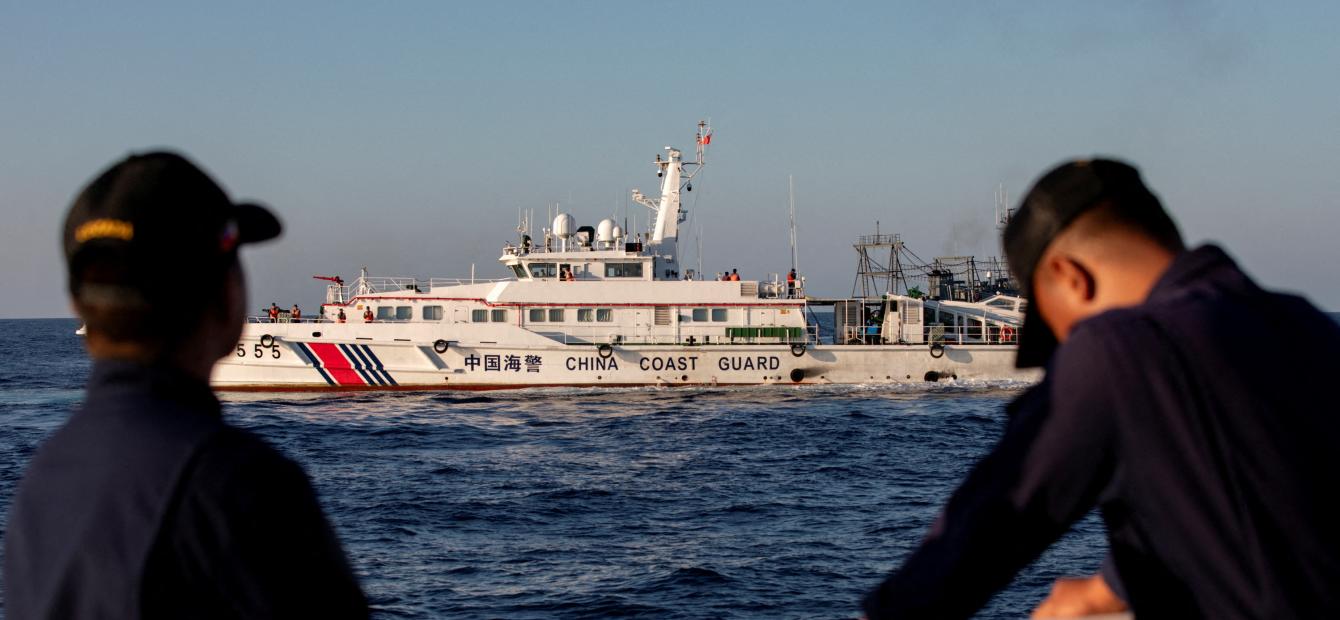
China Flashpoints: A strategy for winning without fighting

China’s long-running territorial disputes regarding Taiwan and the South China Sea have become two of Asia’s biggest flashpoints. This Clingendael Spectator series delves deeper into these issues, offering insights beyond the headlines. In the final episode, Clingendael expert Ingrid d’Hooghe explains how recent maritime activities and incidents demonstrate China’s approach to assert control over the disputed territories in the region without actually fighting.
On 31 August 2024, vessels from the Chinese and Philippine coast guards collided near Sabina Shoal in the South China Sea, with both sides accusing each other of intentional ramming. This was yet another incident in the South China Sea and around Taiwan this year, illustrating that tensions around two of Asia’s biggest flashpoints show no signs of abating. To the contrary. Although the parties involved are careful to prevent escalation – there is no appetite for fighting – a constant stream of clashes keeps the pressure simmering.
In its ‘China Flashpoints’ series, the Clingendael Spectator has shed light on the China-Taiwan conflict
This final contribution examines how China, the biggest and by far most prolific player in the Taiwan Strait and South China Sea, uses so-called grey-zone tactics to increase pressure on countries challenging its territorial claims. These tactics are coercive and aggressive but below the threshold of outright war. The article’s focus is on the role of the China Coast Guard (CCG) in carrying out aggressive actions under the guise of civilian law enforcement and how this approach makes it difficult for these countries to defend themselves without provoking an escalation of the conflict.
The rise of the China Coast Guard
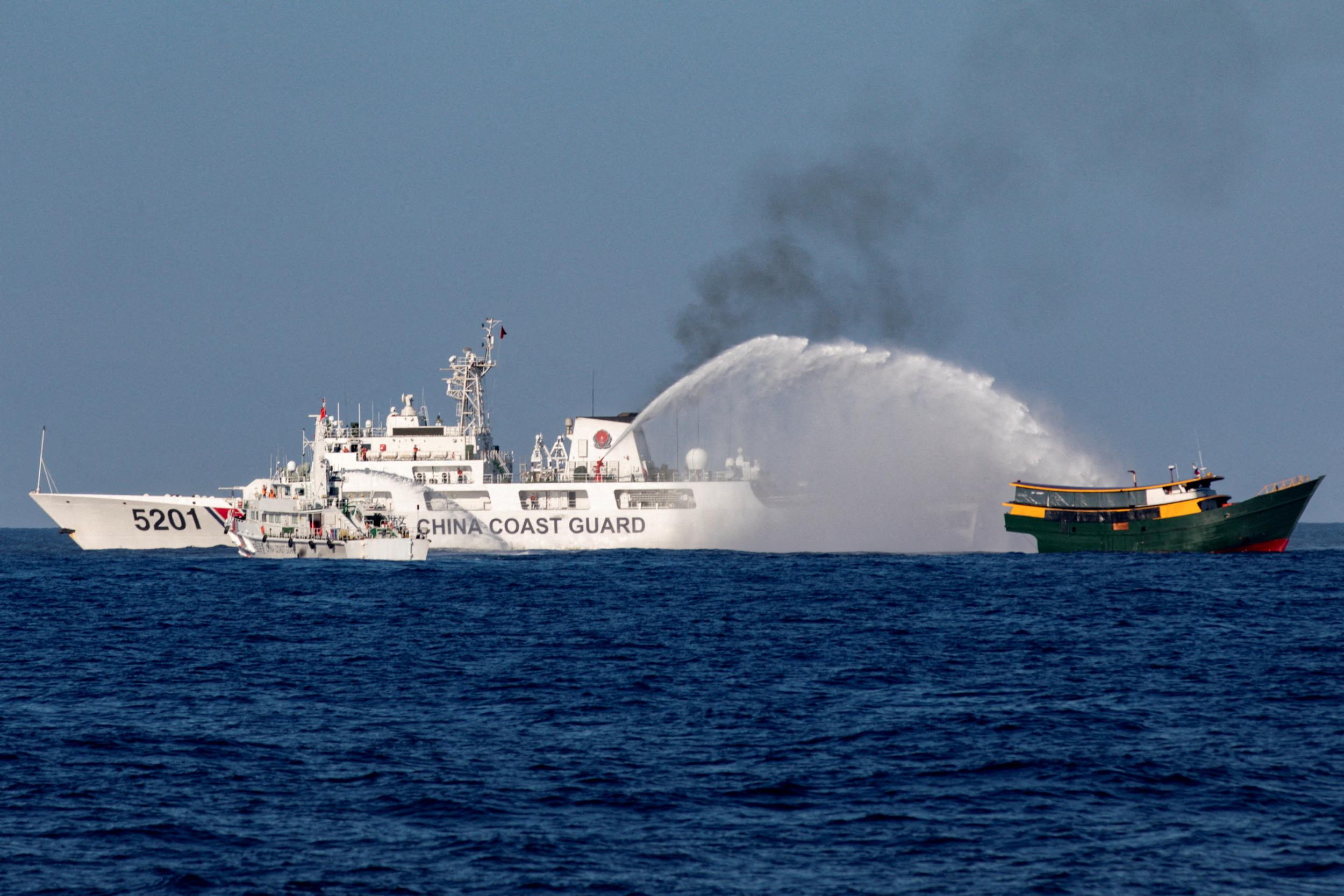
Why and how did the role of the China Coast Guard become so significant? Over the past decade, it has evolved into one of the largest maritime law enforcement agencies in the world, boasting a growing fleet of vessels, including heavily armed ships.
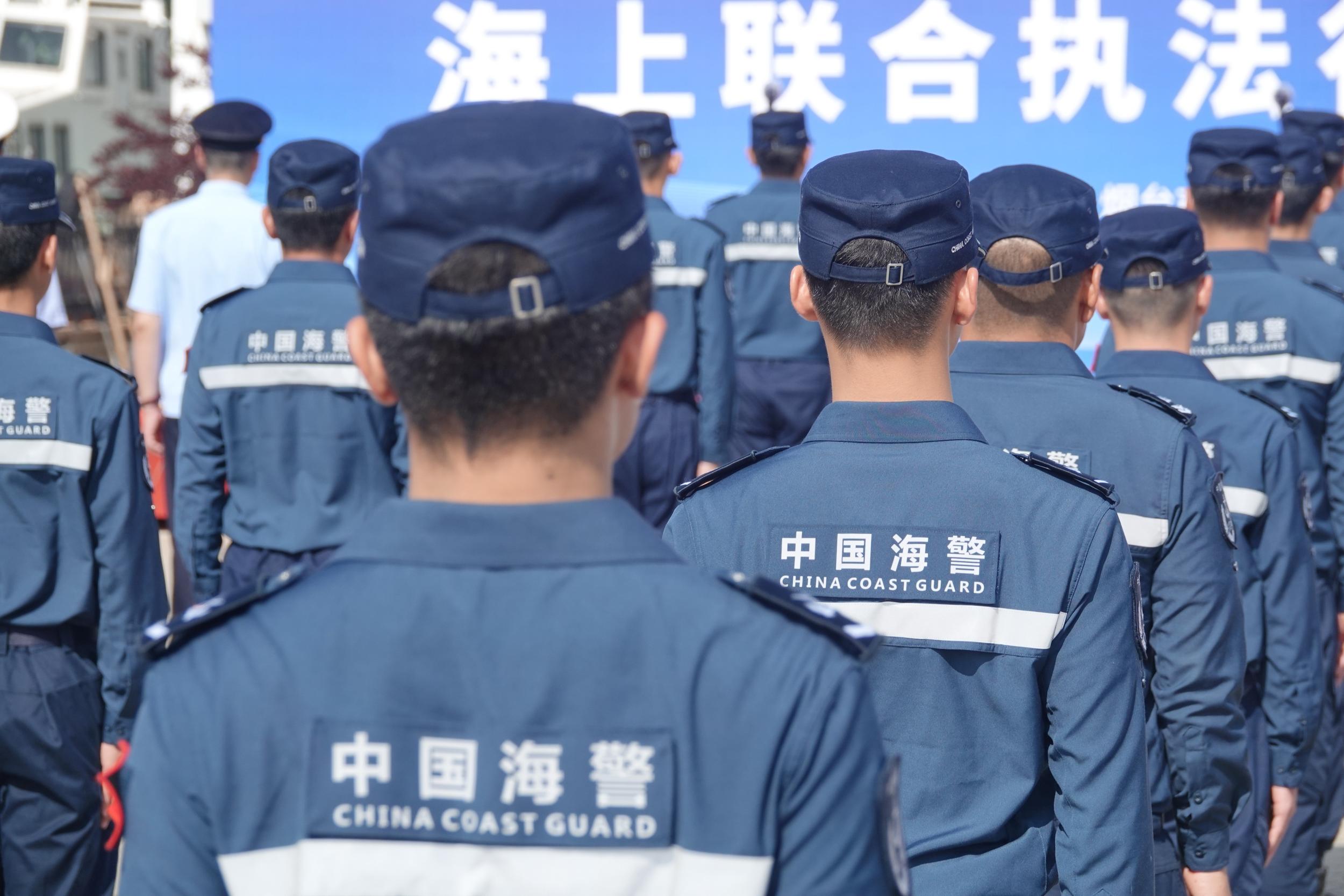
In 2018, the CCG was placed under the direct control of the People’s Armed Police (PAP), which in turn is under the command of China’s Central Military Commission. As a result, although the Chinese coast guard is technically a law enforcement entity, it has become part of China’s military structure, facilitating coordination with the People’s Liberation Army Navy (PLAN). The CCG also often operates alongside China’s maritime militia – which also patrols the South China Sea
The CCG’s activities fall under grey-zone tactics, which makes it more difficult for other countries to respond to Chinese aggression with the use of military means
The CCG operates under the China Coast Guard law of 2021.
However, these “comprehensive law enforcement operations” by the China Coast Guard have become increasingly intrusive and aggressive. They currently include patrolling, surrounding, damaging, boarding and inspecting vessels, as well as confiscating materials and using water cannons and weapons such as axes and knives.
In other words, the CCG’s activities fall under grey-zone tactics, which makes it more difficult for other countries to respond to Chinese aggression with the use of military means. Recent developments in the waters around Taiwan and near the Philippines illustrate this strategy.
The waters around Taiwan
Following the Democratic Progressive Party’s (DPP) electoral victory in January 2024 and the inauguration of new President Lai Ching-te in May 2024, China stepped up not only its rhetoric but also its maritime activities near Taiwan. Beijing is particularly concerned that Lai, who referred to himself in 2017 as a “pragmatic worker for Taiwan independence” may adopt a stronger pro-independence stance than his predecessor, Tsai Ing-wen.
For example, just three days after Lai’s inauguration, China launched large-scale military exercises and comprehensive law enforcement operations around Taiwan. The China Coast Guard not only maintained its regular patrols around Taiwan’s offshore islands, but also sailed east of Taiwan, near the eastern military exercise zone, and to the southern entrance to the Strait of Taiwan.
Many experts find it likely that China will use these “domestic law enforcement operations” to impose a (partial) maritime quarantine on Taiwan
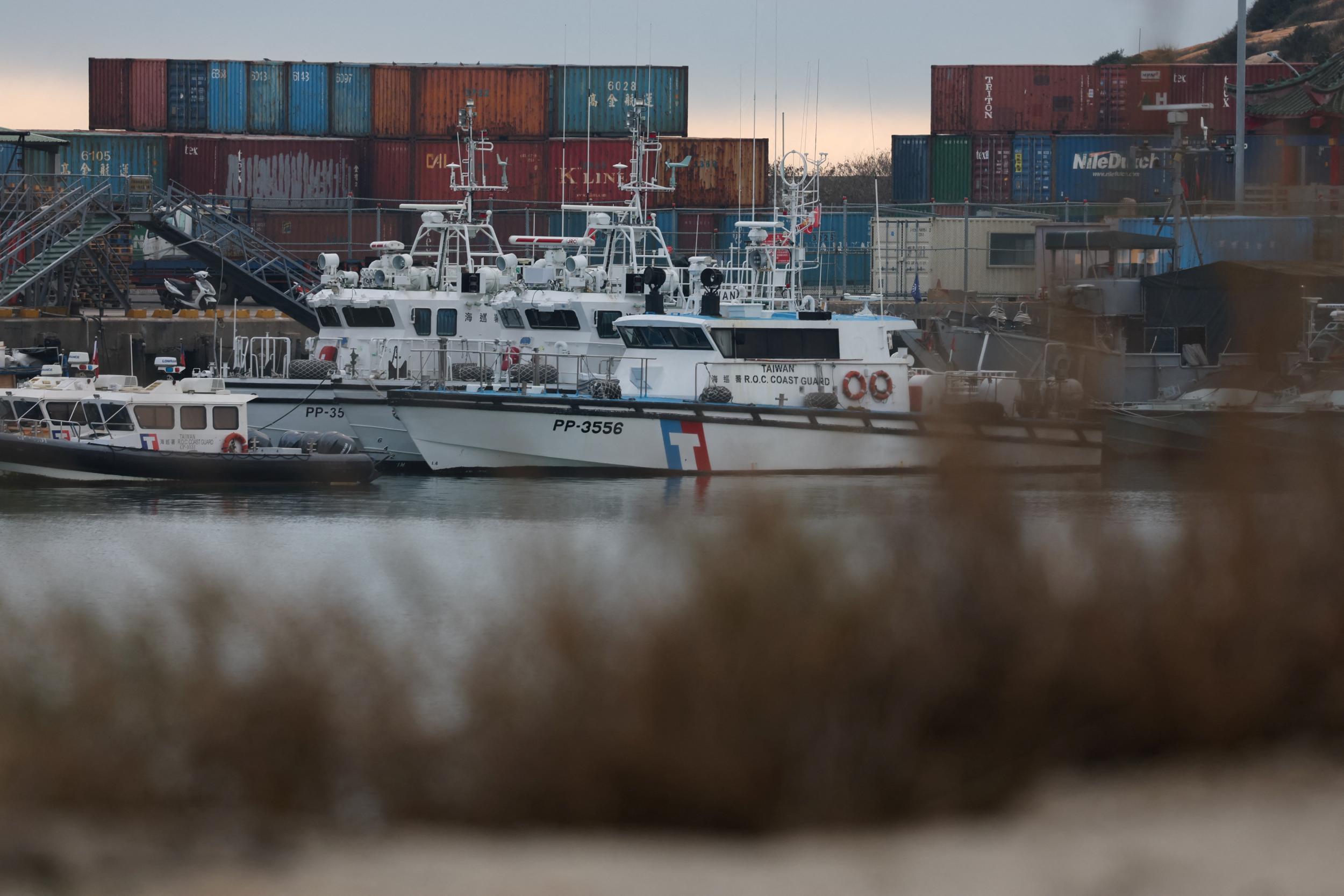
In July 2024, the CCG further expanded its activities in the Taiwan Strait. It reportedly harassed Taiwanese fishermen near and east of the Taiwan Strait median and had four ships entering restricted waters in four different locations around Taiwan’s Quemoi (Kinmen) island group. According to Taiwanese authorities, this marked the 32nd incursion into Kinmen’s restricted waters in 2024.
The increase in China Coast Guard operations is noteworthy, as many experts find it likely that China will use these “domestic law enforcement operations” to impose a (partial) maritime quarantine on Taiwan if it wants to strongly coerce or punish the island.
The waters near the Philippines
In recent months, tensions between China and the Philippines in the South China Sea have also intensified.
The dispute over Second Thomas Shoal, a reef located within the 200-nautical-mile exclusive economic zone of the Philippines but also claimed by China, escalated to new heights on 17 June 2024. On that day, the Chinese Coast Guard clashed violently with two Philippine navy boats which were on their way to deliver food and other supplies to their military outpost at Second Thomas Shoal. Video footage showed Chinese personnel damaging and boarding the boats, waving with axes and knives, and confiscating the supplies, resulting in injuries to a Philippine sailor.
China’s deployment of its coast guard is a key component of its broader strategy to exert diplomatic and military pressure on countries resisting its territorial claims
Previous Chinese grey-zone actions against Philippine vessels in the South China Sea had included intercepting, ramming and deploying water cannons. However, due to the severity of this latest operation, the Philippines denounced the Chinese action as “piracy”.
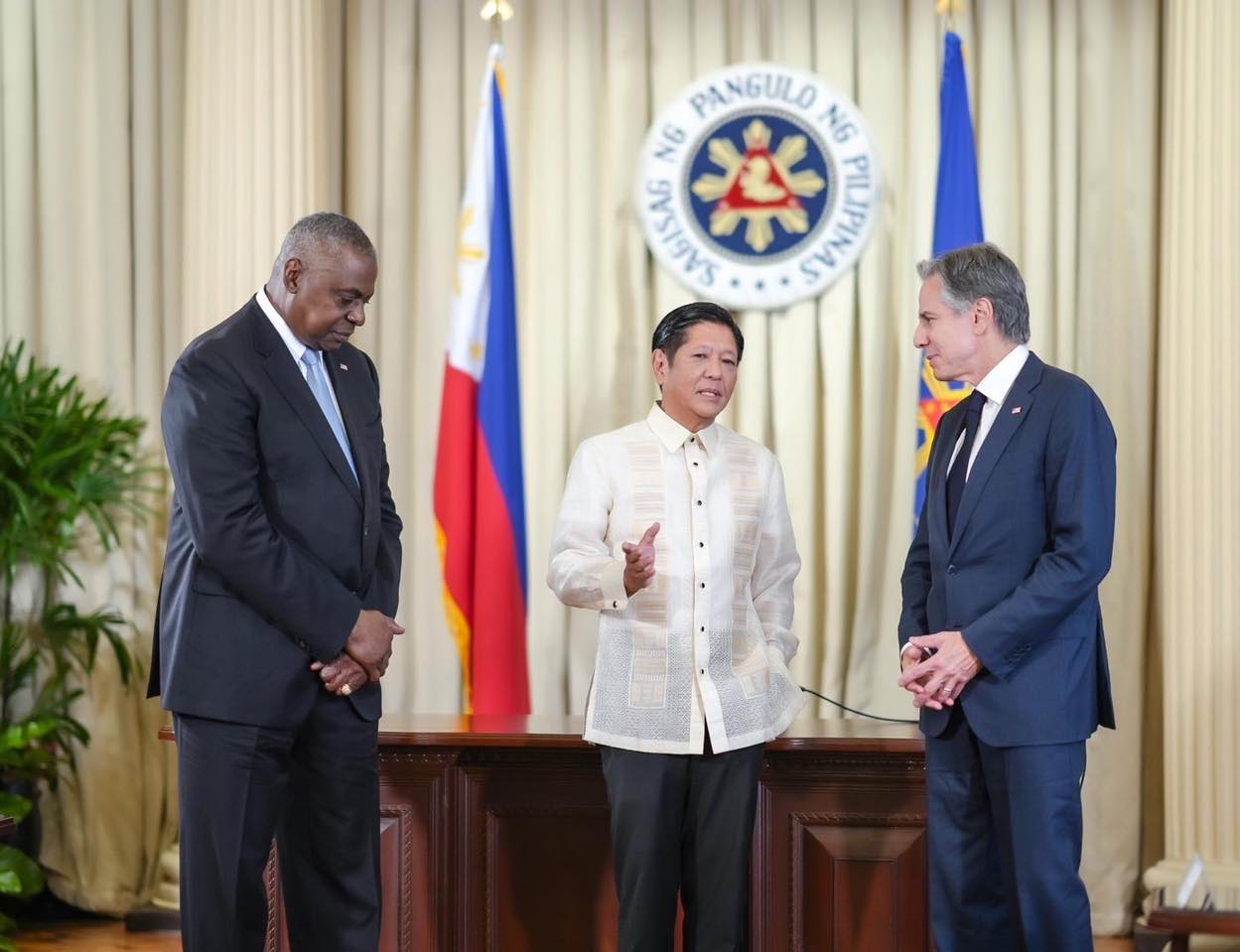
The United States offered help to the Philippines, invoking a 1951 mutual defense treaty. Nevertheless, in an effort to de-escalate tensions, Philippine President Marcos Jr. refused the offer, stating that the country was “not yet ready to classify this as an armed attack” and had no plan to invoke its mutual defense treaty with the US. In July 2024, China and the Philippines reached a temporary agreement to prevent further clashes.
However, the de-escalation around Second Thomas Shoal was quickly overshadowed by an air incident near Scarborough Shoal, an atoll located 120 nautical miles east of the Philippines that is claimed by both sides but occupied by China.
In both cases, vessels of the China Coast Guard and the Philippine Coast Guard collided. With each side accusing the other of deliberately “ramming and damaging” their ships.
No calm water in sight
China’s deployment of its coast guard is a key component of its broader strategy to exert diplomatic and military pressure on countries resisting its territorial claims. While recent developments in the Taiwan Strait and South China Sea have highlighted this approach, China has also intensified its activities in the East China Sea, where it contests disputed islands with Japan.
In the case of Taiwan, this strategy allows for an incremental escalation of actions against the island, as increasing patrols and coercive actions may be gradually stepped up into actions like detaining vessels or blocking specific routes, potentially leading to a (partial) quarantine of Taiwan. The ultimate aim of this strategy, including the expansion of what China calls “domestic law enforcement”, is to wear down Taiwan and other claimants in the South China Sea, while complicating and weakening international resolve. If successful, China could get its preferred option: winning control over disputed territories without actually fighting.