


Why science fiction films help us study the future


Universities and think tanks have always been skilled at archiving the past and analysing the present. But what about the future? Why were we so unprepared for the COVID-19 pandemic? And how will new technologies – ranging from artificial intelligence and robotics to so-called ‘human augmentation’ – impact our societies? In this first contribution of our new topic ‘Tomorrow’s Worlds’, Etienne F. Augé argues that science fiction is a valuable source of inspiration for political analysts offering us a better grip on the future.
In the West, most of us are used to a comfortable lifestyle. We can plan ahead due to good health care, a decent pension, and an overall feeling of security. This bubble of safety is sometimes punctured by a crisis, from terrorist attacks to a global pandemic or rumours of a war against China.
Even though Western governments are better prepared for crises than their counterparts in less developed countries, they remain taken by surprise when the next ‘unforeseen’ crisis hits them. One reason is that governments as well as ordinary citizens are faced with an exponential amount of data.
Even ambitious projects from well-funded organisations, like Global Trends 2040 of the American National Intelligence Council
It is difficult to blame these organisations as predicting the future remains a nigh impossible task
There are numerous reasons why such large, powerful companies like Shell fail to predict the future with some accuracy. One obvious reason is groupthink, a psychological phenomenon that pushes a group to find consensus rather than examine daring ideas. Another could be vested interest, since thinking ‘outside the box’ and imagining a future without Shell is a real career killer for any Shell-employee. A last reason could simply be a lack of imagination, as relying on trends alone often results in tunnel vision, which certainly clouds a clear vision of the future.
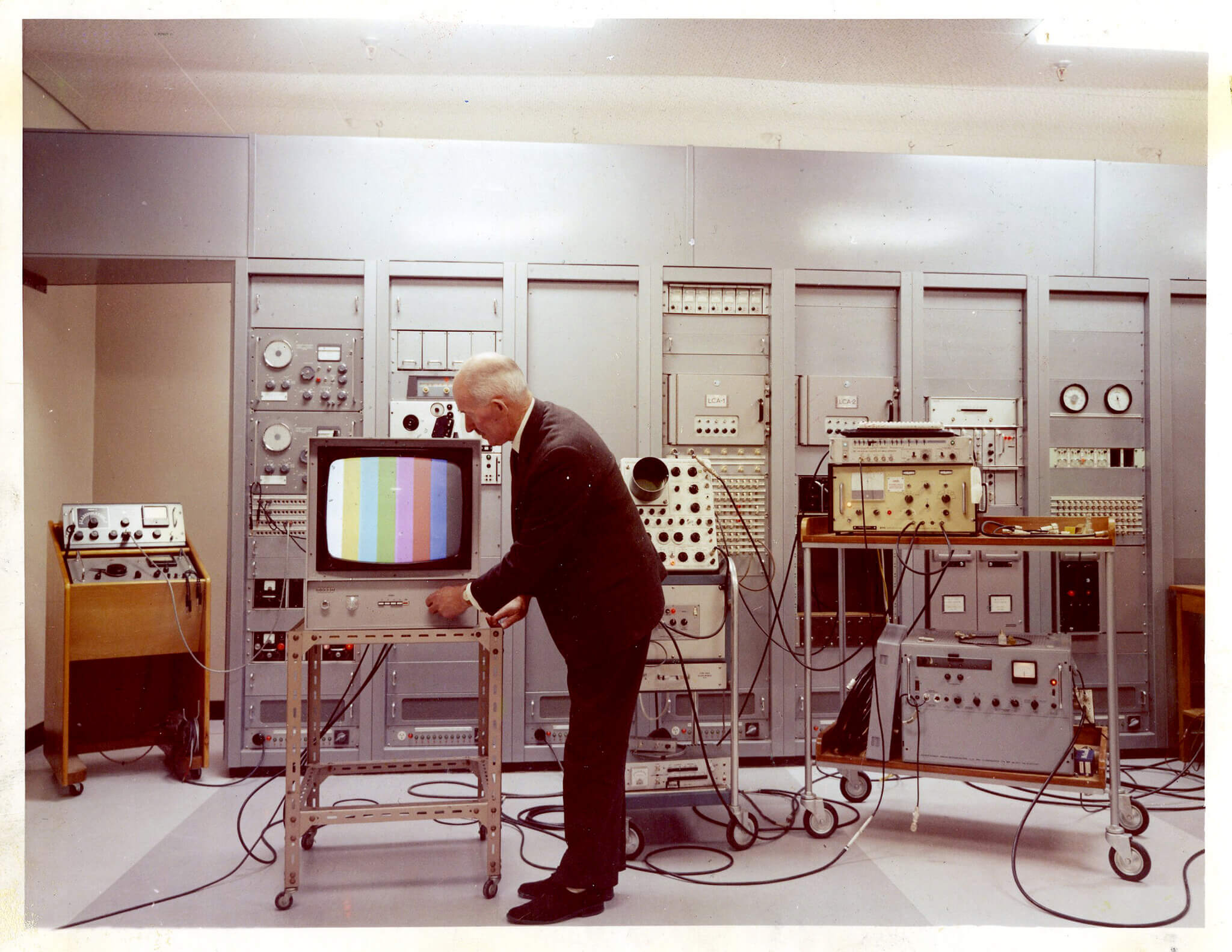
It is difficult to blame these organisations as predicting the future remains a nigh impossible task. There are numerous past forecasts that got it notoriously wrong. Orrin E. Dunlap Jr. from The New York Times did not see a future for television in 1939, as the “problem with television is that the people must sit and keep their eyes glued on a screen; the average American family hasn’t time for it”.
Futures Studies: a new idea?
Despite the many mishaps, it is of course possible to think about the future and design desirable futures – often on the basis of different scenarios. So-called ‘Futures Studies’ have developed extensive methodologies to do exactly that, and a host of futurists are working fulltime around the globe imagining our future, providing scenarios to make humanity better prepared and more resilient to change.
This is hardly a novel idea. As early as 1932, one of the founding parents of science fiction, British author H.G. Wells, broadcast on the BBC a short plea entitled ‘Wanted – Professors of Foresight!’ He remarked: “It seems an odd thing to me that though we have thousands and thousands of professors and hundreds of thousands of students of history working upon the records of the past, there is not a single person anywhere who makes a whole-time job of estimating the future consequences of new inventions and new devices. There is not a single Professor of Foresight in the world. But why shouldn't there be?”
It took some time before Wells’ advice was followed. Studying the future has only become part of academic research and teaching since the 1960s. During all phases of the Cold War, strategic planning – including playing so-called ‘War games’ – was considered essential to prepare for an uncertain future.
For Western governments, it became existential to imagine how new technologies – ranging from satellites to computers, and from television to the internet – would affect their prosperity and security
In 1964 the US-based RAND Corporation famously published the Report on a Long-Range Forecasting Study, stating: “The fact remains, however, for better or for worse, trend predictions – implicit or explicit, ‘scientific’ or intuitive – about periods as far as twenty or even fifty years in the future do affect current planning decisions (or lack of the same) in such areas as national defense, urban renewal, resource development, etc.”
Thinking about the future was not just a frivolous exercise. For Western governments, it became existential to imagine how new technologies – ranging from satellites to computers, and from television to the internet – would affect their prosperity and security.
Stimulating imagination
What remains surprising is that many experts working in Futures Studies hardly watch science fiction, let alone read it. Most experts dismiss the genre as unserious, a teenage distraction at best. According to its critics, science fiction is barely science, and usually involves poor writing.
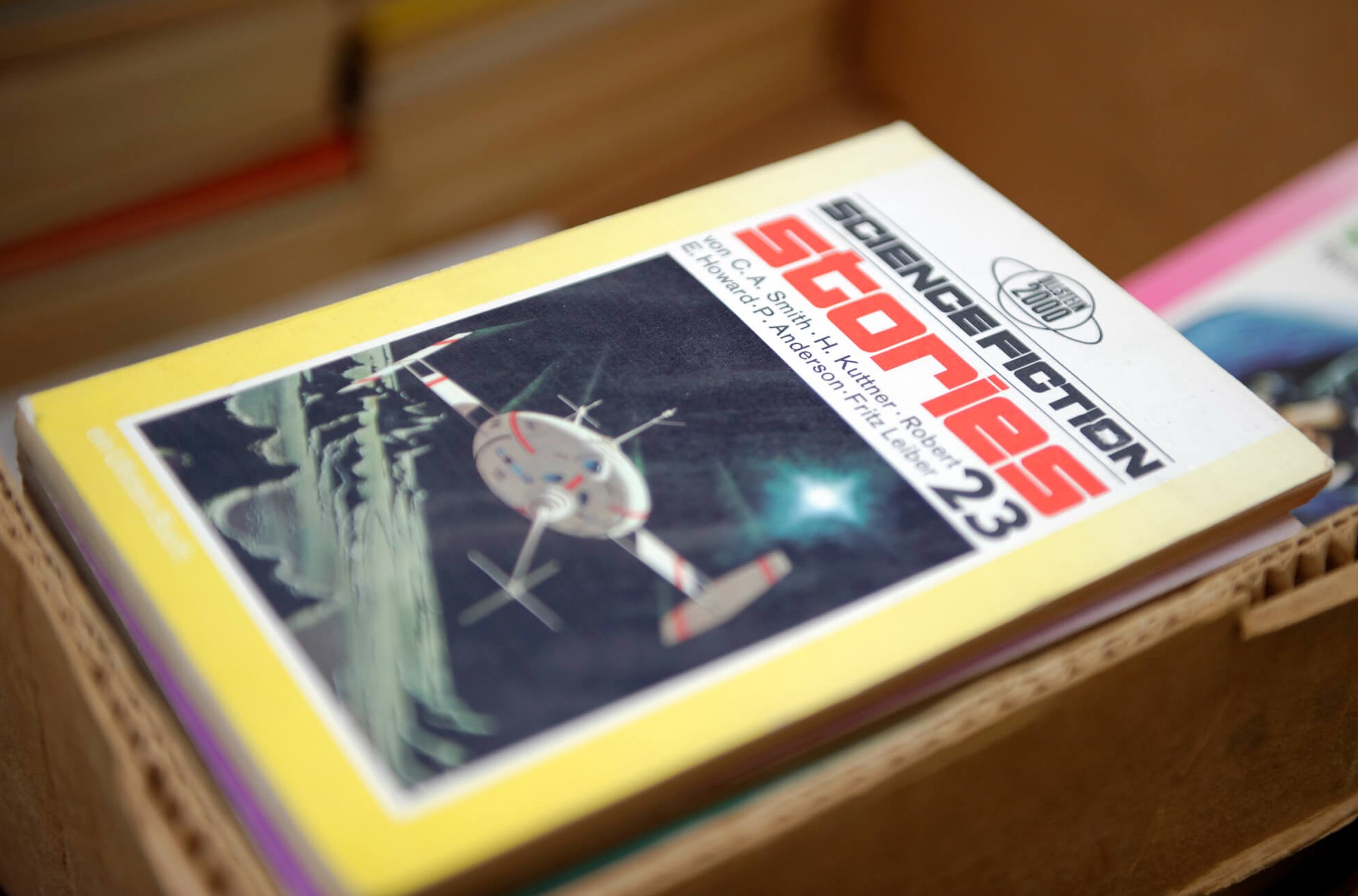
This bad reputation is largely undeserved and science fiction is often misunderstood. Though there certainly is plenty ‘cheap’ science fiction, some authors have had a lasting impact on societies – think about Isaac Asimov’s ideas on robotics, Philip K. Dick on philosophy, or Frank Herbert on ecology. The list is impressive, and way too long for a single article. Science fiction has had a major impact on our societies, mainly because it has constantly reinvented itself.
Science fiction is hard to define. One of its best writers, Norman Spinrad, claimed “science fiction is anything published as science fiction”.
The category or term science fiction has become a bit of a misnomer. Science was indeed the focus when science fiction started off with authors like Mary Shelley, Jules Verne, and Wells. Today, the element of science is of decreasing importance to the genre, since it has become clear that technology is hardly the answer to all human problems. Since the 1950s, the focus of science fiction is on possible future social change, rather than technology per se. Clearly, authors have drawn lessons from Auschwitz and Hiroshima: science and technology in the wrong hands could well mean the end of humanity.
Modern science fiction trends like hopepunk

Science fiction as a source of inspiration
Science fiction can be a remarkable source of inspiration for Futures Studies as it continually asks the question: what if? The genre can also be used as a sandbox to turn over new ideas, since one of the main purposes of the genre is to discover and invent.
‘What if cars could fly?’ is a trope in science fiction, but science fiction goes much deeper and questions present societal models by imagining alternative ones. What if women and men were equal in rights? What if earth was not the centre of the universe and aliens really exist? What if artificial intelligence could help us overcome issues such inequality or misinformation? The list is endless, or only limited by our imagination.
The global pandemic we are living through today, has been the topic of many works of science fiction
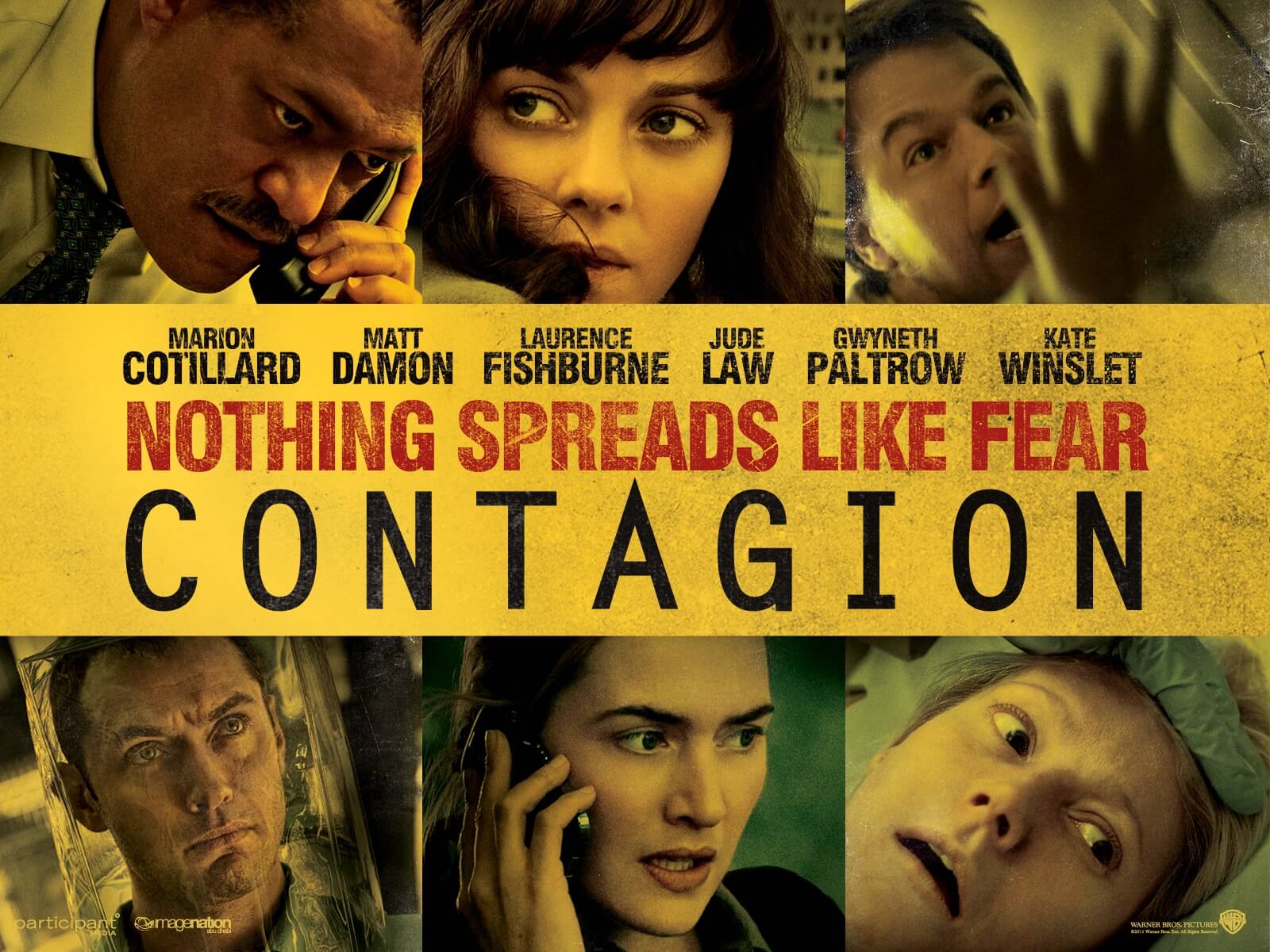
Science fiction can also be used to prevent the worst from happening, by presenting possible future challenges and problems that today’s policymakers decide to ignore, often for lack of a long-term vision. The global pandemic we are living through today, has been the topic of many works of science fiction: I am Legend in 1954, that inspired three later film adaptations; 12 Monkeys (1995); and more recently the movie Contagion (2011, by Steven Soderbergh
The rise of robots is another favourite topic among science fiction writers and is becoming dangerously close to reality since drones may have attacked humans fully autonomously for the first time in 2021.
Due to its spectacular and imaginative qualities, science fiction is Hollywood’s most profitable genre. Today, science fiction movies and television shows comprise about one third of all Netflix productions.
Both the US army
Science fiction is also a major source of inspiration for Silicon Valley’s high-tech companies. Would the ‘metaverse’
Autocratic states like the People’s Republic of China and the Kingdom of Saudi Arabia are also embracing the power of the genre, after initially having strongly rejected science fiction. Recently, Saudi Arabia has commissioned the public relations firm Ruder Finn to promote ‘Neom’, the Saudi mega-city of the future inspired by science fiction.
It seems today that controlling the future contributes to controlling the present, as more and more entities embrace the power of science fiction to literally capture imagination
Neom is pitched as a city of the future based on “sustainable living” and “focused on setting new standards for community health, environmental protection, and the effective and productive use of technology”, at an initial 500 billion US dollars. Interestingly, Saudi Arabia now brands itself as a future oriented country, sponsoring the UNESCO Future Literacy Summit in 2020
The People’s Republic of China has decided to actively encourage science fiction writing ever since they realised that most Silicon Valley inventors and designers were avid science fiction fans, as Neil Gaiman explained in a wonderful conversation with Kazuo Ishiguro.
“Who controls the past controls the future: who controls the present controls the past”, George Orwell famously claimed in his 1984. It seems today that controlling the future contributes to controlling the present, as more and more entities embrace the power of science fiction to literally capture imagination.
Using science fiction
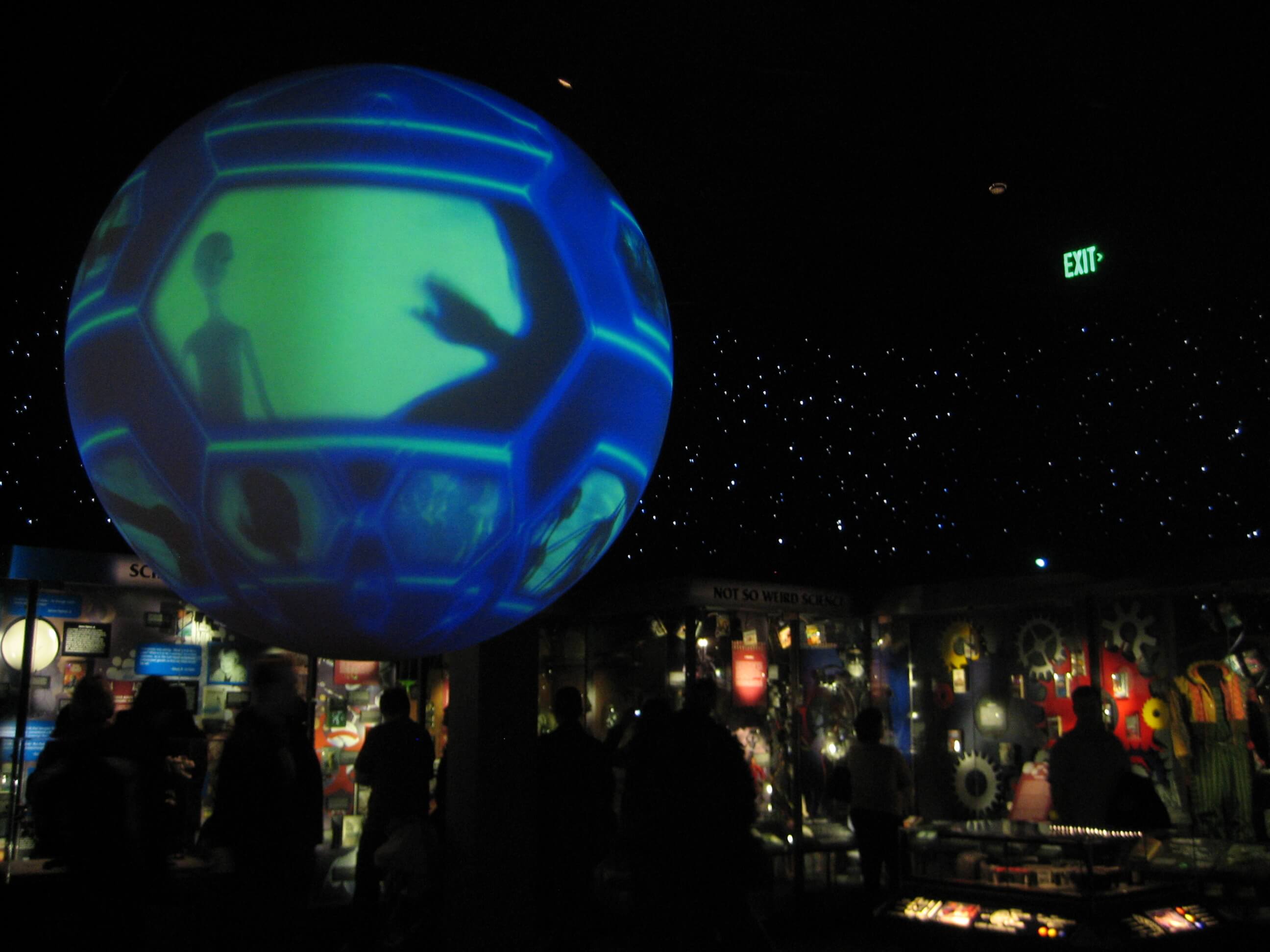
Science fiction can still be used for the greater good. Combining scientific methods with the capacity of stimulating imagination from science fiction can lead to a powerful tool to anticipate the future, or make it happen. For that reason, science fiction has become ‘trendy’ as organisations understand that, beyond Futures Studies, there should also be a narrative motivating societies to embrace change.
Even the United Nations, usually cautious about innovation, has decided to make use of science fiction as an inspiration for its mission, challenging so-called dystopia with better futures imagined with science fiction.
There is a long road before academia incorporates Futures Studies as part of all curricula, but we better start today than tomorrow
The time might therefore be ripe for giving voice to a new kind of expert who is able to combine ‘traditional’ Futures Studies methodology with storytelling skills to lead societies away from doomsday-thinking. A prime example of such an initiative can be found in Arizona State University (AZU), where the Center for Science and the Imagination collaborates with established science fiction writers like Kim Stanley Robinson, but also with up and coming authors to imagine better futures.
In 2015, inspired by AZU, Erasmus University Rotterdam established the special program called ‘The Consortium’ aimed to combine university-based research skills and creativity, academia and the ‘real world’, and bright students and experienced professionals – all geared towards generating scenarios for the future; hopefully desirable ones. In a world where neither Francis Fukuyama nor Samuel P. Huntington have been right about their vision of the world of the future, we believed it was high time to train our students to design the future they want and be ready for unplanned catastrophic scenarios.
There is a long road before academia incorporates Futures Studies as part of all curricula, but we better start today than tomorrow. As Wells warned us in 1932: “Because if it is not to be peace foreseen and planned and established, then it will be disaster and death. Will there be no Foresight until those bombs begin to rain upon us?”
11 science fiction movie recommendations:
- The future of Overcapitalism: Metropolis (1927)
- The future of Humanity: 2001: a Space Odyssey (1968)
- The future of the Universe: Solaris (1972)
- The future of Humans: Blade Runner (1982)
- The future of Society: Minority Report (2002)
- The future of our moon: Moon (2009)
- The present of robots: Animatrix (2013)
- The future of Time: Predestination (2014)
- No future: Mad Max: Fury Road (2015)
- The future of Earth: Aniara (2018)
- The future of Space: Ad Astra (2019)

1 Comments
Load comments
Science Fiction
I agree with you. Design programs does this to a limited degree.
Add new comment