

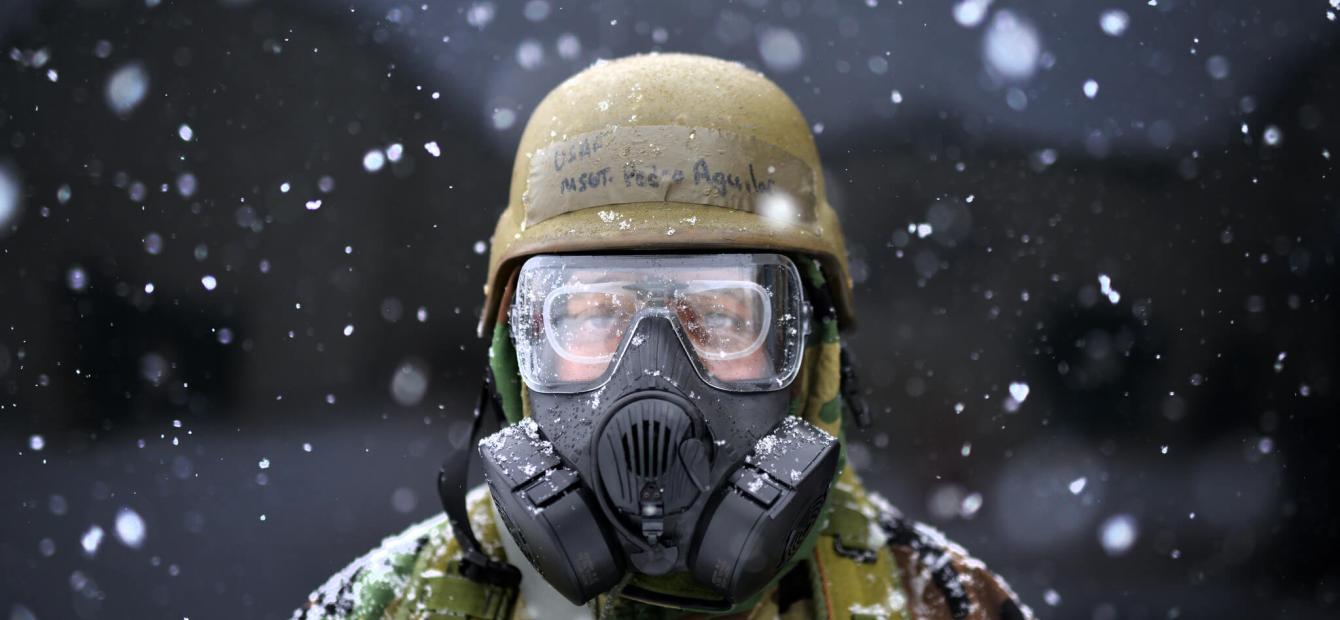
The Chemical Weapons Threat After Syria

The use of chemical weapons (CW) is a relatively rare phenomenon. However, despite a strong norm against these type of weapons, there seems to be a recent surge in chemical weapon use by states, that could inspire other states and terrorist groups or militias. Hence, it is time to re-evaluate the chemical weapons threat.
Before the Syrian conflict, the last uncontested state-authorised use of CW happened in 1991 by Iraq against Shiite rebels
However, to speak of CW normalisation is a bold claim, and discursive normalisation of CW has not occurred: CW are still considered ‘special’ weapons and are globally talked about as such. We must be cautious and prevent the CW threat from being blown out of proportion.
While CW are numerous and varied, they are generally understood and spoken of as a single category
Additionally, normalisation by individual states’ armed forces should not be taken as a general denouncement of the global norm against CW use. Simultaneously, however, we should firstly acknowledge that CW have become operationally normalised in the Syrian civil war, and secondly that this is not an isolated incident, but one that is influenced by other incidents and also continually influences other incidents. The discursively homogenous nature of CW is crucial to understand this process: while CW are numerous and varied, they are generally understood and spoken of as a single category.
Recent CW use
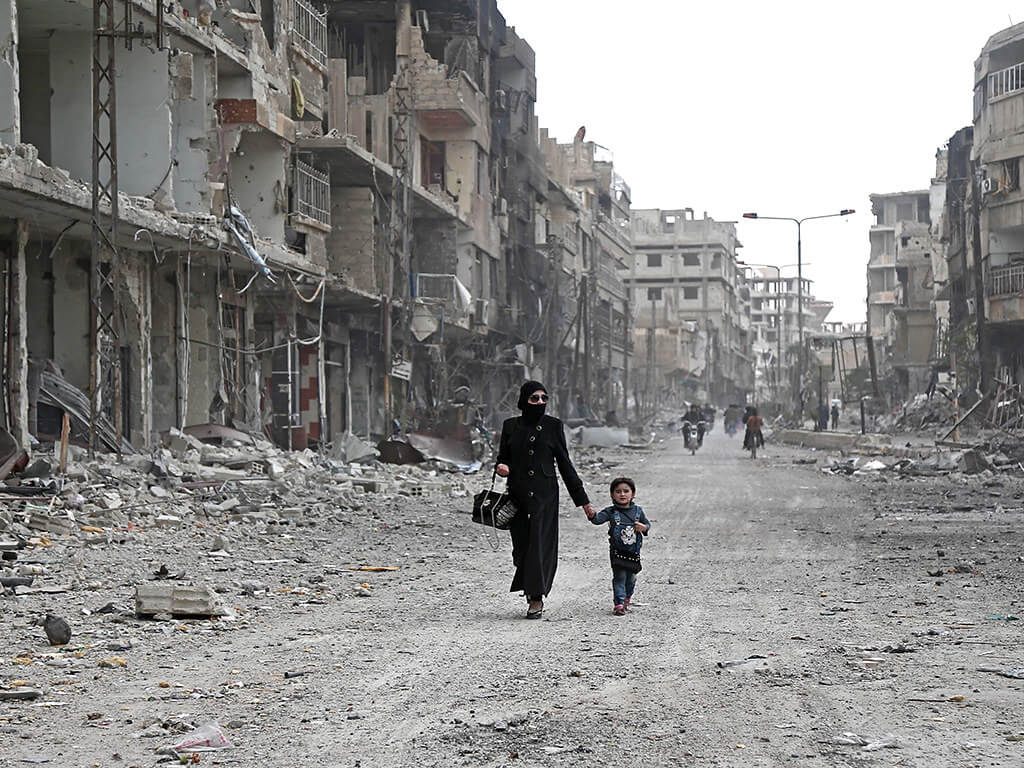
CW have been used in Syria as early as December 2012. Their continued use has not only revealed an integrated offensive CW capability in operational terms, but has also pointed out the strategic relevance of CW in attaining both territorial goals and drawing the international debate away from other atrocities committed by the Assad regime
Even after Syria acceded to the Chemical Weapons Convention (CWC) in 2013, which prohibits not only CW use but also its possession and production, Syria has used CW successfully. Indeed, CW were instrumental in securing the Ghouta region in April 2018: the town Douma surrendered a day after a chlorine gas attack, following sustained conventional attacks. The current state of affairs in Idlib lends itself to similar processes, although a Turkish presence complicates the situation.
Other examples of recent CW use are the Russian and North Korean assassination (attempts) on Sergei Skripal and Kim Jong-nam. They occurred on foreign soil, which has made them publicised events. It is unlikely that those responsible for ordering the attacks, presumably at the highest level of government, would have expected the events to remain unnoticed. Yet, they estimated that they could get away with it.
Both events further severed North Korean and Russian ties with the EU and the US. However, neither Russia nor North Korea had much to lose on the diplomatic front, respectively due to Crimea, and the general quarantined status of North Korea. We can question whether international responses to CW use by these states have had a particularly significant effect.
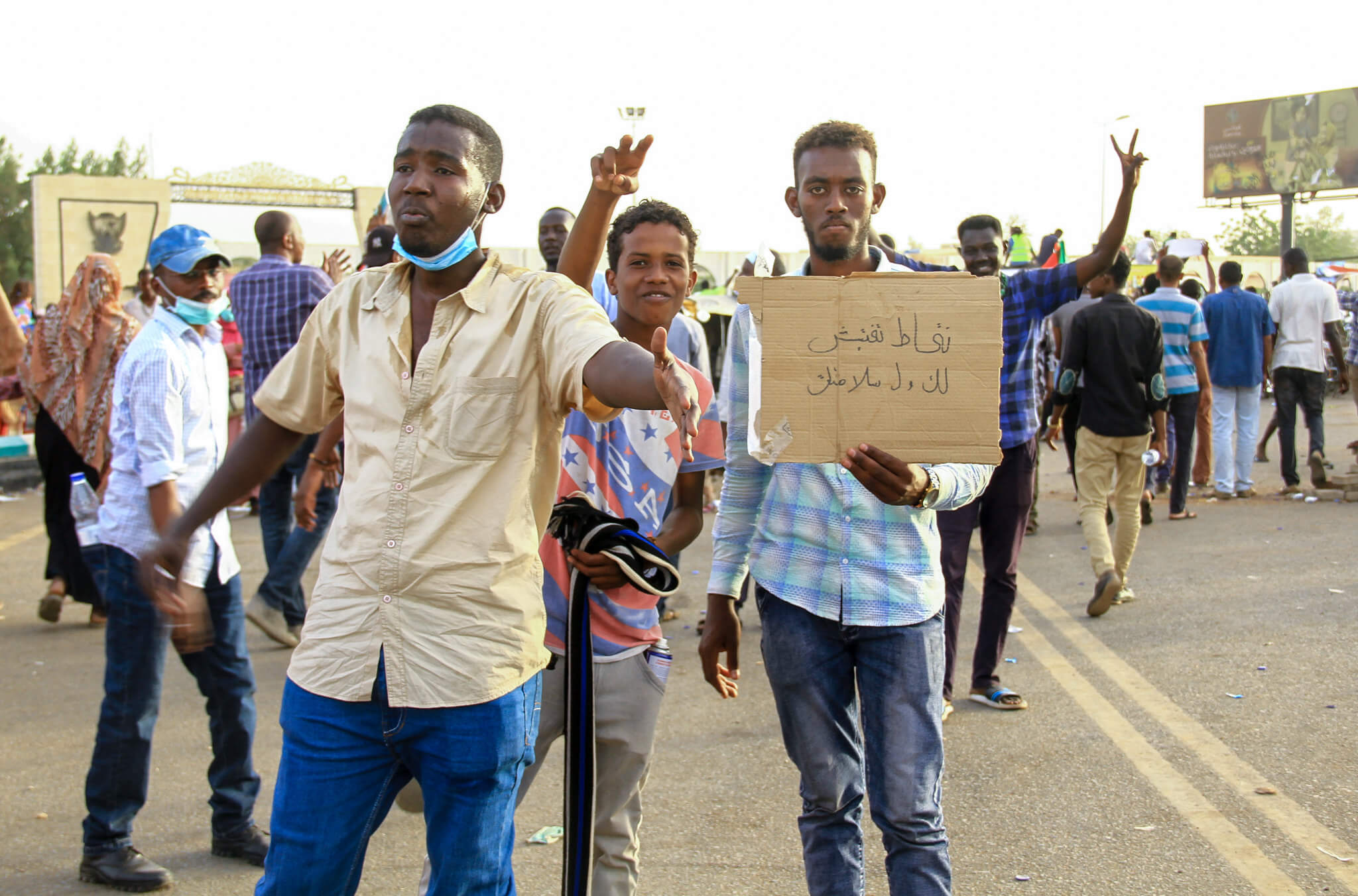
Furthermore, the Sudanese case is interesting as reports of CW use in Darfur in 2016 are credible and provide a basis for further investigation, but international attention for the events is extremely limited. The claims were made by Amnesty International, quoting two CW experts who concluded that “vesicants or blister agents, which include lewisite, sulphur mustard and nitrogen mustard” had likely been used
Chemical weapons discourse
As mentioned earlier, international attention for the attacks in Sudan never really took off. It should also be noted that the legal questions pertaining to CW in Sudan among the experts, should not have been limited to the categorisation of chemical agents. Indeed, the CWC considers each chemical agent that has been weaponised to cause harm to humans, a chemical weapon
CW use does not occur in a political vacuum. The successful use of CW in Syria provides a solid basis for future use. We already saw this in Darfur by Sudanese forces in a civil war context, but it is also true for the use of nerve agents in Malaysia and the United Kingdom.
Especially the Salisbury incident, in which Russian officers poisoned a former Russian double agent with Novichok, a highly effective nerve agent, has likely been interpreted as a form of encouragement for Syria. Even if Russian government officials truly believe the Syrian Armed Forces have not used CW, an action such as the one in Salisbury is a silent confirmation by Russia that CW use is warranted.
The reason for this is that CW as a category does not have internal hierarchical differences: any and all use of whichever type against whichever target is prohibited under the CWC. The legal and political discourse on CW confirms a large degree of continuity on this point
CW use places actors in a distinctive normative universe. It is no coincidence that Syria relies on Russia for protection in international organisations: both have used CW recently, and both are subject to identity attributions such as ‘rogue’, ‘resurgent’ (negatively connotated, as in ‘dangerous’), and ‘authoritarian’. Such identity attributions can push actors towards that separate normative universe.
Strategic use
When it comes to strategic benefits, one might wonder why a resort to conventional means would not be more easily carried out in civil war circumstances: high explosives or artillery would have similar end results in terms of incapacitation as CW attacks. We must note that CW use in active war-fighting contexts does not occur in isolation, and is usually carried out along with conventional attacks
Additionally, because of their immoral status, a denial of use by reference to the CWC is rather more believable than that of conventional means. The deniability of CW use is an important strategic feature of chemical weapons, and one that links the four cases mentioned above. Even beyond the battlefield, the deniability of CW use is key. It is likely that this feature was crucial in Russia’s decision to use Novichok in Salisbury, for instance.
CW kill, incapacitate and, even more than conventional weapons, induce fear
We should also concede that CW are effective weapons, from a military perspective. It is precisely their deniability that might make them preferable over conventional weapons. The stigma attached to CW also means that their use draws away the attention from the atrocities committed with conventional means. Their sustained use throughout the Syrian civil war as well as the Iraq-Iran war shows their effectiveness, and indeed, CW have been decisive on various occasions in Syria and Iraq. CW kill, incapacitate and, even more than conventional weapons, induce fear.
These strategic benefits can have the effect of seducing military and political leaders facing similar domestic challenges to using CW. Ironically, this is dependent on the illegal status of CW and the existence of a strong norm against their use. Only because of this, deniability has strategic value. Therefore, we should not expect extensive CW use, even though the use of CW by Syria over the course of six years can indeed be considered extensive. However, clearly, we cannot sit back and rely on the chemical weapons taboo to ensure that statespersons exercise self-restraint when the situation lends itself to CW use.
The unwillingness to keep up international pressure after CW use, communicates that despite CW use being wrong, states can get away with it as long as they have enough leverage and do not immediately endanger Western interests. Syria is able to rely on Russia for protection in the UN Security Council, and is an important interlocutor to Europe in its current migration crisis. The latter also goes for Sudan.
Future CW use
European interest in various regions across North Africa and the Middle East has not diminished over the years. As a result of US withdrawal from those same areas, peacekeeping efforts will increasingly become dependent on European presence. Budgetary considerations and a fragmented political will, means that this guidance is often civil in orientation and relies on local police and military forces. Examples include the border management mission in Libya (EUBAM-Libya) and various training missions in Iraq. Both these countries have had extensive CW stockpiles in the past and are subject to instability. Libya in particular has political leverage over Europe in light of the migration crisis. This leaves the question to what extent CW are a threat in these regions.
Iraq and Libya
Generally, the CW threat stems from non-state actors, who are more likely to find themselves in the aforementioned distinctive normative universe. The willingness of the Iraqi and Libyan governments to cooperate with Europe, both concretely concerning CW and with daily governance and training, makes it unlikely that these would resort to CW use. Sub-state factions in both territories, however, can be expected to seriously consider CW use.
Iraq has had an extensive CW program until the early 1990s, when international sanctions depleted Iraqi CW activity
In addition to the state-organised CW program, Iraq has also known a number of Sunni terrorist groups experimenting with CW. While not highly impactful, this experiment led to the successful creation of rudimentary delivery methods. This culminated in ISIS’s CW program, which was based outside of Mosul and included not only CW production, but also delivery systems. While the program has been shut down after Mosul was liberated, the know-how is believed to remain available to affiliated terrorist groups via the dark web
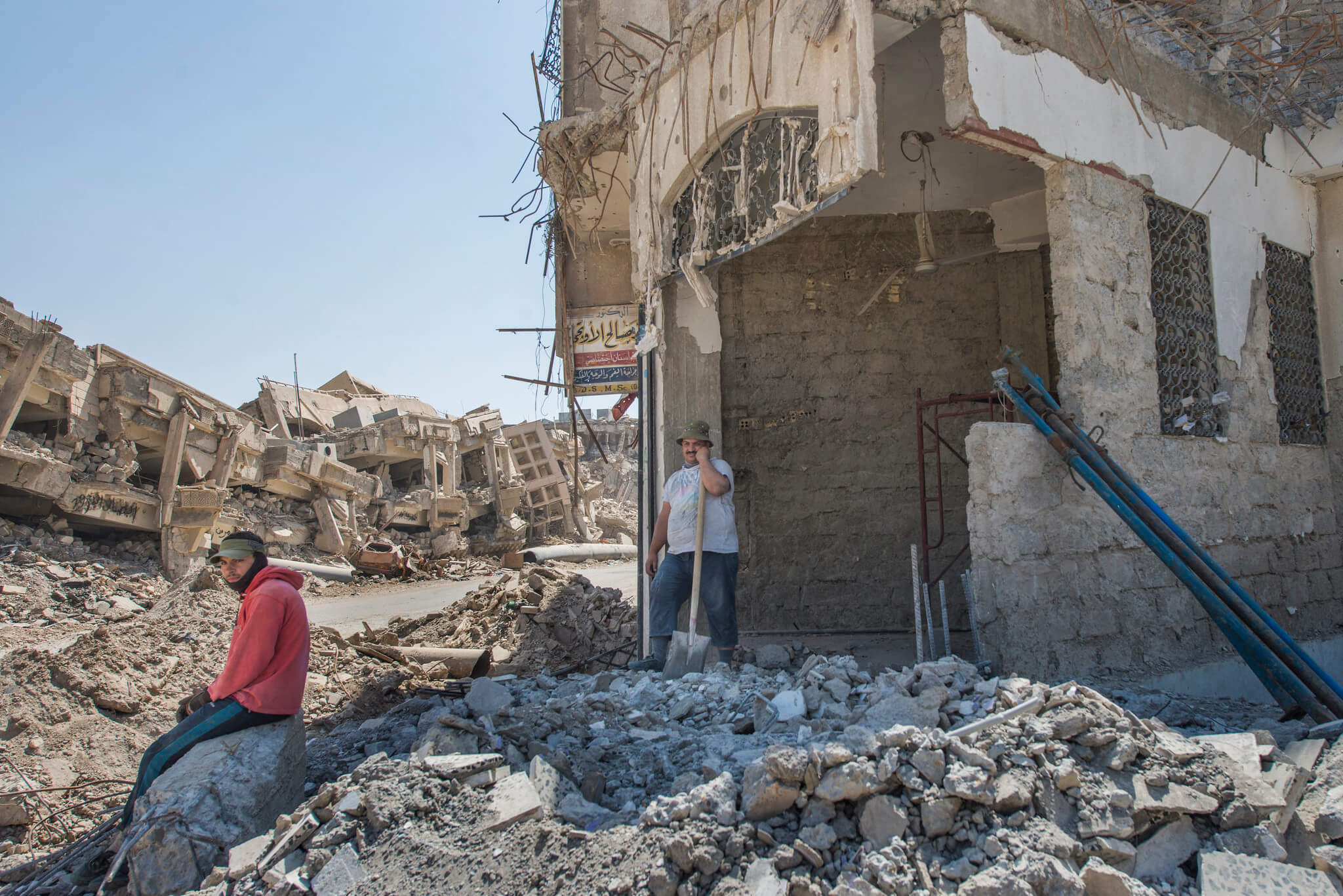
Libya’s declared CW production and storage facilities were dismantled over the past 15 years, starting in 2004 when Gaddafi acceded to the CWC. Total destruction of stockpiles, including precursors, was completed under OPCW auspices in 2017. However, reports have claimed that small amounts of CW, including mustard stockpiles, have fallen into the hands of sub-state militias
Crucially, the Libyan conflict has been characterised more by diplomatic efforts and elections than the Syrian conflict. However, as the conflict lingers, CW will become more attractive to force breakthroughs and capture civil centres. Quillen, based on a comparative study of CW usage in Arab states, concludes that as conventional means fail to reach territorial goals, military dictators are likely to consider CW if their opponent does not possess a retaliatory capacity
Concluding considerations
CW use is attractive to military states facing threats to their regime security, especially when conventional means fail to be decisive. Being careful not to exaggerate this threat, we should be equally hesitant to rely on the CW taboo to prevent chemical war from occurring in zones where international law is forced into the backseat and competing military groups seek to control civil centres.
The EU has already taken steps towards strengthening cooperation between military and civil services in the event of an incident with Chemical, Biological, Radiological or Nuclear weapons (CBRN) within Europe, which is vital to create strong defensive and responsive capabilities. Such an effort should be replicated focussing on overseas civil and military employment. The CBRN Centres of Excellence, which are overseas EU initiatives offering guidance and expertise to mitigate regional CBRN risks, can provide institutional support for such capabilities.
Institutionalisation helps to integrate preventive and responsive capabilities among deployed military forces, civil experts, the local chemical industry and political stakeholders. The EU has a diplomatic responsibility to uphold the CW prohibition in regions where CW risk and EU interest converge. Prevention, however, is key. The EU should engage with its own chemical industry as well as regional partners to prevent dual-use chemicals and CW precursors from falling into the wrong hands. To prevent strategic deniability from becoming too useful, each credible claim of CW use should be investigated by the OPCW. Otherwise, another ‘under the radar’ occurrence like in Sudan is to be expected.

0 Comments
Add new comment