

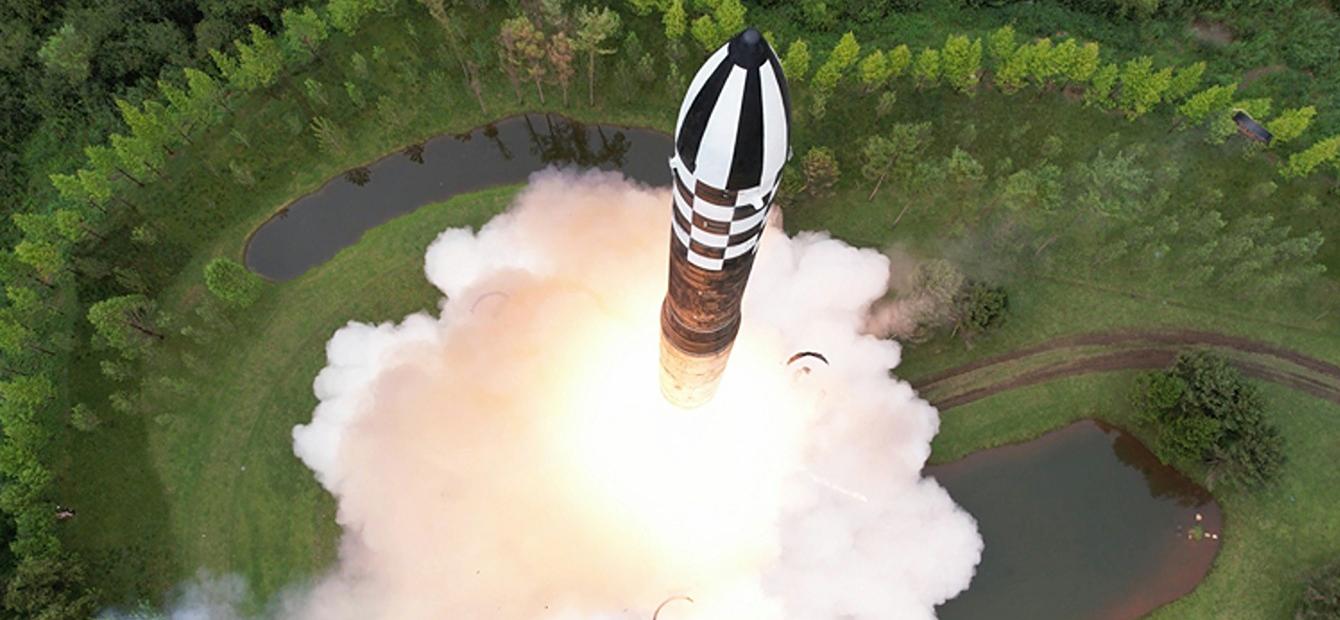
The EU must step up for nuclear non-proliferation

“War has returned to Europe, and it directly involves a nuclear weapon state. The conflict in Ukraine is also an indirect confrontation between the world’s biggest nuclear weapon states, the first since the end of the Cold War. But nuclear exercises and open references to the use of nuclear weapons in the theatre of this war are increasing the risks and can not be ignored. In the Middle East, the conflict of the past year has ignited smouldering tensions between Israel and Iran and led to the unprecedented step of direct exchanges and attacks between the two. Here there is also a nuclear weapons dimension. On one side, the assumed presence of nuclear weapons looms in the background. On the other, the very real potential of nuclear proliferation is raising the stakes.”
The norm against further nuclear proliferation is under threat. While a lack of agreement in reviewing the Non-Proliferation Treaty is not necessarily a yardstick for the treaty’s health, a broad coalition of states – led by the EU – must prioritise reaffirming its value ahead of the 2026 Review Conference. The groundwork for this effort should begin at the preparatory meeting this April/May.
We live in dangerous times, a reality reflected in the sobering words above from the Director General of the International Atomic Energy Agency (IAEA) in December 2024. The shadow of nuclear weapons lingers over the conflicts he mentions. Arms control efforts have stalled. Multilateralism has stopped being a cradle for new ideas and decisions. The UN Security Council has not operated effectively in recent years.
In Asia, four countries are expanding their nuclear arsenals: India, Pakistan, North Korea and China. With the rapid expansion of its nuclear arsenal, China – the only one of the four that is a state party of the Non-Proliferation Treaty (NPT) – has sparked a debate in the United States about whether the current limits on nuclear weapons, set by a series of bilateral treaties with Russia, are sufficient. The US plans to allocate more funding to nuclear weapons in the coming years, not only in absolute amounts but also as a percentage of its defence spending. Russia may follow, especially if the US strengthens its missile defence.
The NPT is under pressure from two sides
A renewed nuclear arms race would put pressure on the non-proliferation norm, prompting some non-nuclear countries to reconsider whether they should pursue nuclear weapons themselves. Such reconsideration was already provoked by President Donald Trump in his first term, when he insisted that states protected by the American nuclear umbrella should pay more for that protection. Since the beginning of Trump’s second administration, similar statements and actions have sparked debate in South Korea about developing its own nuclear weapons,
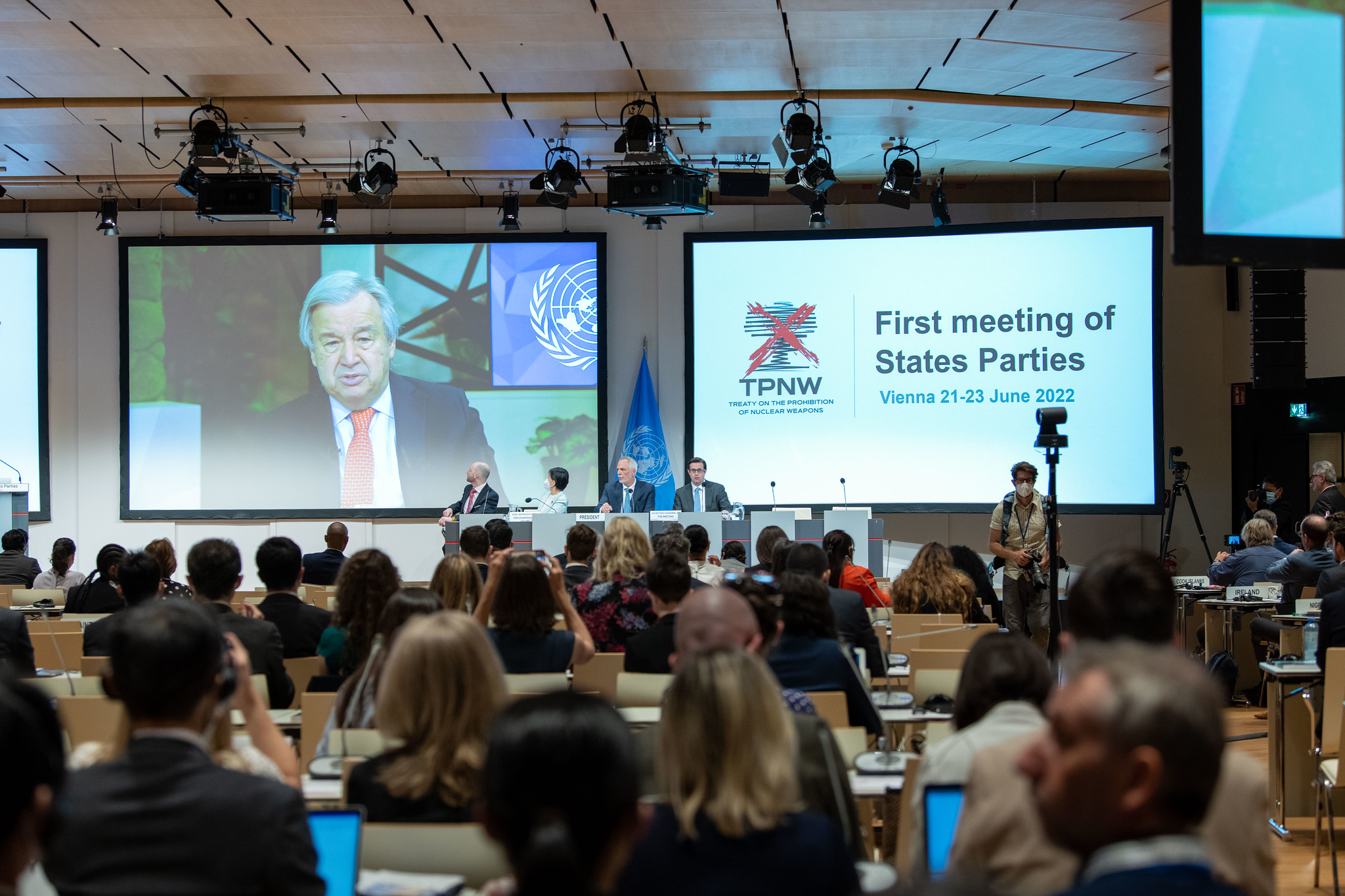
Despite the withdrawal and destruction of thousands of American and Russian nuclear weapons in recent decades, the Treaty faced criticism for not making sufficient progress towards nuclear disarmament. In some cases, the progress made was even reversed: the US withdrew from the ABM Treaty, Russia violated the Treaty on Intermediate-Range Nuclear Forces, and the Comprehensive Test Ban Treaty was not ratified by key states, first and foremost the US. All of this spurred the adoption of the Treaty on the Prohibition of Nuclear Weapons (TPNW) in 2017. While many TPNW signatories view the treaty as complementary to the NPT, the two treaties conflict in certain areas, in particular regarding the issue of whether the stationing of nuclear weapons abroad is allowed.
The NPT is thus under pressure from two sides: a renewed interest in nuclear weapons if the US umbrella starts leaking on the one hand, and a growing concern about nuclear weapons and nuclear umbrellas in general on the other. Additionally, during recent review conferences of the Treaty, states parties were unable to agree on the final document text. Many observers have viewed this as proof that the NPT is on its last legs. However, this view can be challenged. There is a viable path forward that can be pursued in the lead-up to the 2026 Review Conference, with the European Union playing a key role.
The review cycle of the Non-Proliferation Treaty
First, a closer look at the NPT’s review cycle is in order. The NPT came into force in 1970, and its first review conference took place in 1975. Since then, these conferences have been held every five years.
At each conference, the work is divided into three committees: Main Committee I, II and III. The first committee focuses on nuclear disarmament, the second addresses safeguards and the third deals with the peaceful use of nuclear energy and access to it. Main Committee I has been the most contentious. Sometimes it was possible to overcome the difficulties standing in the way of agreement on a final document, but there have also been times when such an agreement proved elusive.
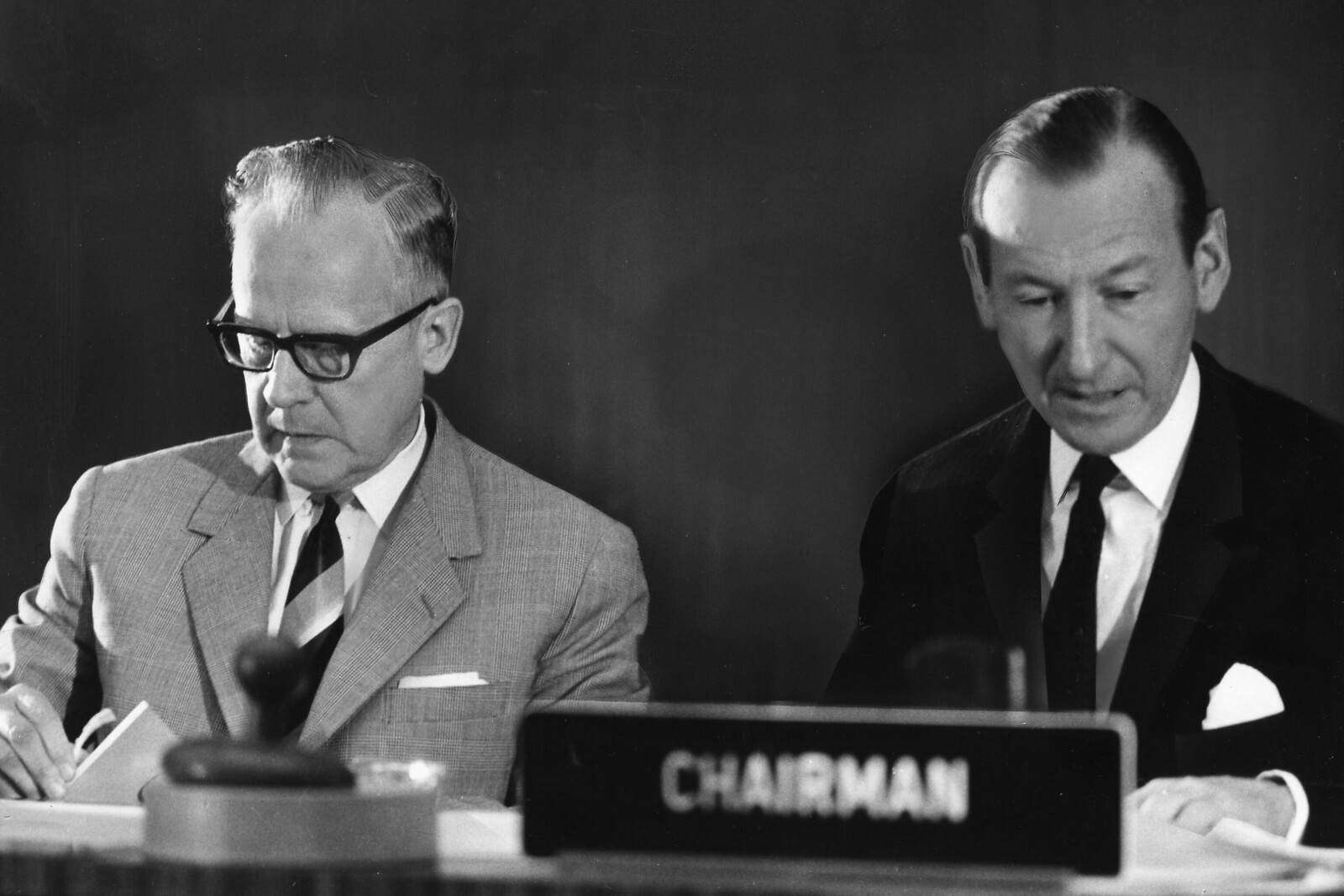
During the first review conference in 1975, optimism prevailed and reaching an agreement on a final text was relatively easy. However, by 1980, in the middle of debates on the stationing of intermediate-range nuclear weapons in Europe and the deployment of more tactical weapons (such as the neutron bomb), Main Committee I struggled to find common ground. Main Committee II faced challenges as well, due to controversies surrounding the guidelines of the Nuclear Suppliers Group, which many developing countries saw as a restriction of their right to access nuclear technology. The lack of agreement at the end of the conference could be seen as a reflection of the harsh political climate at that time.
By 1985, the political situation had not improved. These were the dark days of the Cold War. Nevertheless, NPT member states managed to agree on a final document. I referred to it in an article at the time as an unexpected success, given the lack of progress in terms of nuclear disarmament.
Criticism must be weighed against how participating states view the value of the NPT
The 1990s were very different; significant progress had been made in nuclear disarmament. By 1990, the INF Treaty had come into effect and the Strategic Arms Reduction Treaty (START I) was essentially ready, be it that its finalisation was delayed by the dissolution of the Soviet Union, which made a revision of the treaty necessary to include the Soviet successor states with nuclear weapons on their territory. Additionally, through coordinated unilateral actions, US President George H.W. Bush and Soviet President Mikhail Gorbachev agreed to withdraw thousands of tactical nuclear weapons from Europe and other regions. Despite these advancements, negotiators at the 1990 and 1995 NPT review conferences were unable to reach an agreement on a final document. Particularly in Main Committee I, the exchanges were harsh and disingenuous. In 1995, my impression – as the penholder for Main Committee III
During the review conference of 2000, an agreement was – surprisingly – reached.
Since 2000, most review conferences have not concluded with an agreed final document. Only the 2010 conference was a partial exception, when agreement was reached on the forward-looking part of the document. We do not need to examine the specifics of these conferences to draw some conclusions.
Conclusion 1: Agreement on a Final Document is not the ultimate yardstick
It is clear from the above that there is no direct link between the state of nuclear disarmament and the likelihood of reaching an agreement on a final document during a review conference. Of course, review conferences are the appropriate forum to criticise nuclear-weapon states for their lack of progress – or even reversal – on nuclear disarmament and to seek commitments from them. However, these criticisms must be weighed against how participating states view the value of the Treaty. From today’s perspective: how they value a positive outcome at the upcoming 2026 Review Conference.
For the NPT to remain intact and its fragile balance to be preserved, efforts from all parties are required
Whether a review conference results in a final document or not should not automatically be taken as a gauge for the health of the Treaty. Since the first review conference in 1975, the number of NPT parties has more than doubled, with North Korea remaining the only country that has withdrawn from the Treaty.
The NPT has its limitations, particularly in the distinction it draws between ‘haves’ and ‘have nots’ – a divide that is not likely to endure indefinitely. This distinction underpins a precarious equilibrium that has largely been maintained for the past half-century. The few states that have pursued nuclear weapons since the Treaty’s entry into force were already inclined towards nuclear weapons at that time. For the NPT to remain intact and its fragile balance to be preserved, efforts from all parties are required. So, in a time when the non-proliferation norm is under pressure – and might face even more pressure in the years to come – additional efforts will be essential to demonstrate the health of the Treaty.
Conclusion 2: The EU needs to take the initiative to form a broad coalition
Looking ahead, a broad coalition needs to be formed to ensure a positive outcome of the 2026 Review Conference. This process should start at the preparatory meeting in April/May. The approach followed in 2000 might be inspiring. The European Union – for a change – is well positioned to play a key role in this regard. The EU represents a combination of nuclear-weapon states (like France, and the UK at arm’s length) and non-nuclear-weapon states, all of which attach great value to non-proliferation, despite differences, for example, in how states look at the TPNW.
Ultimately, it is the nuclear-armed states that stand to benefit most from the Treaty’s continued vitality, but the P5 have not been influential and unified in recent years, largely as a result of the Ukraine war. One of the few positive aspects of Washington’s recent volte face towards Russia is that it enables non-proliferation talks between the two countries again.
The EU may be better positioned than the US to underscore the risks that China would face if the NPT were to collapse
Still, that link alone is not enough. China needs to be involved as well, particularly given its influence the Global South. The EU should therefore send a clear message to Washington that a moderate response to China’s nuclear expansion is critical, and to Beijing that China is bound by Article VI of the NPT, which commits it “to pursue negotiations in good faith on effective measures relating to cessation of the nuclear arms race at an early date”. Starting a new arms race is inherently at odds with that obligation. While China’s rationale for expanding its nuclear arsenal – primarily related to a US first-strike capability – is well-known, its current lack of transparency fuels worst-case scenarios in the West.
The EU may be better positioned than the US to underscore the risks that China would face if the NPT were to collapse. While Beijing is certainly concerned about the stationing of American nuclear weapons in Japan and South Korea, it should also consider the potential consequences of acquiring even more nuclear neighbours. By framing the situation this way, the EU could serve as an effective intermediary, encouraging China to realise that its own security could be jeopardised in the long term if the NPT framework were to unravel.
Finally, for such a broad coalition to come together, it is crucial that participants are willing to compromise on their pet topics from the outset.



0 Comments
Add new comment