


The EU’s anxieties of guaranteeing the rule of law

Recent developments in particularly Hungary, Poland, and Romania show that the rule of law is under severe pressure in the EU. Last December the European Commission triggered the so-called ‘nuclear option’ against Poland: the Article 7 procedure of the EU Treaty which can ultimately lead to the suspension of voting rights in case of a serious breach of European values. On April 12 the European Parliament produced the Sargentini Report which could lead to proposing Article 7 against Hungary in September as well. In combination with the refusal of Visegrád countries to implement the EU’s majority decision to redistribute refugees, the conflicts are also tied up in a ‘West’ versus ‘East’ clash.
This does not mean that rule of law issues are confined to Central and Eastern Europe, nor that there is no common concern of EU rules not being properly enforced across the EU. Yet it is undeniable that this region systemically scores worse in the rule of law as a component of national democratic governance (see various monitoring organisations such as Freedom House, World Justice Project, World Governance Indicators and the EU’s Cooperation and Verification Mechanism regarding Bulgaria and Romania). Moreover, troublesome application of (more specific) EU law (such as budget deficit rules or EU directives) is incomparable to the ramifications of rule of law backsliding. A rule of law abiding democracy is a pre-condition for membership and precedes EU decision-making. Having ‘illiberal democracies’ operating in the EU leads to systemic effects on the democratic nature of EU decisions themselves. National decisions taken in context of such regimes threaten furthermore the legal certainty and democratic guarantees of EU-citizens, companies and investments - both within and outside the scope of EU-law. Finally, the credibility of the EU’s value-based foreign policy (in particular the efforts of the EU to induce reform in the Balkans) is being jeopardized.
This article briefly reflects upon the role of the rule of law in the EU, followed by three different rule of law challenges as well as the latest efforts set in motion to potentially preserve the rule of law.
European values
The EU - not a fully-fledged democratic federation or state - would show democratic deficits if it were to proscribe the constitutional identity of a member state in detail. Nevertheless, its members have committed themselves in Article 2 of the EU Treaty to its founding European values, of which the rule of law. In addition, the EU acquis, the Charter of Fundamental Rights and the jurisprudence of the European Court of Justice have produced various fundamental rights and references to the rule of law. EU member states are also obliged to accept human rights scrutiny of their constitutional systems by the Council of Europe and its Court in Strasbourg.
The credibility of the EU’s value-based foreign policy is being jeopardized.
At the same time, the judicial enforcement mechanism of the Commission in tandem with the European Court of Justice (the infringement procedure) is in practice only focused on the legality of specific EU-legislation and directives, and not (yet) the wider context of European values. The Court has so far been unable to directly judge on Article 2 values. The Charter of Fundamental Rights is also only applicable in relation to the implementation of (secondary) EU law, or at best when member states act ‘within the scope of EU law.’
Rule of law challenges in the EU
Currently, several challenges can be observed for the EU to protect its founding values.
Minor challenges
Minor deficiencies of the rule of law, such as (individual cases of) corruption, can and should be addressed over time by the rule of law institutions of the member states. Corruption involving the EU’s financial interests is investigated by the European Anti-Fraud Office and the new European Public Prosecutor’s Office is a welcome development to actually make sure fraud is prosecuted. Rule of law issues that affect (secondary) EU-law lead to infringement procedures by the Commission, which can end up before the Court with binding judgements (imposing financial penalties on the member states). In addition, the EU can support the resilience of national institutions by providing (additional) funds to improve governance and facilitating European networks of professionals that exchange best practices and develop a professional culture of norms.
A systemic challenge ‘by stealth’
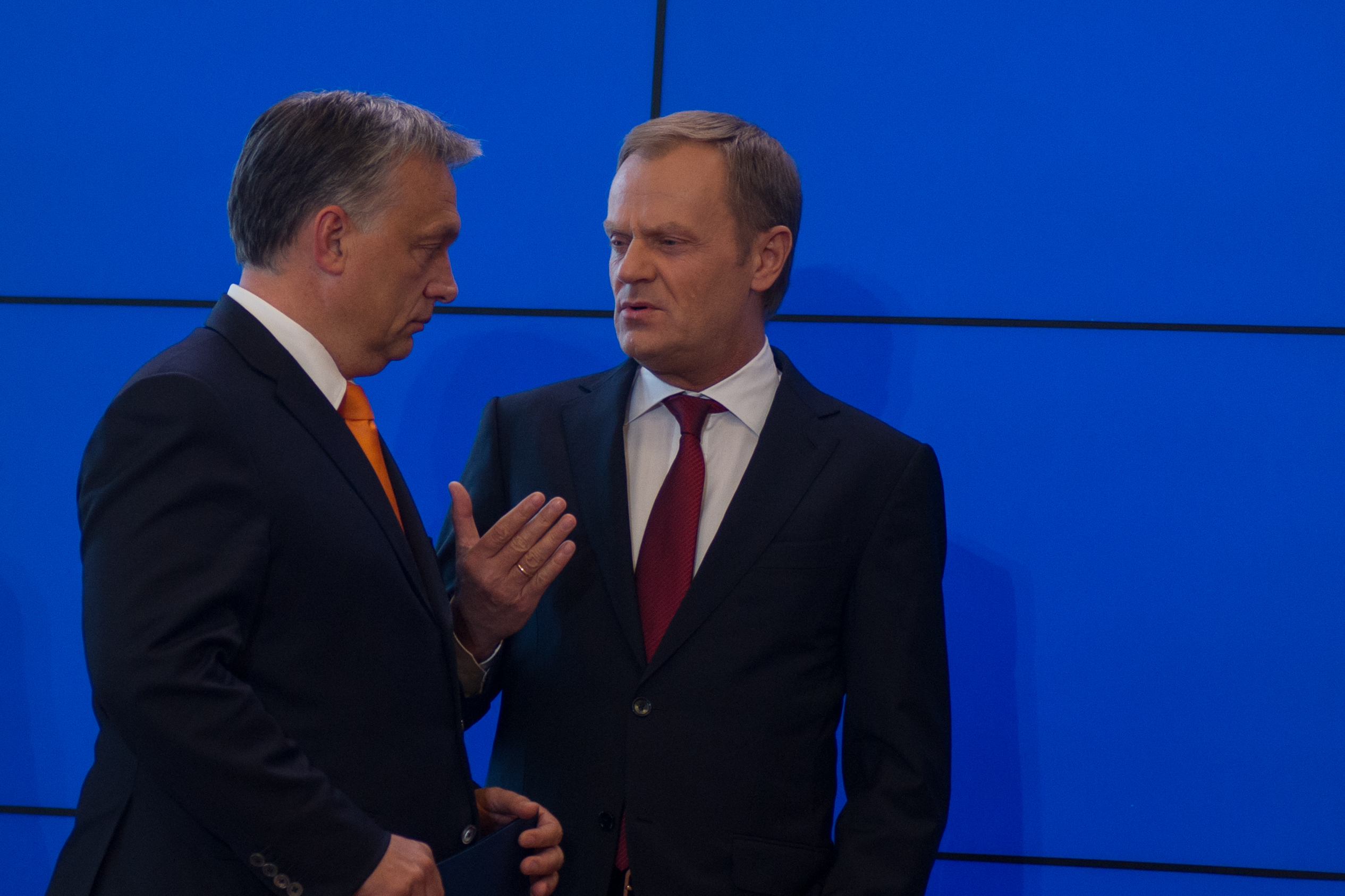
Next to minor challenges, the EU is also faced with grave systematic challenges. The practices of the Hungarian government demonstrate for example that the EU can only attempt to formally enforce (secondary) EU-law, but not the rule of law: i.e. also the system of checks and balances in a democracy. With a super majority in parliament, Fidesz (the party led by Viktor Orbán) has rapidly changed and amended the constitution to by-pass a critical Constitutional Court
While the Commission expressed concern in most of the cases, the EU could effectively do little.
A systemic challenge ‘in plain sight’
The government in Poland has directly violated its own constitution and ignored legal judgements of its own national Constitutional Court in 2015. The governing PiS politicians also expressed publicly that ‘of course the law is not the most important. The life of people and security is.’
Seeking ways to guarantee the rule of law
Poland, which is facing a(nother) deadline, will be discussed in the EU Council on June 26.
Sanctioned multi-speed Europe
If not formally through Article 7, several member states could admonish a deficient member via exclusion of new European cooperation until the rule of law has improved (as for example instigated in the case of the rejection of Schengen accession by Romania and Bulgaria due to concerns about the rule of law). The Commission has now also warned Romania that its Schengen accession is at risk in relation to new laws that politicize its national anti-corruption prosecution.
EU funds
The Commission has expressed its desire to tie EU funds to the rule of law in the next EU-budget recently.
Better legal enforcement
Improved judicial enforcement through the European Court of Justice seems highly desirable. This would lead to a rule of law discussion on more solid grounds, away from polarising debates regarding Article 7, the EU’s budget or other EU policies, which by definition are the subject of political horse trading. Indeed, care should be taken that the rule of law is not tangled up with other political differences. This is exactly the strategy by Hungary and Poland; they claim that since they have different views about the economy, migration and the EU and so forth, they are being criticized (by ‘progressives and liberals’) on their democratic and rule of law credentials. It is in this regard not particularly helpful that the self-proclaimed ‘political Commission’ has initiated an Article 7 procedure against the Polish government (member of a marginal political family in the EU) and not Hungary (member of the biggest political family, providing the Commission president). Moreover, the forthcoming Article 7 proposal for Hungary led by a Green MEP feeds into this narrative; the political groupings in European Parliament have proved to primarily defend their peers until now.
Therefore, it is crucial that on February 27 the Court judged a Portuguese case regarding the reduction of salaries of judges, which seems to pave the way for making judgements on Article 2 values possible.
While it is risky if national judiciaries would increasingly be suspicious of each other and thus pause EU obligations and cooperation (undermining the direct effect and unity of EU law), a pan-European legal debate - instead of a less desirable ’West vs East’ political stand-off - might be in the making. For example, top Polish, Slovak, Czech and Estonian judges had earlier also voiced their concerns about the Polish developments in declarations, and in Hungary judges have also being critical on their own situation.
A pan-European legal debate - instead of a less desirable ’West vs East’ political stand-off - might be in the making.
Conclusion
The rule of law is under severe pressure in the EU. In May, more than 900 Romanian magistrates protested against amendments that would undermine the Romanian judiciary.
Following the Irish request for a preliminary ruling regarding the Polish judiciary, the opinion of the Advocate-General is expected June 28, the official ruling by the European Court of Justice early July/September. Time will tell if the upcoming Court’s judgment will enlarge the EU’s in-house legal expertise on its European values. This could serve as much needed extended material for the Commission and European political actors, either in support of an Article 7 procedure, (systematic) infringement procedure or the future creation of better monitoring rules.

0 Comments
Add new comment