

Franco-German axis: a balancing act with room for the Dutch

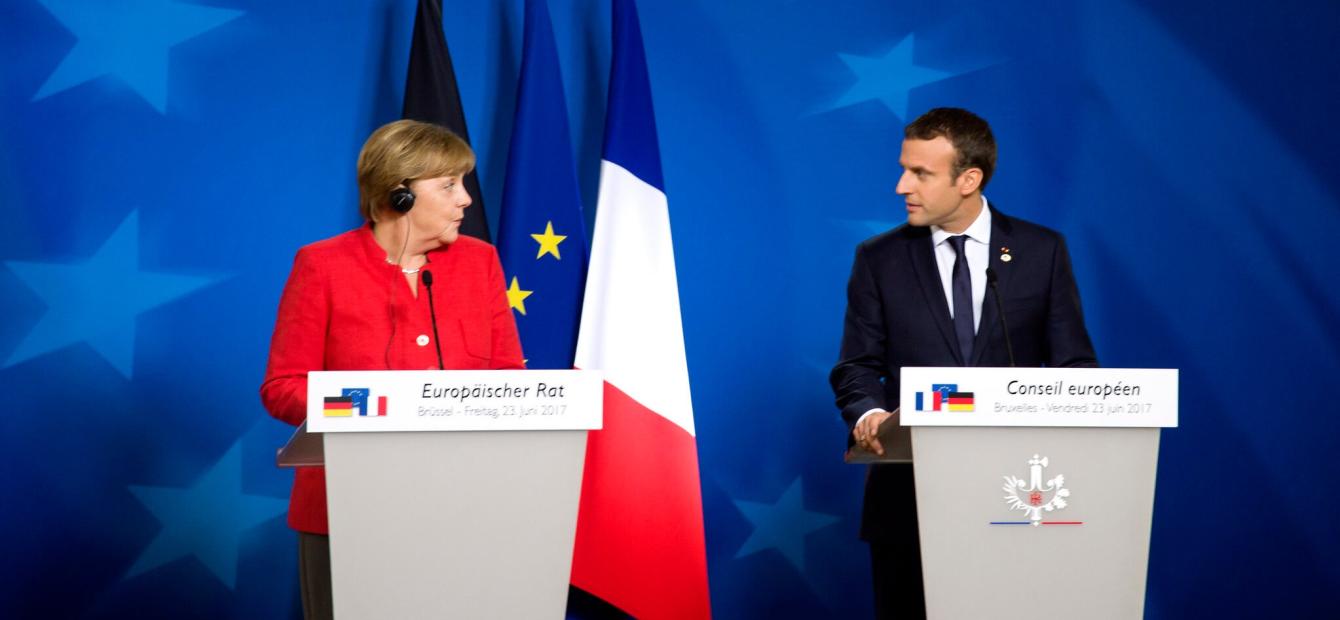
Expectations were high following Macron’s rousing speech at the Sorbonne. France and Germany would join forces to mobilise the renewal process in the EU. But after waiting for Merkel’s answer, little remained of those high expectations. Whereas Macron was in a hurry, Merkel hit the brake. She pays heed to the mutterings of her rank and file who are not only fearful of a new refugee crisis but also of a transfer union. On the one hand, Merkel has reasons not to concede too much to Macron, on the other, she asserts the necessity to speak with one voice. And so the EU is in the midst of an intensive, lengthy negotiating process in which other countries such as the Netherlands still play an important role.
The Franco-German axis is much more than a relationship between two random EU member states. For one it is the motor, while for the other it is a symbol of administrative impotence. One has pinned all hopes on it, while the other sees it as a spectre. As a result of the emotional commitment to the Franco-German relationship – in a positive or negative sense – reporting on it is ‘himmelhoch jauchzend, zum Tode betrübt’ (‘Rejoicing to heaven, grieving to death’). If things do not go as expected, the abyss soon looms. The German political scientist Ulrike Guérot cites Michael Gorbachev, who said just before the fall of the Wall: “Life punishes those who come too late.”
Differences of style: Macron vs Merkel
One of the reasons why it is so difficult to gauge the value of the Franco-German axis is the enormous difference in political style between Macron and Merkel.
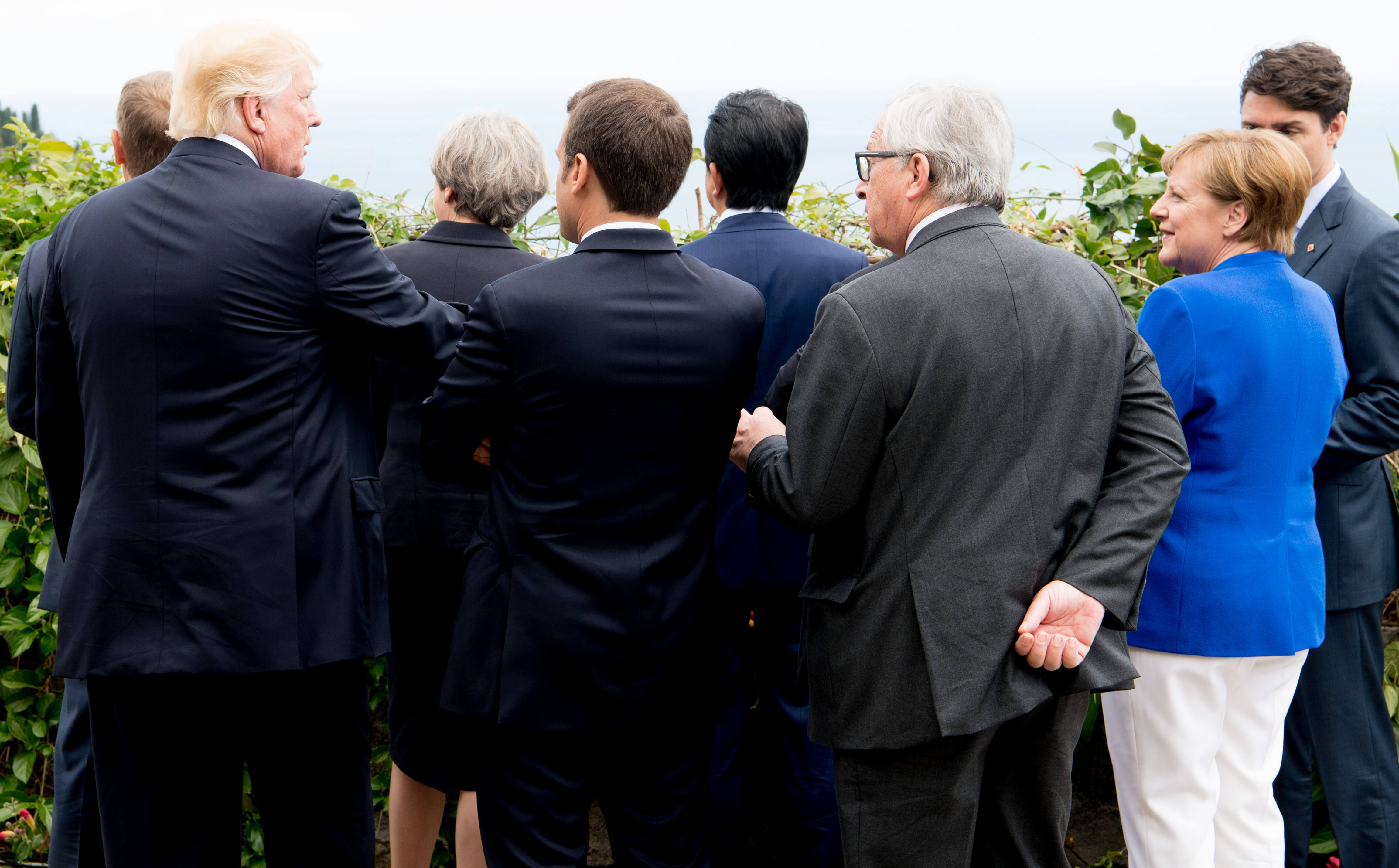
If the differences in style of Merkel and Macron were only a matter of political presentation, it would be no problem, but their rhetoric also belies a very different style of political operation. Macron wants energetically to breathe new life into the EU. During his state visit to Athens on 7 September 2017 he spoke aptly of “a Hegelian moment when the owl of Minerva takes flight”. Hegel himself emphasised in his Grundlinien der Philosophie des Rechts that this owl spreads its wings only with the falling of the dusk. Concrete results can only be achieved once a crisis becomes palpable. With growing impatience Macron argues that Europe must not go down impracticable paths, must not satisfy itself with minor adjustments but must redesign and rebuild with the energy of the founding fathers.
But while Macron risked losing his impatience, Merkel continued her step-by-step policy, if only to safeguard German interests. Merkel hoped to avoid the German debate being dominated by opponents of a Haftungsgemeinschaft, in which risks are shared, or of a Transferunion, in which money flows from rich to poor member states. Therefore, she is open to change, but only within specific parameters and under strict conditions. Conditionality is the key word.
It is entirely possible that Mercron will also find a modus vivendi, but probably only at the eleventh hour
The youngest French president has no choice but to accommodate and to be satisfied with that. In his Charlemagne prize acceptance speech in Aachen on 10 May 2018, Macron packaged his critique in four tidy ‘imperatives’: Europe must make choices, work together, overcome fear and act, “hic et nunc”, before it is too late. Implicitly he told Merkel: “Now is the time to jump across the bridge, abandon fears, stop delaying and take firm decisions.” In passing he called the German trade surplus a fetish, complimented former SPD leader Martin Schulz for his commitment during the coalition talks and addressed ‘Joschka’, the former interior minister Joschka Fischer, who had strongly criticised Merkel for her wait-and-see attitude.
Exactly 250 days after Macron held his Sorbonne speech, the scene shifted with the publication of a rather detailed interview Merkel gave to the Frankfurter Allgemeine Sonntagszeitung.
There is a precedent, after all. When Nicolas Sarkozy was elected president in 2007, it was not immediately a happy marriage between the two. When the credit crisis struck, almost every proposal from Sarkozy (and from British prime minister Gordon Brown) was shunned, which is why Merkel soon acquired the nickname ‘Madame No’ in Brussels. The duo only began working closely together from the spring of 2010 when the crisis in Greece threatened to undermine the eurozone. ‘Merkozy’ therefore had only a short life. The couple’s nickname refers to a period from May 2010, when the EFSF bail-out fund was set up, to May 2012, when François Hollande took over from Sarkozy. It was also in this period that the Netherlands became increasingly concerned about the Franco-German axis. It is therefore entirely possible that ‘Mercron’ will find a modus vivendi, particularly in times of crisis which open windows of opportunity that were previously closed.
Approach routes
Although France and Germany have certainly converged in the 21st century, the differences in principles remain wide. The main difference concerns expectations. What do we want to achieve with the EU? For Macron the EU is an essential part of his ground-up revolution.
Macron’s ideas for strengthening the eurozone are not new. French proposals for a gouvernement économique are regularly aired at the negotiating tables in Brussels. They were put forward by Nicolas Sarkozy in 2010. Plans for a joint Franco-German net profit tax were also tabled earlier but proved difficult to implement. What is new is the fervour with which Macron is presenting the plans.
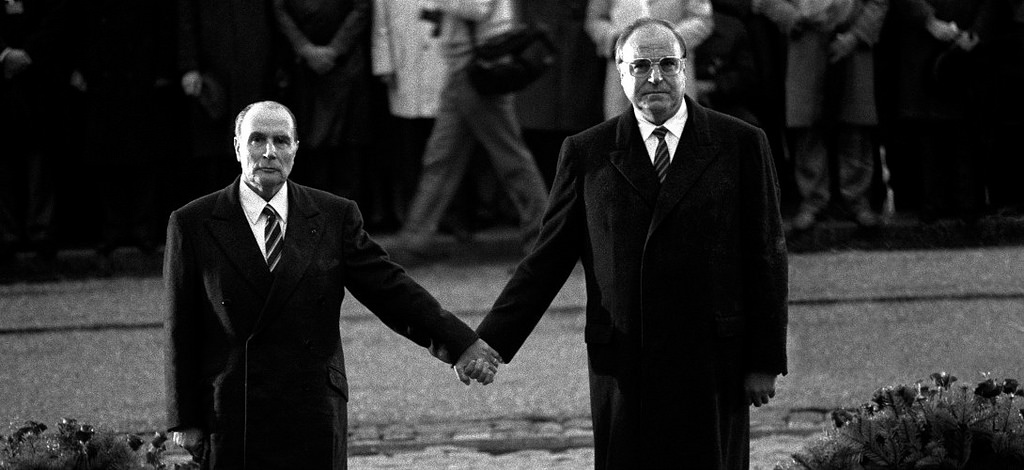
For Merkel the EU is primarily a peace initiative: a definitive end to the transitional enmity between France and Germany, so perfectly symbolised by the photograph of Mitterrand and Kohl hand in hand in front of the ossuary in Verdun. Various ingredients are necessary to keep this peace initiative together. The cement is provided by the European treaties. More than other member states, Germany sees the EU as a Rechtsgemeinschaft, in line with a federal approach in which powers are devolved to the local, regional and federal levels. She sees the EU certainly as a vehicle for economic growth. Stability, clear rules, a strong banking sector and investments in innovation and digitisation are important guiding principles.
As a community of values, the EU is closely interwoven with German thinking on Zivilgesellschaft. The fact that this very community of values is under pressure is painful to many Germans. Where she can, Merkel tries to build bridges between East and West and South and North. “Spaltungen in Europa sind mit mir nicht zu machen,” (“Divisions in Europe are not my doing,”) she said in 2009 in her Humboldt-Rede zu Europa.
Sphere of influence
When Emmanuel Macron presented his many proposals at the Sorbonne in 2017, everyone knew that Merkel’s helping hand was not an immediate literal endorsement of all his proposals.
On the other hand Merkel must equally take account of the SPD, which negotiated hard on the European section of the coalition agreement. Notable elements of the agreement are the clear wish to contribute to the EU’s long-term budget, a European Monetary Fund controlled by the national parliaments and enshrined in EU law, stricter controls on tax evasion and a new Franco-German Elysée treaty. Martin Schulz took a leading role in the negotiations on the agreement. But the question is whether his successors will show the same fighting spirit when it comes to EU reforms.
Merkel has every interest in Macron succeeding as president
The divisions in German society are evidenced also by pressure exerted by other parties, such as industrial employers, who are demanding rapid reform of the eurozone, and 154 German economists, who have written a manifesto warning about the sharing of risks.
But the balancing act is not limited to the German political stage. There is friction too in the European Parliament. Macron has decided not to join the existing European groupings, but to reach out to like-minded MEPs whom he hopes to lure away from the existing groupings. That means not only the PD, the centre-left party of his Italian friend and former premier Matteo Renzi, but also the Dutch D66 and even the German SPD. It is questionable whether Merkel wants to see realignment in the European Parliament. She would benefit from a continuation of the Christian and Social Democrat majority that sets the tone in the Parliament as a ‘grand coalition’ and reflects her own coalition in Berlin. Too much French success is not in her interest.
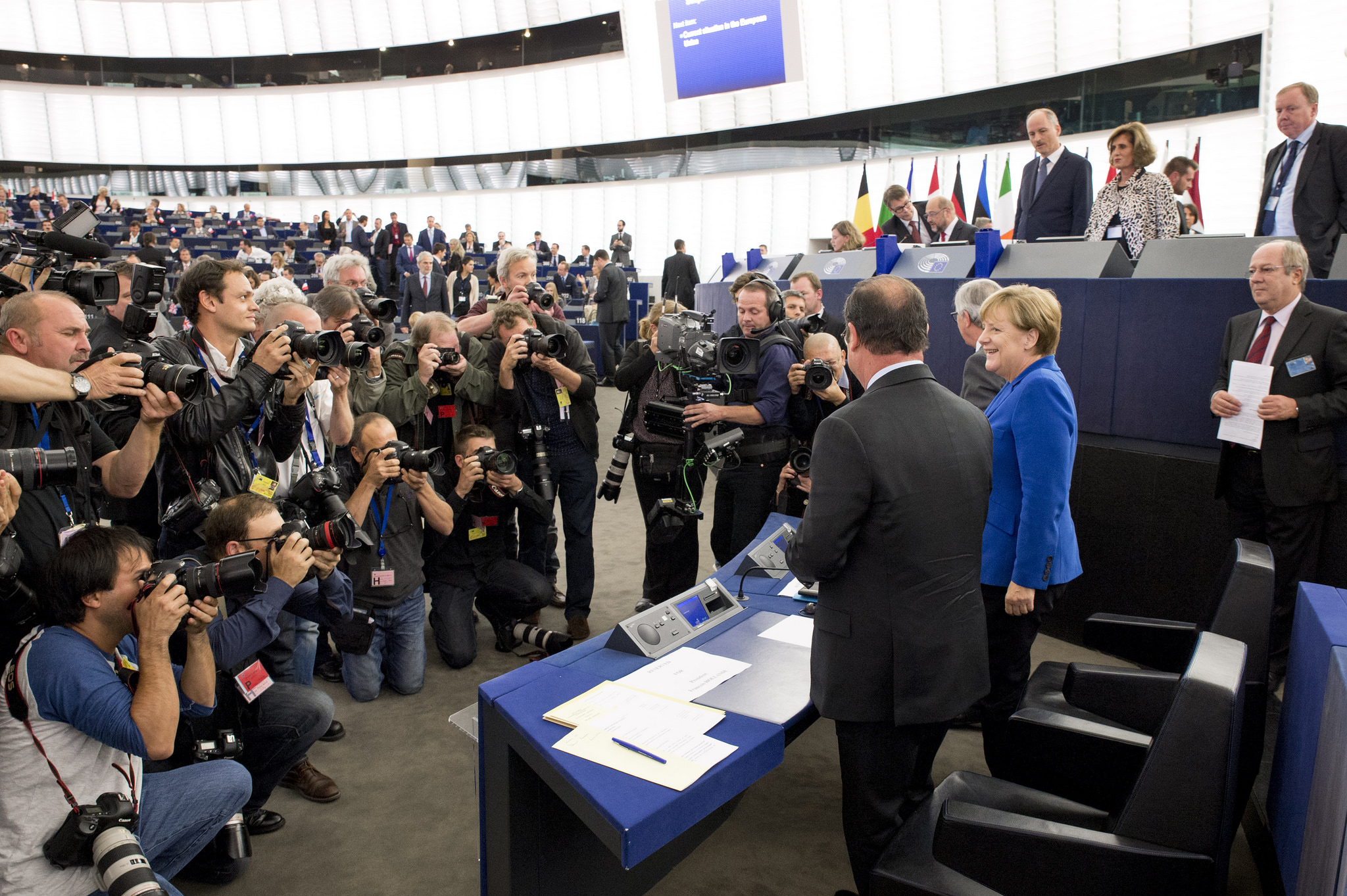
And yet Merkel will want to cede at least just enough ground to accommodate Macron’s wishes. After all, she has as every interest in Macron succeeding as president. It is not good for the EU if successive French presidents end their term of office on a low note. For that reason alone Macron must be able to continue sending out his optimistic message. A second reason is that no one wants to see the status quo maintained.
The pressure on European government leaders to take decisions is particularly strong at this time. A new balance must be found in the EU that takes account of local, regional and national political differences but equally is based on minimum economic, monetary and democratic standards that have to be maintained. That is no easy matter.
Pressure cooker
What can we expect? Which decisions demand priority? What is essential for Germany is a new policy to redistribute refugees. The current policy is not working. It is putting too much pressure on the external boundaries and too much pressure on Germany itself as the most attractive destination country. Merkel has proposed setting up a European Immigration and Naturalisation Service that would take decisions on the external boundaries based on European asylum law.
Other items were as high on the agenda such as the completion of the European Banking Union. A decision on such a union was taken back already on 1 June 2012, but there is still no permanent European deposit guarantee system. The Germans – and the Dutch too – are right to say that risks can only be shared if the balance sheets of the ‘bad banks’ have been cleaned up, the national regulators do their job and a final decision is taken on the institution that will be the lender of last resort. An end to these negotiations is in sight, but the election outcome in Italy has not made things any easier. It is highly questionable whether the new Italian government will be prepared to make the painful concessions that are expected of it. After all, that is where the problems in the banking sector are greatest.
Another crucial point is the establishment of the European Monetary Fund (EMF). This institution is derived from the existing bail-out fund, the European Stability Mechanism (ESM). There are many economic reasons for establishing this institution, but the geopolitical reason is perhaps the most important in these turbulent times: to compete against the United States or China, Europe needs strong foundations, for which the basis is the euro. If the EMF performs well, it could considerably strengthen the foundations of the EU. It can also manage investment funds to support weaker economic regions.
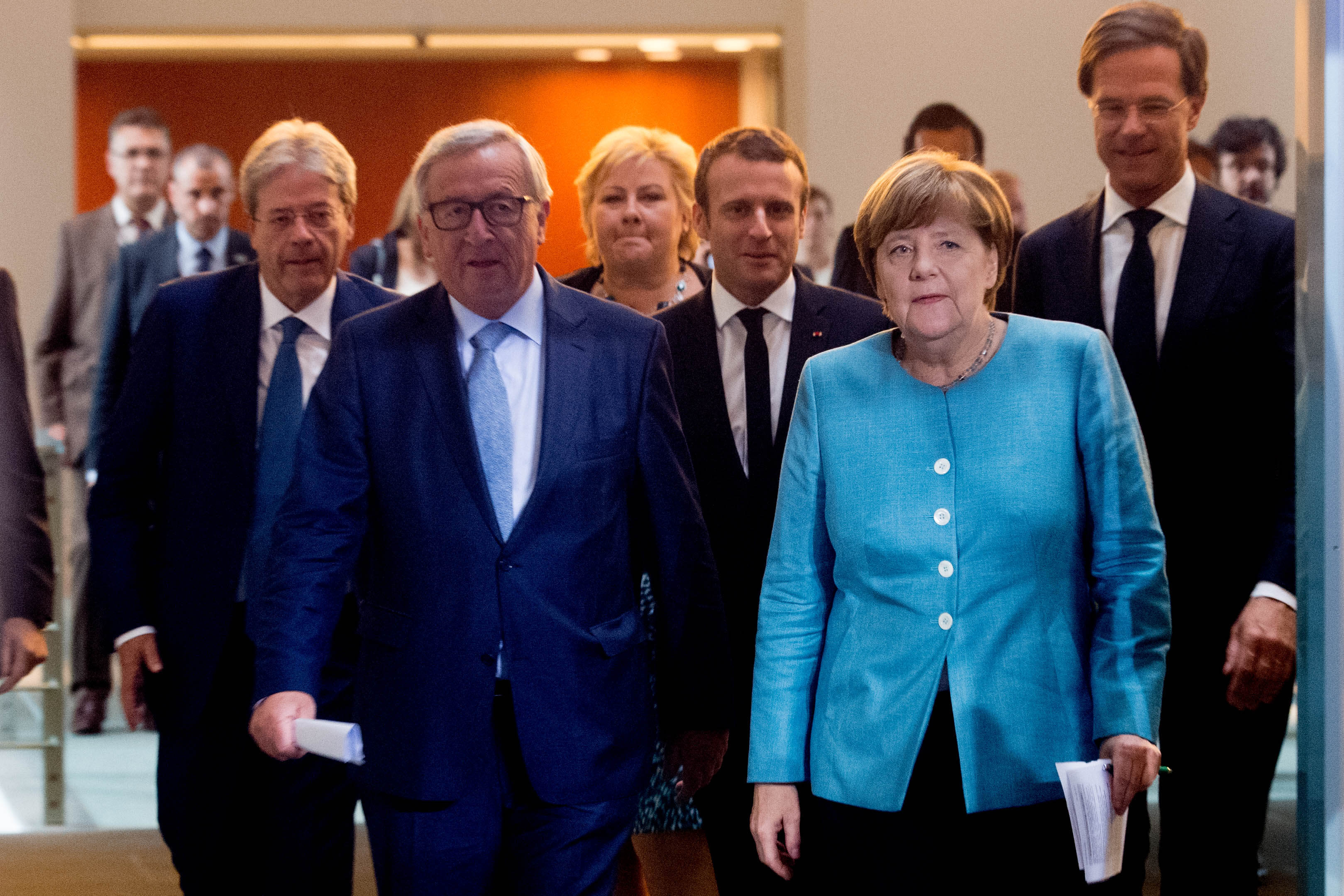
The German government wants to establish the EMF on a phased basis only under strict conditions. The timetable has 2024 as the foundation date. According to Olaf Scholz the EMF must act as a lender of last resort for European banks. Scholz repeated once more that the EMF must be placed under parliamentary supervision and be enshrined in the European treaties. Other member states, such as the Netherlands, believe supervision should rest with the member states.
Berlin has consistently said that substantial reforms will follow. But Merkel’s nod to Macron in the Frankfurter Allgemeine Sonntagszeitung illustrated her restraints. Notable points were her proposal for a European intervention force, a European Security Council to coordinate foreign and security policy, and a European Immigration and Naturalisation Service. Also notable was her desire to set aside several tens of billions of euros for innovation and investment to stimulate economic convergence. But the question how this limited eurozone budget would be financed was and still is open to discussion. Certainly also notable was the interview given by German economics minister Peter Altmaier to Der Spiegel in March. He said he was inspired by his illustrious predecessor Frans-Josef Strauss, who in the 1960s laid the foundations for Airbus, the international consortium of aircraft manufacturers, that offers a European alternative to Boeing of the US.
The Netherlands can help Merkel to translate Macron’s proposals into a German style, so as to reassure both German and Dutch voters and cause Macron no unnecessary loss of face
Almost silently the contours of a harmonised foreign policy are emerging. On Brexit the EU is showing great unanimity – with not a scintilla of disagreement between the member states. France and Germany are working jointly in their dealings with Eastern European member states, coordinating the response to Trump’s withdrawal from the nuclear deal with Iran and formulating a joint North Africa policy. Interestingly, also the smaller disagreements are finessed away quickly.
A curious example was the internal criticism of Horst Seehofer, who in the heat of battle wrote a letter to Brussels, in which he criticized the European Commission’s stance on post-Brexit security relations. Whereas Seehofer asked for full cooperation on security measures, the Commission wants to give post-Brexit Britain only limited access to important data-bases. In reaction, Germany’s Permanent Representative in Brussels also wrote a letter to the Commission, in which he asserted that Seehofer’s views did not reflect the official government stance in Berlin. Also, in the looming trade war with the US we have seen minor differences between the two countries: Germany is fearful that its car industry will be hit hard and for that reason the government wanted to negotiate with the US on a new accord. France and the European Commission, however, are taking a hard line. Like no others, France and Germany realise how important it is not to be played off against each other by the United States. nt.
A lot will certainly change in the period ahead, but not everything in the way Macron wants. Proposals for a eurozone parliament or European electoral lists (instead of national ones) were killed off by the European Parliament itself. Merkel did not need to do anything to secure that outcome, except wait. European funds will doubtless come into being, but limited in amount and hedged around with strong provisos. However he did not stress the importance so much, Macron will be lucky to get a permanent president of the Eurogroup. As a consolation prize he could call him or her ‘Minister of Finance’, but whether he or she will have more say than the current president is questionable. Countries such as the Netherlands would object to that.
Finally, what about the Netherlands?
In the Netherlands many people seemed convinced that now that the British are leaving the Netherlands should seek new alliance partners other than Germany and France. Finance minister Wopke Hoekstra even forged a coalition with North European countries, the Hanseatic League, to clearly oppose any transfer of money to countries which do not have their budgetary affairs in order. And in an interview in Der Spiegel Mark Rutte warned that the Netherlands would not simply rubber-stamp every Franco-German proposal.
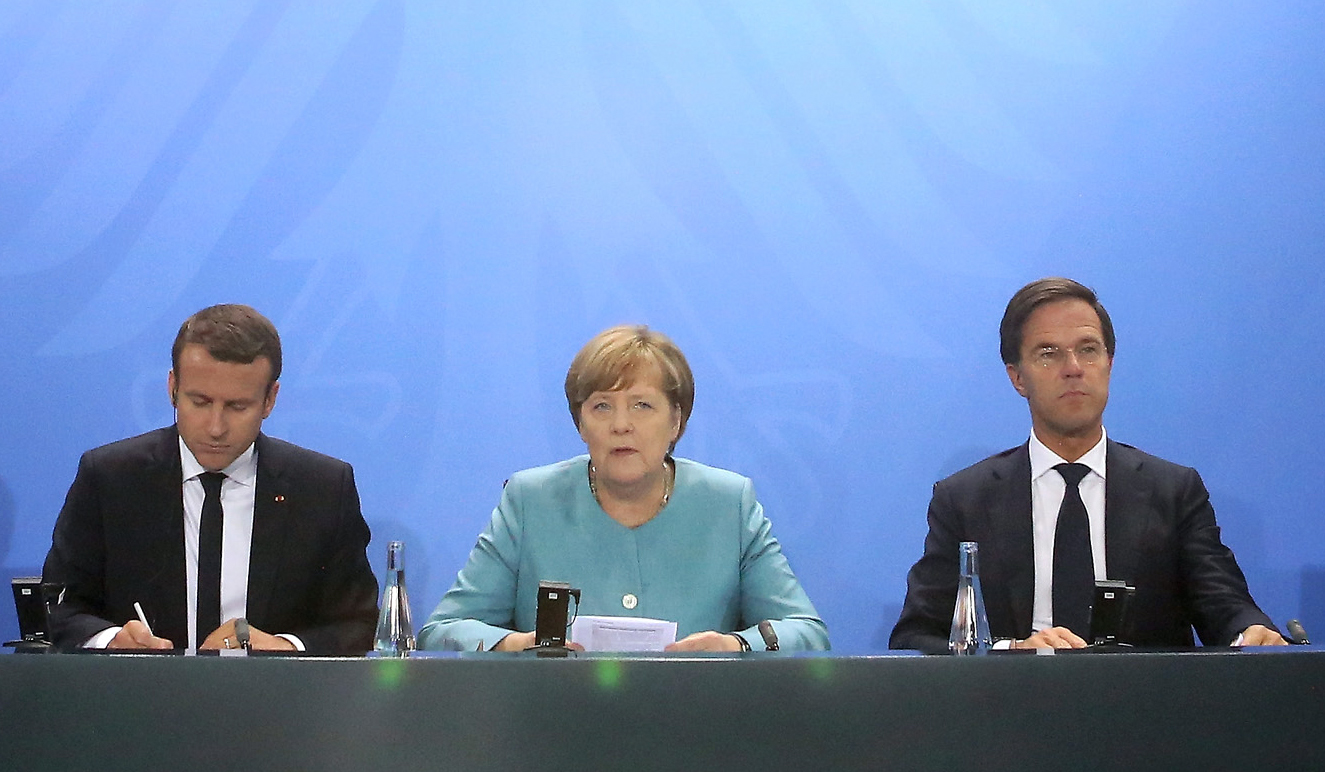
It is good that the Netherlands made its voice heard, but all things considered one might ask if this policy will work. Did the new cabinet forget how constructive the Dutch-German cooperation has been until now? And did they forget that France and Germany certainly cannot decide on their own on matters like a European Monetary Fund, the Banking Union or the distribution of refugees. These are debates that concern all member states. And let there be no misunderstanding about it. In the German sphere of influence outlined above it will be determined how much space Macron has to implement his ideas. The Netherlands has traditionally had strong positions in that sphere of influence: the Dutch central bank, but also the finance ministry and the prime minister, not forgetting CDA leader Sybrand Buma, who, as a member of the Christian Democrat family, has good connections with the German sister parties. They all could influence important German stakeholders when they are willing to actively engage in the debates on the future of the European Union.
The Netherlands can help Merkel to translate Macron’s proposals into a German style, so as to reassure both German and Dutch voters and cause Macron no unnecessary loss of face. Particularly since Germany has been slow to act, there is every opportunity for the Netherlands to put its own mark on the German sphere of influence. But then the Dutch government coalition, Hoekstra and Buma included, must continue to think creatively, not face into the wind and constantly reject proposals from elsewhere. That would not only bring the Netherlands little benefit, but would also entail risks. The Netherlands is viewed by some member states, France in particular, as a tax haven. If the Dutch government gets up on its high horse, the issue will bounce back. Paris has already made known that the annual rebates for the EU’s long-term budget could be scrapped immediately instead of being phased out over five years.


0 Comments
Add new comment