

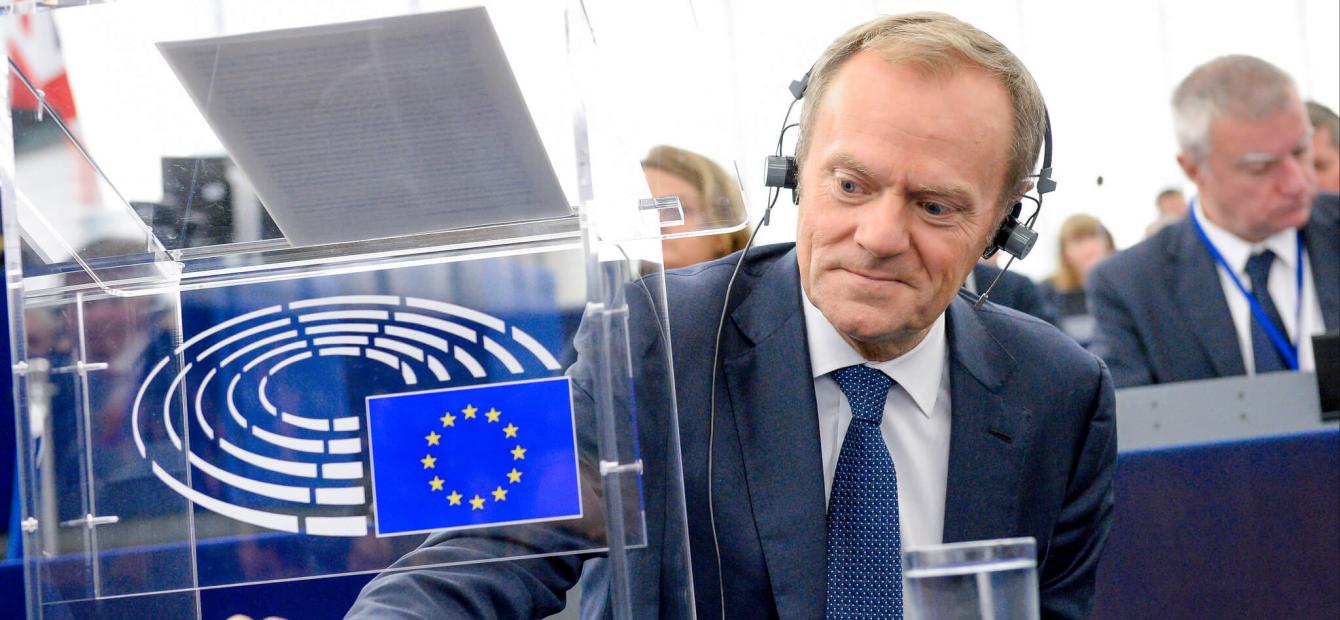
Which coalitions could result from Tusk’s ‘Leaders’ Agenda’?

European Council President Donald Tusk has three issues at the top of his ‘Leaders’ Agenda’: eurozone reform, migration and the future financing of the EU. Given the major interests at stake, and in view of Brexit, which disrupts the balance of power in the EU, this ‘Leaders’ Agenda’ raises the question of whether these three issues could give rise to more or less permanent coalitions of member states, and, if so, how such coalitions will influence the coming negotiations.
When Herman Van Rompuy began his term as the first permanent president of the European Council in early 2010, he drew up plans for heads of government to meet at fixed times to steer the course of the European Union. His good intentions were brutally thwarted, however, when the financial and economic crisis exploded in 2010. Van Rompuy had his hands full dealing with the crisis. It was nearly the defining theme of his five-year term of office.
His successor Donald Tusk also faced existential crises: first the influx of large numbers of refugees into Europe, particularly from Syria, and then Brexit, but also the election of President Trump, which clearly underscored a trend towards American estrangement from Europe. It was only after Tusk was reappointed in March 2017 and the Brexit shock had worn off somewhat that he realised the time was ripe for the European Council to fulfil its role as a key player.
An infernal task for the EU: solving difficult issues while maintaining unity
Under the ‘Leaders’ Agenda’ Tusk took the initiative of putting certain key issues regularly on the European Council agenda in order to take hold of the major challenges facing the EU. The three issues at the top of the Leaders’ Agenda are: eurozone reform, migration and the future financing of the EU.
“The aim is to step up efforts to deliver also on the most difficult issues, while preserving the unity of the EU.” Underlying this apparently simple sentence on the Leaders’ Agenda website
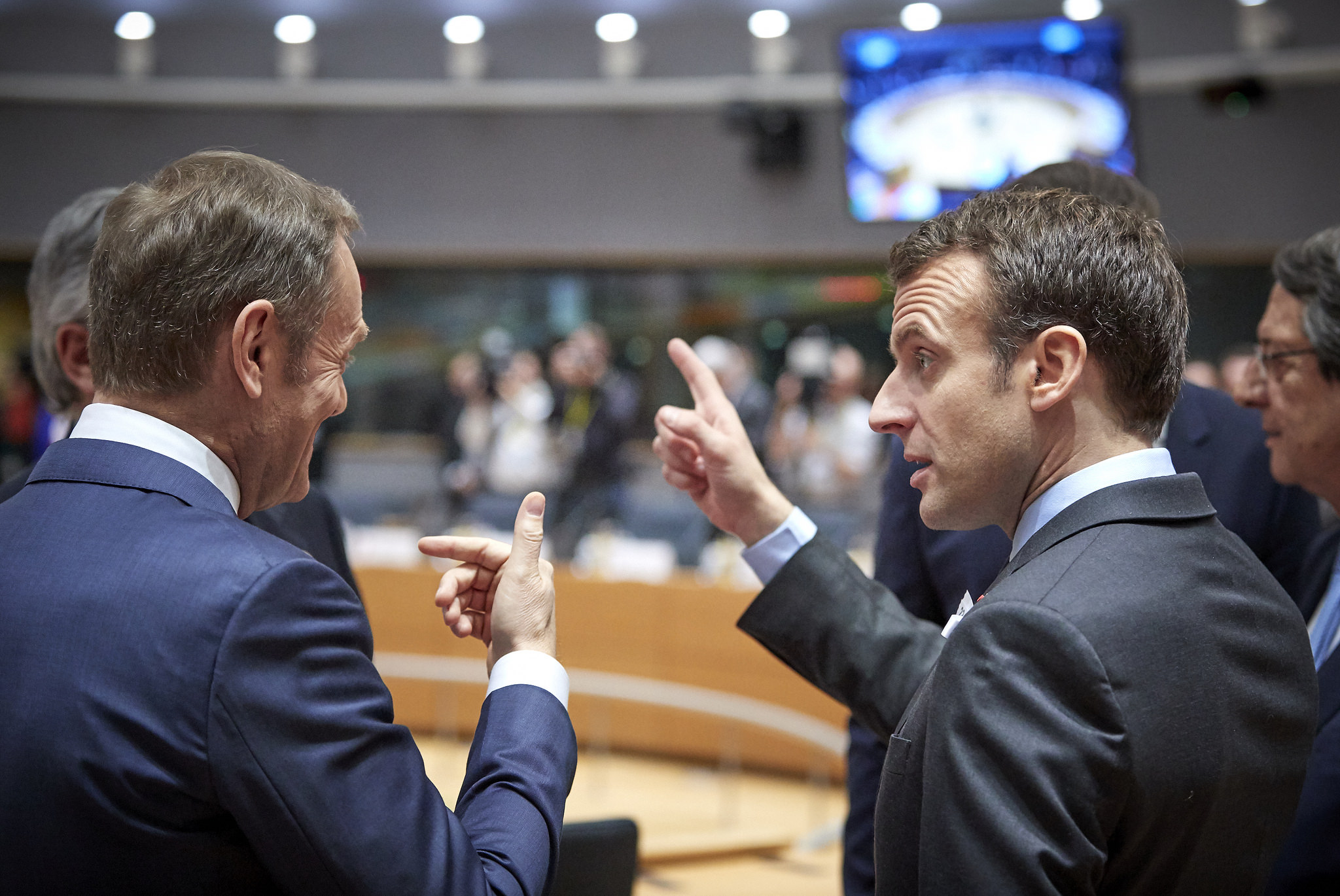
Tusk’s quest to square the circle is also motivated by a desire to take the wind out of the sails of President Macron. The energetic and determined Frenchman wants to see a strong European core coalesce around France and Germany, based on the eurozone. The Leaders’ Agenda – which on this point has clearly been influenced by European Commission president Jean-Claude Juncker – must show that the 27 can also produce results, thereby preventing fresh divisions in Europe.
This will require the bridging of divisions within the EU that are both numerous and follow no fixed pattern. In very broad terms, they sometimes reveal a North-South divide, sometimes East-West and sometimes both at the same time. This is nothing new in itself, but the differences are deeper than ever.
Given the major interests at stake, and in view of Brexit, which disrupts the balance of power in the EU, Tusk’s ‘Leaders’ Agenda’ raises the question of whether these three issues could give rise to more or less permanent coalitions of member states, and, if so, how such coalitions will influence the negotiations.
Eurozone reform
The North-South divide is particularly evident in the first issue: eurozone reform. During the financial crisis, the circumstances forced far-reaching measures that strengthened the eurozone. These included new agreements on budgetary discipline, but also key elements of a banking union, such as European supervision of all systemically important banks and arrangements to wind up banks that get into difficulties and cease their operations.
There are two crucial questions: how should the banking union be completed and should the EU be given more financial tools to adjust its course in the event of an economic crisis? On the latter point President Macron in particular has repeatedly proposed giving the eurozone a substantial budget of its own. He believes there should also be a fully-fledged eurozone finance minister and preferably also a separate eurozone parliament.
Northern countries such as Germany and the Netherlands are totally opposed to these proposals. These countries want responsibility for sound budgetary policy to rest with the member states. They see the EU as having only a supervisory role. A permanent North-South transfer of financial resources should be avoided. There may be agreement on the theoretical desirability of completing the banking union, but not on the method.
Coalition-building usually suggests cooperation between parties pursuing the same interests, but that is not always necessarily the case
The issues on the one hand concern the establishment of a European deposit guarantee scheme and on the other hand a backstop for banks, specifically the conversion of the European Stability Mechanism (ESM) into a European Monetary Fund (EMF), with facilities, for example, to recapitalise banks in times of crisis. But before contemplating risk sharing, the northern member states are first demanding a risk reduction in the southern member states. Particularly in Italy, but also in Greece, for example, banks’ balance sheets are laden with government bonds
Given this North-South divide, which coalitions will arise with regard to eurozone reform? Coalition-building usually suggests cooperation between parties pursuing the same interests, but that is not always necessarily the case. Coalitions are also possible between countries with opposing interests. A prime example is the Franco-German axis.
Germany’s significance and views, for example, usually make it a natural and attractive ally for the Netherlands, but it can also be an uncertain partner, because the strategic collaboration with France and the collective interest of European unity ultimately prevail over the substantive interest. The strength of coalitions of opposing interests, particularly the Franco-German axis, lies in the fact that the compromise they are able to reach is usually also acceptable to other parties or, failing that, provides the essential basis for a solution. This situation is expected to arise in the reform of the eurozone.
In response The Hague is turning to a coalition with three Northern member states, three Baltic states and Austria. This positions the Netherlands diametrically opposite Paris. How strong is this alliance? In most cases coalitions of like-minded parties are not particularly cohesive. Individual members can be pared away fairly easily, for example under pressure from Paris or Berlin. An unusual feature in this case is that Denmark and Sweden, neither of which is an EMU member, are part of the coalition. This has plainly caused irritation in France. But these are countries with a good reputation for budgetary discipline and that is precisely where Macron could yet be severely hit by countries such as Italy, particularly at a time when a government of anti-European parties is formed in Rome.
Another point is that major interests are at stake and for the moment there are hardly any differences between Rutte’s coalition partners. Hence this coalition could play a strong role. Germany, which is not overly enthusiastic about the French ideas, will value support from Rutte’s coalition in this game as it seeks to preserve its own relationship with Paris.
Migration
On the migration issue the divisions run partly North-South, but mainly East-West. Northern member states accuse countries such as Greece and Italy, where most migrants arrive, of lax application of the asylum procedures, putting pressure on the Dublin Regulation system whereby the country of arrival is responsible for processing asylum applications. This is also endangering the Schengen system of open internal borders. The southern member states in turn accuse the northern member states of failing to understand the problems they face.
But the deepest gulf is between East and West. The northern member states are in principle prepared to show solidarity with the southern countries by agreeing to take in refugees, provided that they police their external borders more effectively and comply with asylum procedures. But countries such as Hungary, Poland and Slovakia are completely opposed to that, sometimes deploying xenophobic arguments. What makes the division so unbridgeable is that it is not merely a simple question of distributing refugees; the differences are based on an entirely different vision of society. The fundamental values on which the EU is based appear to be no longer shared by some former East Bloc countries, as evidenced by their rejection of multiculturalism and attacks on the principles of the rule of law, including an independent justice system and a free press. Migration is thus not only a management problem for which pragmatic solutions must be found but also a question of values and fundamental rights.
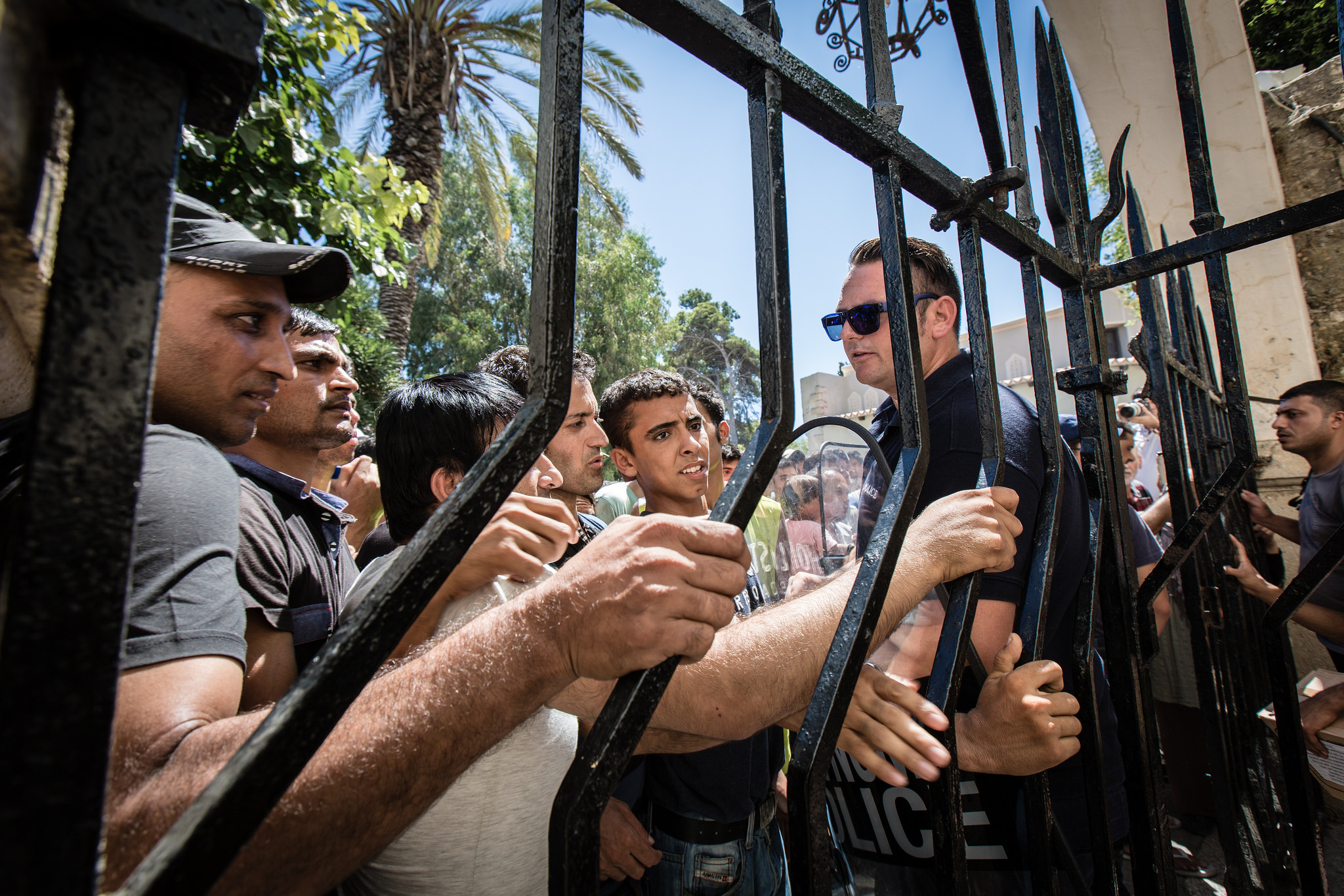
The EU has great difficulty in responding to this gulf between East and West. Coercive measures such as those the European Commission is now trying to impose on Poland have so far achieved little and member states are not currently prepared to stand up against a partner. Both North and South will therefore be confronted with a small but fierce coalition of the Visegrad Group that will continue to oppose refugee quotas and hence impede a comprehensive solution to the migration issue.
The long-term budget
This will undoubtedly have a negative impact on the third issue on the Leaders’ Agenda: the EU’s long-term budget. Poland, currently by far the largest net recipient of EU funds (around €11 billion per year), will literally pay a price for its unconstructive attitude to migration issues. The forthcoming financial negotiations will be more difficult than ever this time due to the departure of the United Kingdom, which in net terms will cost the EU around €12 billion a year. The divisions on this theme run broadly North/West to South/East but may differ greatly on individual topics.
There are four dominant themes. The first is the division between countries (particularly in the South and the East) that want to increase the size of the long-term budget and a group of northern countries, including the Netherlands, Denmark and Austria, making up the hard core, that want to limit the size of the budget as far as possible. The second is a division between net payers and net recipients, that is followed by a division between the member states on what the EU budget should now be focused on: traditional themes such as agriculture and cohesion, or modern subjects such as innovation and border protection. Finally, there is a group of mainly northern countries that want to link the distribution of resources to conditionality and a group of mainly eastern countries that oppose it.
The Commission is holding a knife to the throats of countries such as Poland and Hungary by linking their receipts from the EU budget to compliance with the principles of rule of law
The European Commission presented its proposals for the Multiannual Financial Framework on 2 May. The interesting point about these proposals is that in certain areas they interconnect the three issues on the Leaders’ Agenda. Some ideas are intended to simplify solutions, while others throw the divisions into sharp relief. For example, the Commission proposes to devote part of the EU budget to stabilisation measures in the event of economic difficulties. That appears to offer President Macron a helping hand, but given the limited amount of budget involved, it is highly questionable whether he will perceive this as a real contribution. For the northern countries it could offer a way out for precisely that reason.
The Commission is also offering additional money for migration: on the one hand by also supporting northern countries with the reception and integration of refugees and on the other hand by increasing the funds for border controls in the southern member states. But it is holding a knife to the throats of countries such as Poland and Hungary by linking their receipts from the EU budget to compliance with the principles of rule of law. Both countries have firmly rejected this intention. In practice it will still be difficult to implement, but the mere principle will already annoy Eastern European countries.
Which coalitions will play a role in the long-term budget? Will Rutte’s coalition for the eurozone also provide a basis for this subject? That question is relevant because in this area in particular the UK’s departure is problematic for the Netherlands. For example, in 2014 Dutch prime minister Balkenende and British prime minister Tony Blair jointly blocked a compromise proposal from the then Luxembourg presidency led by prime minister Juncker on the EU’s long-term budget and subsequently negotiated a more favourable agreement under the British presidency. That possibility has gone forever.
It is important to realise that interests rarely run in parallel in different fields. A particular member may be an ally in one case and an opponent in another.
An anxious time for the EU
The EU therefore faces an anxious time. The external geopolitical and economic shifts will impact the EU and its member states. President Tusk’s “with friends like that, who needs enemies?” comment in Sofia aimed at President Trump is symptomatic. The withdrawal of the US, the dilution of the multilateral system, the UK’s departure from the EU, the divide-and-conquer policy in Moscow, the destabilising war in Syria, the financial fragility and the emergence of nationalistic movements are major forces confronting the EU.
The Leaders’ Agenda is an attempt to get to grips with a number of essential issues. If member states are able to move closer to each other on immigration and the long-term budget and if they succeed in mitigating and curbing financial risks and bolstering Economic and Monetary Union, including the completion of the banking union, the EU will be stronger and more united. That is possible, but it will demand statecraft from all European leaders.



0 Reacties
Reactie toevoegen