

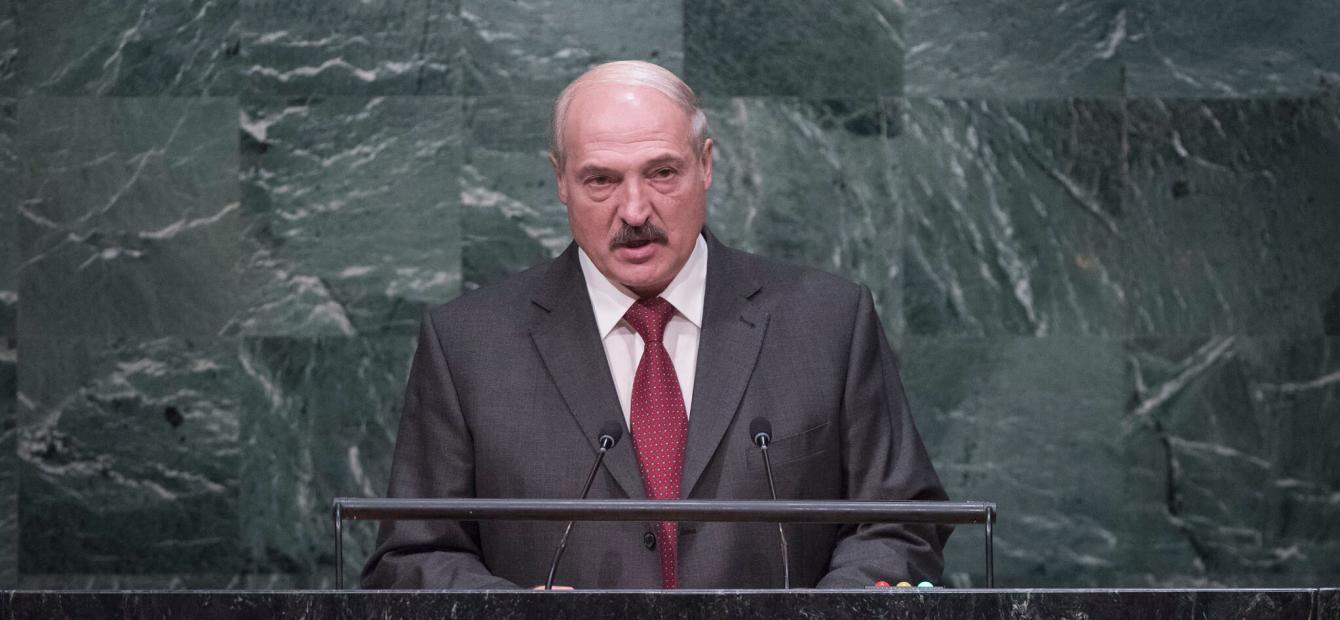
How Lukashenko internationalises the Belarusian crisis

After more than ten months of political stalemate in Belarus following the disputed presidential election in August 2020, the international fallout from the forced landing of a Ryanair flight may have significant domestic repercussions for Belarus. President Alexander Lukashenko has elevated what was principally a domestic conflict to the international level, threatening the very independence of Belarus.
The forced landing of a Ryanair flight on 23 May 2021, ordered by Belarus’ president Alexander Lukashenko to arrest journalist Roman Protasevich
The protestors were supported by strike action at some of the country’s biggest manufacturing and industrial plants. At the same time, students at some of the most prestigious universities began a campaign of civil disobedience, joined in some cases by former police officers and civil servants who resigned from their positions in support of the anti-Lukashenko movement.
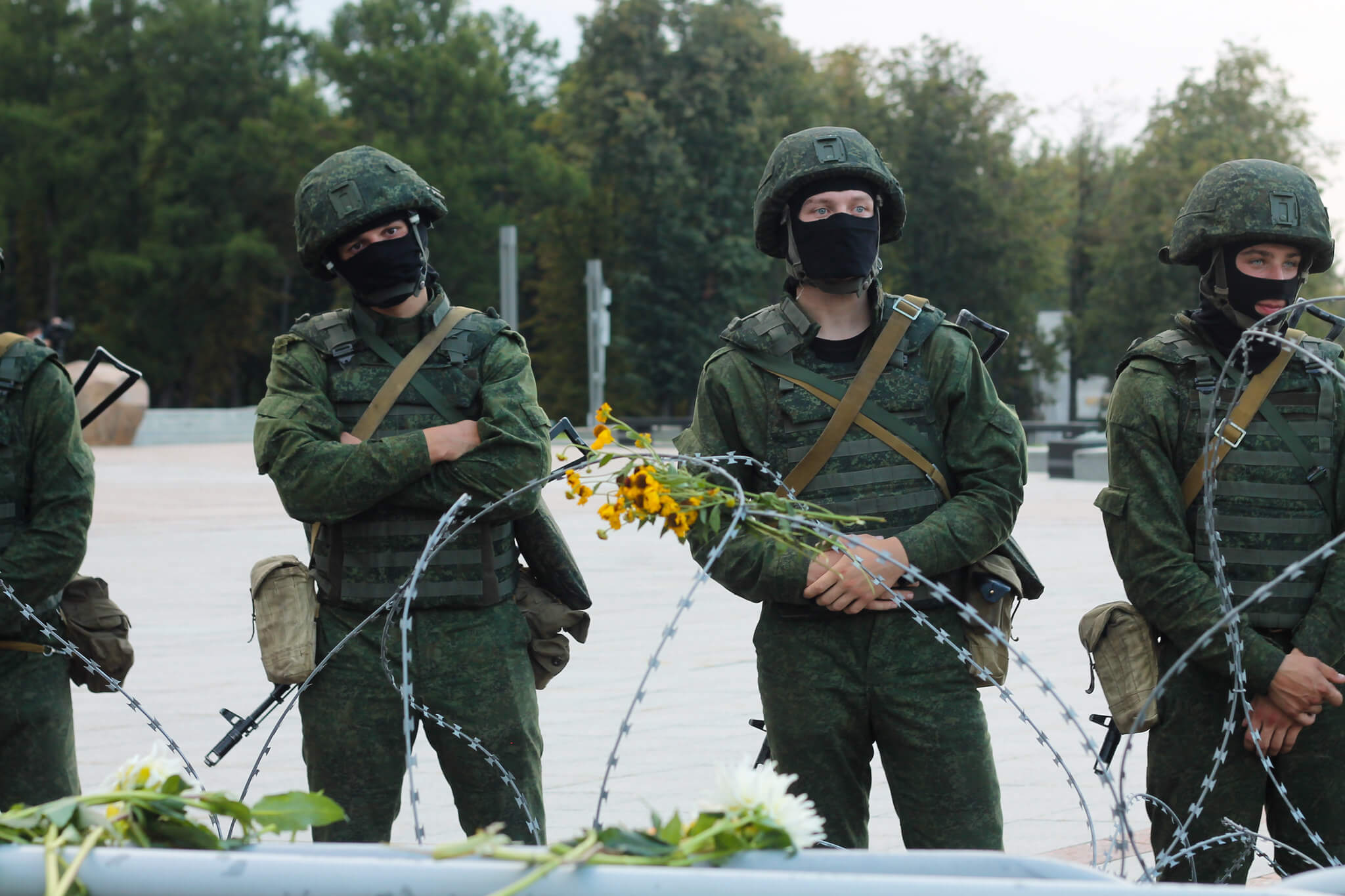
Today, things look very different in Belarus. Street protests have stopped following a crackdown by the police and judicial authorities. The industrial action was called off within days after threats of mass sackings and criminal prosecutions against the organisers. Dozens of students were expelled from their place of study, with some being arrested and charged with rioting and public disorder offences. Meanwhile, the civil service and state security apparatus engaged in their own purge of disloyal elements, removing hundreds of officials from their positions.
The result of all these actions has been an uneasy calm, allowing Lukashenko to reclaim the political momentum he lost in late 2020 and to give the appearance of normality to much of the outside world.
Lukashenko has been quietly engaged in a process of administrative, political, and constitutional change
Whilst the exiled opposition continue to try and spread their message via social media and at high-level meetings with European leaders, most of the international media had switched off and many in Brussels had determined that Belarus belonged in the ‘too difficult box’.
After three rounds of EU sanctions against the country, many in the EU elite had privately accepted the uneasy status quo, hoping that when Lukashenko finally did leave office, the EU would be in a position to capitalise on that change.
Lukashenko’s constitutional agenda
Since late 2020, free from the immediate pressure of daily street protests and statements of condemnation by the EU, Lukashenko has been quietly engaged in a process of administrative, political, and constitutional change.
The most important and visible of these changes is the proposal to reform the constitution and put it to a public vote in the first quarter of 2022. Constitutional reform is not a new idea by Lukashenko, it is something he has spoken about on several occasions since 2018.
The framing of the constitutional debate is uniquely Belarusian, one in which Lukashenko publicly acknowledges that he has extraordinary authoritarian power. Not least the power to issue presidential decrees with the full force of the law, but that any successor should not be so lucky. Lukashenko argues that a new balance should be found between the president, government, legislature, local government, and judiciary.
In addition, Lukashenko has made it known that he would favour creating a constitutional footing for the currently ad hoc All-Belarusian People’s Assembly, a body which resembles the former congresses held during the Soviet era.
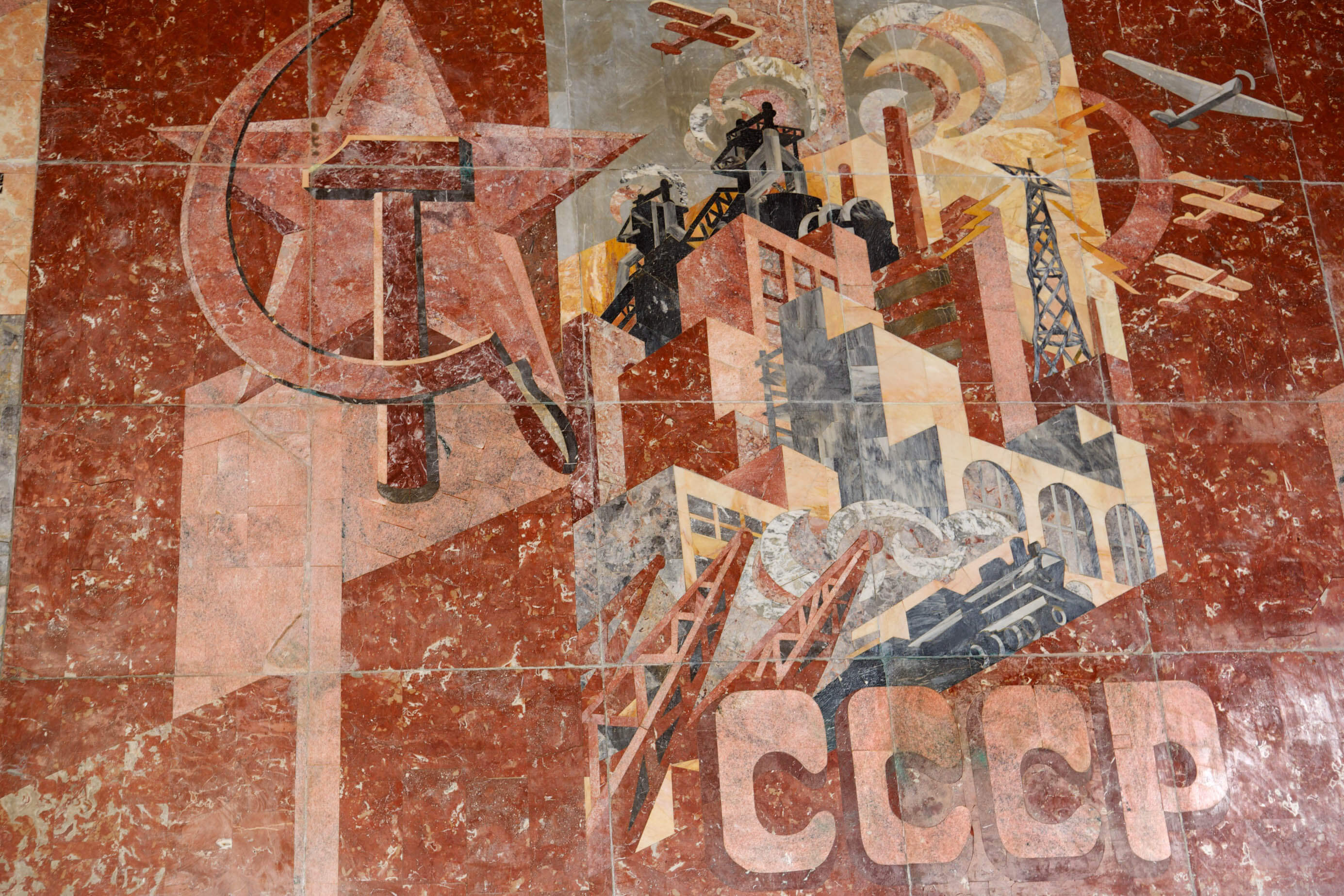
Constitutional Court chairman Petr Miklashevich has tabled constitutional amendments to make the Assembly the “supreme representative body of democracy” in Belarus, and also to allow the Assembly to determine aspects of presidential impeachment law.
Changes to the Security Council
Alongside the constitutional changes, Lukashenko has also been putting in place contingency planning in the event of his sudden death or incapacity. The existing constitutional provision states that the prime minister temporarily assumes the presidency, with a new election being held between thirty and seventy days later. The interim president also assumes the chairmanship of Belarus’ Security Council.
Is this Lukashenko being paranoid about his own personal safety, or a prudent exercise in emergency planning?
The most high-profile change is a new presidential decree signed by Lukashenko in May 2021, which establishes the rules of procedure within the Security Council for how the country should be governed in the event of Lukashenko’s death.
What is most significant is that the decree requires all decisions of the Security Council to be made via a majority vote of members, rather than the interim president governing alone. In a time of crisis, the Security Council would become the de facto collective leadership of Belarus.
Lukashenko’s new decree seeks to achieve two things. The first is to operationalise existing constitutional provisions in order to make clear the working methods that will be used in these circumstances. The second is to provide a safeguard against a renegade prime minister, possibly in the circumstances of a coup against Lukashenko.
Is this Lukashenko being paranoid about his own personal safety, or a prudent exercise in emergency planning? Only time will tell.
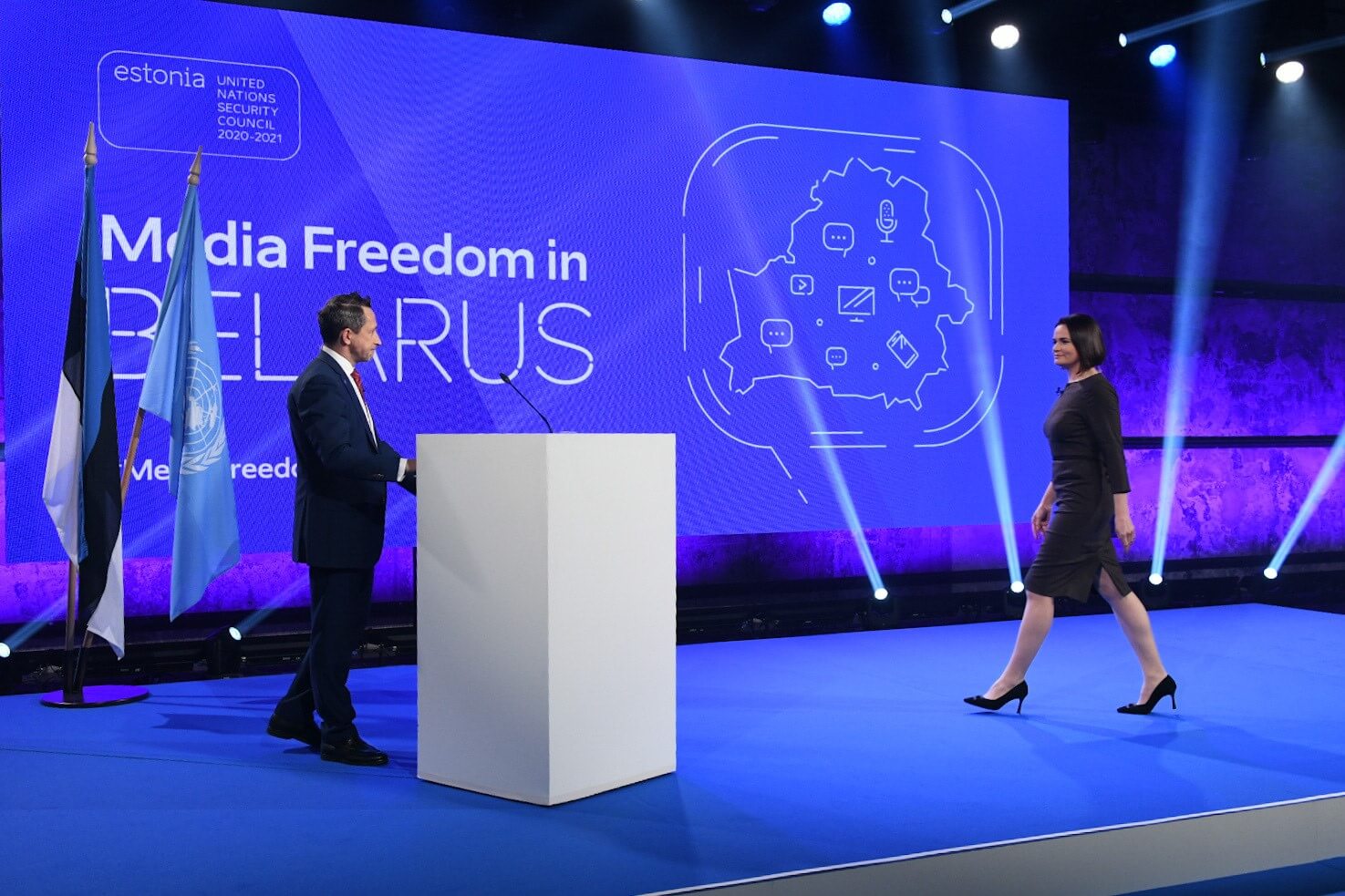
Other proposals currently under consideration include a new legal framework for the development of new political parties. These are potentially a preparation for a reformed political system that will lean more towards parliamentarism, rather than presidentialism. Lukashenko’s newfound enthusiasm for political parties should be understood in terms of him seeking to capitalise on the divisions that have emerged within the opposition.
For years, Lukashenko made commitments to implement elements of the Union State
Whilst Svetlana Tikhanovskaya remains the EU’s favoured opposition politician, other leading figures – such as Viktor Babariko, Maria Kolesnikova and Pavel Latushko – have all created their own political parties in the hope of attracting support in a future parliamentary Belarus. Ensuring that no single party can emerge whilst he is still in office, Lukashenko hopes to be able to divide and conquer.
The (in)famous Union State roadmaps
The most visible constitutional and political change being embarked upon by Belarus remains the Union State integration programme with Russia.
The Union State process has been reinvigorated in Moscow and reluctantly so in Minsk. For years, Lukashenko made commitments to implement elements of the Union State, making promises in public and then quietly ditching them in private.
According to Belarusian officials, thirty roadmaps have been drafted in recent years, covering all aspects of the integration process, including within the spheres of judicial cooperation, monetary union, energy, transport, customs and tax.
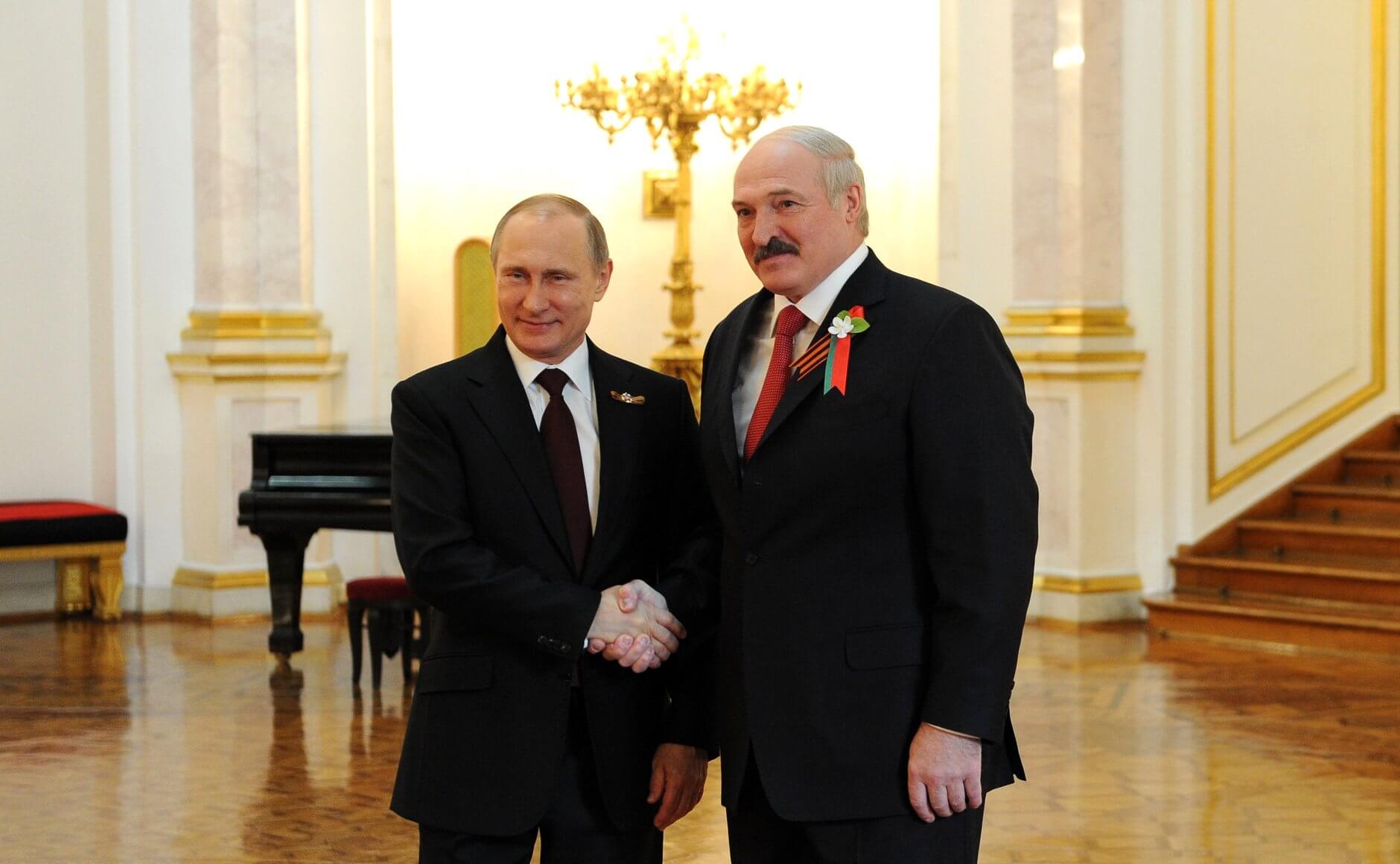
Officials in Minsk briefed journalists that Lukashenko’s meeting with Russia’s president Vladimir Putin in Sochi at the end of May 2021 included a discussion about the roadmaps, suggesting more than twenty of them are now ready for signing.
It was also at this meeting that Putin confirmed the next 400 million dollars tranche of the loan from Russia to Belarus. Since the crisis started, Russia has committed 1 billion dollars to help keep the Belarusian economy afloat. The first 500 million dollars were transferred to Minsk in December 2020.
Why has Lukashenko decided now is the moment to put the international spotlight on himself?
Given the significant investment Russia is making in Belarus, it is reasonable to assume that operationalising the Union State roadmaps is a pre-condition for continued support. From Moscow’s perspective, loaning money to Minsk is a necessary cost to ensure that their last remaining strategic ally on their western border remains close. The cost of losing Belarus would be many more times the cost of supplying emergency loans.
Little love lost between Lukashenko and Putin
It is in this context that the actions by Lukashenko in the past weeks are so surprising and revealing. The domestic situation appeared to be calming, his plans for a referendum on a revised constitution were on track, and the prospects for deeper Union State integration limited. Why has Lukashenko decided now is the moment to put the international spotlight on himself?
Putin keeps Lukashenko and Belarus close, not because of some personal affection for the leader or country, but for strategic and geopolitical reasons. Belarus remains the last politico-military ally on Russia’s western border, so retaining the country within its historic sphere of influence is a national priority for Russia.
Whilst that strategic importance extends to Belarus, it does not necessarily extend to Lukashenko himself. Many Kremlin observers have surmised that Putin would be perfectly content if another pro-Russian pragmatist could be cultivated or found amongst the Belarusian elite.
Politicians such as Andrei Savinykh and Oleg Gaidukevich, both members of the National Assembly, are often touted by players in Moscow as possible contenders. Even jailed former presidential candidate Viktor Babariko and his new political party, Razam, have been considered possible successors.
Lukashenko is aware of these discussions and knows his position is more dependent than ever on Putin. It is conceivable therefore that Lukashenko undertook the unilateral action against the Ryanair flight in order to back Putin into a corner. Lukashenko’s calculation being that Putin will have to support him or risk looking divided and weak against Western pressure. In effect, forcing Putin to back him or risk allowing Western interests to carve Belarus away from Russia.
Belarus still recognises Crimea as part of Ukraine
The subsequent supportive actions by Russia suggest that this message was understood. Alongside the advancing of the loan, Russia also banned several flights from Air France and Austrian Airlines as a punishment for avoiding Belarusian airspace.
At their most recent Sochi meeting, Lukashenko and Putin agreed to expand the number of flights between Belarusian and Russian cities, including possible flights bypassing Ukrainian airspace to Sevastopol in Crimea. Belarus still recognises Crimea as part of Ukraine, a position which looks increasingly untenable if Minsk is to continue receiving support from Moscow.
The beginning of the end?
In forcing the Ryanair flight to land in Minsk, Lukashenko forced the hand of not just Russia, but also the EU to respond. The European Council’s decision to coordinate the closing of their airspace to Belarusian registered aircrafts, and stopping EU registered aircrafts from overflying Belarus, was never considered in Brussels until Lukashenko’s actions.
Without this incident, it is likely the EU would have continued with their approach of piecemeal sanctions. Instead, Lukashenko gave the EU the ammunition it needed to significantly escalate the international sanctions regime against Belarus.
In light of the EU and other Western sanctions, Russia now has no choice but to embrace Belarus and – for the time being at least – Lukashenko himself. Kremlin insiders have let it be known that Putin’s patience with Lukashenko is running out. Whilst Lukashenko is secure for now, as he still retains both the support of Moscow and his own security services, it is clear that his period in office is unlikely to extend beyond the next presidential election.
Lukashenko always wanted to determine the timing and nature of his departure from office himself, leaving Belarus as a sovereign state, carefully balanced between competing powers. However, because of his own actions, he has almost certainly brought forward his departure date and will leave Belarus more dependent than ever on the whims and wishes of Moscow.


0 Reacties
Reactie toevoegen