

Three misunderstandings about China’s policy on Taiwan

Speculation about the odds of war between China and Taiwan seems to be growing by the day. In this final part of a trilogy on the China-Taiwan conflict, Xiaoxue Martin (Clingendael Institute) outlines the three main misunderstandings about China’s stance on Taiwan that stand in the way of rational policymaking.
…And then there were fourteen. Since December last year, Taiwan holds only fourteen official diplomatic allies
Taiwan’s dwindling number of diplomatic allies is a clear reflection of the rising pressure it faces from China, as the latter becomes a more attractive partner for Taiwan’s allies due to its booming economy and growing power. With a growing amount of Chinese military activity near Taiwan and increasingly strident rhetoric from both sides of the Taiwan Strait, tensions have risen significantly.
This rightly worries not only Taiwan and its 23 million inhabitants, but also the United States and European Union. China’s president Xi Jinping paints cross-Strait relations as “purely an internal matter for China, one which brooks no external interference”.
However, there are plenty of reasons why the US and EU should and do care for avoiding escalation. Powerful motivations are Taiwan’s centrality to the security balance in the Indo-Pacific, the rising threat of military conflict that could disrupt global supply chains and flows, and a Taiwanese democracy that places itself at the forefront of the fight against authoritarianism.
Several harmful misunderstandings about China’s policy continue to exist in the debate on Taiwan
While the US does not officially recognise Taiwan or support Taiwan’s independence, “maintaining strong, unofficial relations with Taiwan is a major US goal, in line with the US desire to further peace and stability in Asia”.
Meanwhile, diplomatic relations with China being a precondition, the US and EU’s (economic) engagement and cooperation with China has grown immensely in the past decades. However, as recent events have shown, this balance has become more and more difficult to maintain.
For the EU and US to best protect their interests, good policy requires thorough understanding of China’s stance on Taiwan. This is hardly a radical statement, to be sure, yet several harmful misunderstandings about China’s policy continue to exist in the debate on Taiwan. This article will clear up the three main misunderstandings that stand in the way of rational policymaking.
#1: China’s Taiwan policy has radically changed under President Xi
It is undeniable that China’s military and diplomatic pressure on Taiwan has increased in recent years. The re-establishment of relations with Nicaragua and the growing number of Chinese aircraft entering Taiwan’s self-declared Air Defence Identification Zone are clear indicators of this trend.
Moreover, President Xi has warned several times that China does not renounce the use of force.
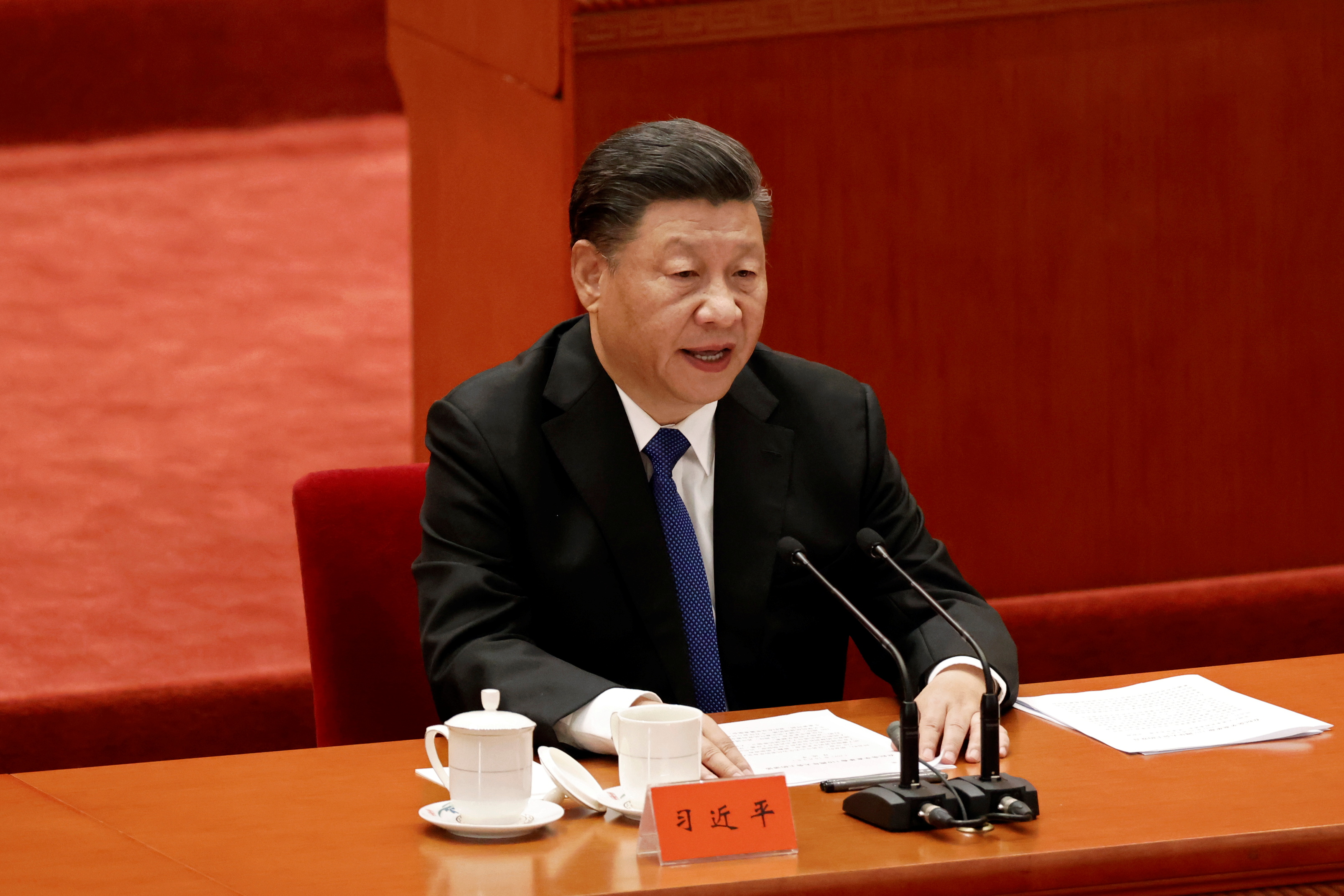
There are several issues with this understanding. Of course, President Xi himself denies a change in China’s stance, maintaining that China has always been consistent in its policy and refusing to take the blame for rising tensions.
In reality, President Xi actually sustains – rather than departs from – the same fundamental elements of China’s Taiwan sticks-and-carrots approach as those before him.
In the official Chinese narrative, China is not the instigator, but the victim that is forced to defend itself
Similarly, like his predecessors, President Xi still upholds the ‘One Country, Two Systems’ formula for reunification, under which Hong Kong and Macao are part of China, and continues to promote economic integration and exchanges of views to strengthen the ties between China and Taiwan. Taiwanese independence has always been a red line for China, and the country’s goals have remained consistent throughout the years. What has changed, are the means to pursue them.
It is also good to keep in mind what the conflict looks like from China’s perspective. In the Chinese view, others are to blame for the increasing tensions: Taiwan for seeking more support for independence from other countries, and the US and European countries for giving this support and seeking to contain China.
China also closely watches domestic politics in Taiwan. During periods when the independence-leaning Democratic Progressive Party (DPP) holds the presidency, as opposed to the more Beijing-friendly party Kuomintang (KMT), relations are sure to sour.
President Xi’s stance on Taiwan thus has been a continuation of policy so far. However, there are indications that a shift in China’s Taiwan policy might be announced at this year’s 20th Party Congress, China’s biggest political event of the year. Senior policymakers and official policy documents have started signalling this with the use of a new term since November 2021: “[the Communist] party’s overall strategy for resolving the Taiwan issue in the new era.”
#2: China will invade Taiwan as soon as it has the military might to do so
A second misunderstanding about the Chinese policy on Taiwan, is that China will invade Taiwan as soon as it has the power to do so. China’s military capabilities have indeed grown substantially, leading to headline-grabbing predictions that China could be capable of an invasion in the next three to six years.
These warnings should not be taken lightly. However, we should differentiate between capacity and intention: just because China might have the military capacity to stage a successful invasion, this does not necessarily mean that it will choose to do so.
President Xi maintains that China has “patience and will strive for the prospect of peaceful reunification with utmost sincerity and efforts”.
Military pressure is not the sign of a trigger-happy China, but an instrument to deter Taiwan from proclaiming independence
There are many reasons why China is not eager to pursue a military clash. To name a few, an invasion would severely damage China’s reputation, risk economic and diplomatic repercussions from other countries, and require immense resources to accomplish and maintain the military occupation of Taiwan.
In other words, the costs of invasion are incredibly high regardless of military capacity, making it a risky option of last resort. Military pressure is not the sign of a trigger-happy China, but an instrument to deter Taiwan from proclaiming independence.
While China would like to achieve reunification sooner rather than later, there is also no hard deadline that would force China to invade if less drastic means have not been exhausted yet. Some speculate that President Xi’s 2049 target of the ‘great rejuvenation of the Chinese nation’, a core concept of his leadership, is also a deadline for Taiwan’s reunification.
The Chinese official discourse indeed often implicitly associates rejuvenation with reunification. However, the 2049 deadline has never been explicitly linked to the goal of reunification with Taiwan itself, as setting a hard deadline publicly could push China into a corner it does not want to be in by 2049.
Of course, military conflict remains possible. We should prepare for the worst while taking the necessary measures to prevent a clash. However, we should avoid alarmism and keep in mind that war is not inevitable. Overstating the likelihood of invasion is a danger in itself, and can lead to miscalculation and mistakes.
#3: Whatever is said about Taiwan in China, is official policy
The third misunderstanding relates to the diversity in Chinese opinions on China’s Taiwan policy, or the perceived lack thereof. It is not true that Chinese people speak with one voice on Taiwan, or that whatever is said about Taiwan in China is official policy.
Although there is indeed little room for public debate on the Chinese Communist Party’s (CCP) position and the fundamental elements of Taiwan policy, there still exist different views on cross-Strait relations. Some voices are decidedly more confrontational and hawkish, while others are more representative of the official policy.
Very simply said, an editorial in a nationalist Chinese newspaper should not be weighed as heavily as a statement by President Xi, or be presented as speaking ‘on behalf of’ all of China. This should not have to be said, yet, this is exactly what often happens in coverage on Taiwan.
A recent example: in late 2020 Hu Xijin, editor in chief of the notoriously nationalist state media Global Times, wrote in an opinion piece that “The mainland should clearly warn the DPP authorities [the governing party in Taiwan] that if the Taiwan military dares to open fire at mainland warplanes flying over Taiwan, it means war”.
In conclusion, these misunderstandings might all make eye-catching headlines, but will not further true comprehension of China’s policy on Taiwan or reduce tensions across the Taiwan Strait. Alarmism about Taiwan will only create a self-fulfilling prophecy, and obscure the nuances in the conflict that are essential to understanding it. We would do well to stay clear-eyed, and avoid falling into the pitfalls of sensationalism in the debate on Taiwan.



1 Reacties
Load comments
All but one path
China’s “willingness” to engage in a diplomatic and peaceful solution to the “Taiwan issue” can’t be taken as face value, while they continue to reiterate and underscore that reunification be unconditional and absolute. They are unwilling to deviate from the 1992 consensus either. This does not leave much room for deliberation, or alternate pathways forward. While it is true, Taiwan has never been independent from China, it’s also true that the PRC has never legitimately governed the Island, only claiming it as its own. Arguably, only the KMT has ever been the only legitimate authority to govern both the Mainland and Taiwan. Will a war come to pass? It is doubtful, for the economic and political reasons outlined in the article; however, for another reason I put forward: The term “war”, civil or otherwise, would mean the PRC tacitly accepts the governing institutions in Taiwan as a legitimate authority, as a independent entity it is fighting.
But when we look at the Ukraine situation, it is not difficult to fathom that one day, China may initiate its own “special operation” to achieve its policy goals.
Reactie toevoegen