

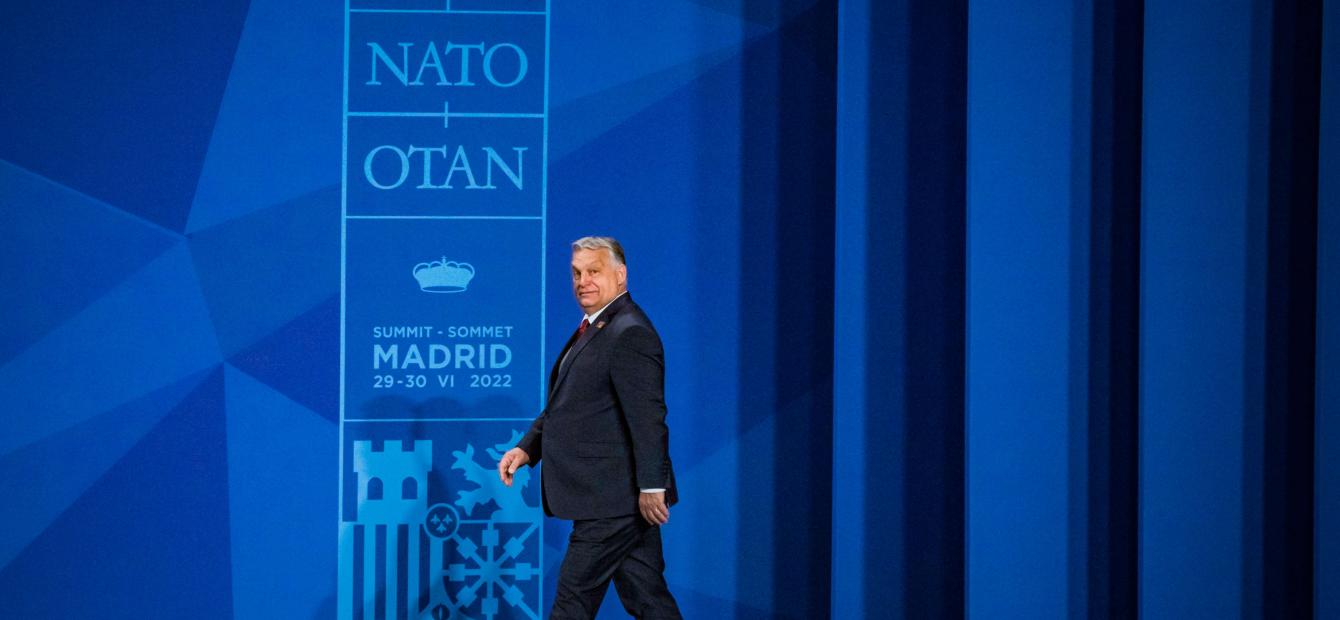
Hungary clashes with EU, but what about NATO?

Many people are aware that Hungary and the European Union find themselves in a complex relationship, mainly as they do not see eye to eye on the rule of law. Less known and often misunderstood, however, is Hungary’s stance towards NATO.
THE ISSUE
What is this about?
Since Russia’s invasion of Ukraine on 24 February, much has been written about the sources of the conflict and Russia’s aggressive policy towards Ukraine. The war has, however, also brought another sensitive issue to the surface: the relationship between Russia and Hungary.
What about the Russia-Hungary relationship?
Hungary is widely perceived as the most Russia-friendly EU and NATO member and has therefore frequently been criticised by its Western allies during the course of the war.
What does this mean for Hungary’s relation with NATO?
In contrast to what many suggest, Hungary’s EU-sceptic attitude and clinch with the Union over issues such as the rule of law do not make the country anti-NATO as well. Hungary’s Prime Minister Viktor Orbán and his government not only support, but also want to strengthen the Alliance. At the same time, some tensions are visible between the two, mainly related to a difference in perception of NATO’s supposed identity and Hungary’s wish to be perceived as a country that keeps itself aloof from the Ukraine war.
To fully understand Hungary’s stance towards NATO, its relatively friendly relationship with Russia should be explained first.
In March 1999, Hungary was one of the first three post-Communist countries to join NATO, together with Poland and Czech Republic.
Orbán sees a valuable partner in Putin on an ideological level in his fight against Western liberalism
Last year, the country signed a new fifteen-year gas supply agreement with Gazprom and this July Minister of Foreign Affairs Péter Szijjártó even visited Moscow to negotiate an increase in gas supplies, a salient detail being that this visit was only one day after the European Union presented its plan to reduce European gas demand by 15 per cent.
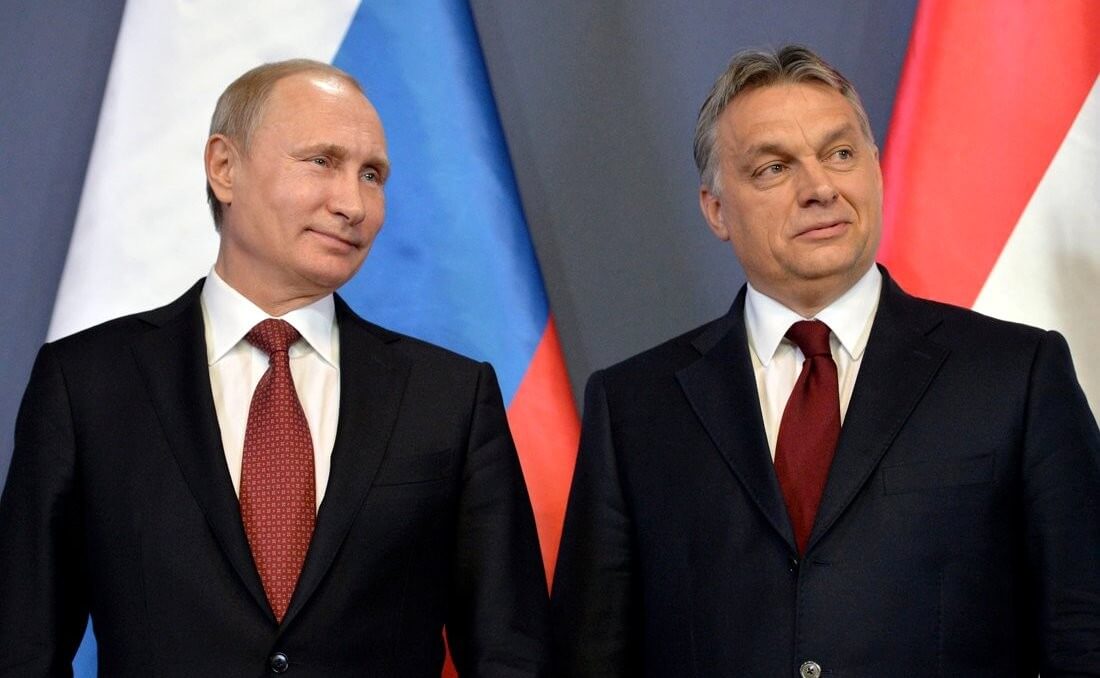
Another reason for Hungary’s relatively soft line on Russia is that Prime Minister Viktor Orbán sees a valuable partner in President Vladimir Putin on an ideological level in his fight against Western liberalism.
Finally, Hungary’s friendly relationship with Russia also appears to be linked to a desire to protect Hungarian assets in Russia, particularly those connected to the MOL Group, Hungary’s foremost gas and oil company, and the OTP Bank, the country’s largest commercial bank. Both are not only large companies that are highly important to the country, but also owned by wealthy pro-Fidesz
Hungary’s difficult relationship with Ukraine
Over the past months, Hungary seemed reluctant to help Ukraine like some of its NATO allies have done; it does not supply weapons to Ukraine, nor does it allow other NATO members to transport weapons across its territory to Ukraine.
In order to tackle Russian influence in Eastern Ukraine, the Ukrainian Parliament decided to pass a new education law in 2017. This law limited the rights of ethnic minorities living in Ukraine, including those of approximately 150,000 ethnic Hungarians, to be educated in their native language.
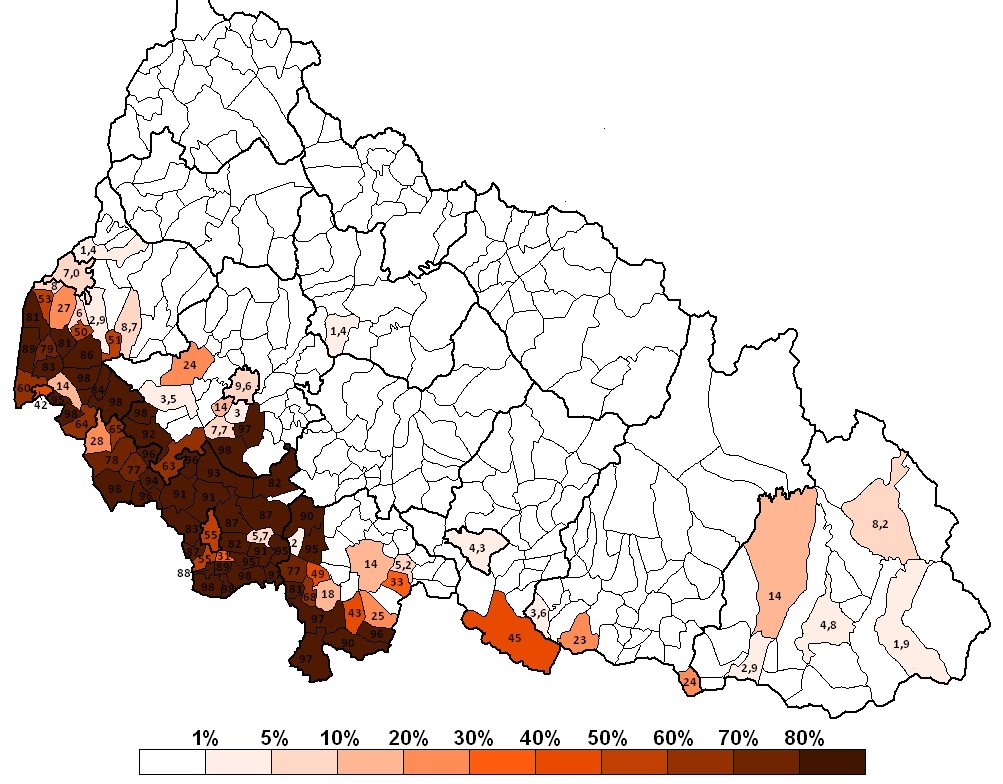
Consequently, as the advocate par excellence for Hungarian minority rights outside of Hungary, Orbán threatened to block all steps within the EU that would further integrate Ukraine.
For these reasons, Hungary has been blocking political meetings between NATO and Ukraine since 2018 as a sign of discontent. Many experts and opinion leaders have in turn been claiming that this type of decision demonstrates that Hungary is Russia’s ‘Trojan Horse’ within NATO and that the country intends to undermine the unity of NATO in providing support to Ukraine.
Despite the strained relations with Ukraine, Hungary repeatedly made clear that it stands for the sovereignty and integrity of Ukrainian territory
Ukrainian President Volodymyr Zelensky has also frequently attacked Orbán for taking a relatively soft line with Moscow and not demonstrating full support to Ukraine. In response, Orbán referred to Zelensky in his election victory speech as one of his opponents and has also stated that the president’s demands (regarding sanctions) would force the Hungarians to pay the price of the war.
Simultaneously, despite the strained relations with Ukraine, Hungary repeatedly made clear that it stands for the sovereignty and integrity of Ukrainian territory and has offered – among other things – a support package worth 37 million euros to Ukraine to improve the humanitarian situation.
When asked why Hungary only provides humanitarian aid and does not supply weapons to Ukraine, Minister Szijjártó answered that Hungary was not the only EU or NATO country that did not deliver weapons.
Moreover, according to him, the most important duty of the Hungarian government is to make sure that it can guarantee the security of the country and its people. The minister continued by stating that if weapons would be delivered from or through Hungary to Ukraine, the country would risk being involved in the conflict. Hungary wants to avoid this as it would increase the possibility that Russians would “shoot in the direction of the Hungarian-Ukrainian border or of parts of Ukraine that are populated by Hungarians”.
Hungary’s stance towards NATO
On 6 April, a few days after his election victory, Orbán described Hungary’s position towards NATO with these words: “We are a NATO member country, we will remain a NATO member country, and we want to build a much stronger army than we have today. This will also strengthen NATO. If Hungary becomes stronger, our allies will also benefit.”
When the war broke out in Ukraine, Hungary condemned Russia’s military aggression
Two weeks earlier, during the Extraordinary NATO Summit in Brussels, Orbán even stated that NATO was stronger than Russia.
Nevertheless, when the war broke out in Ukraine, Hungary condemned Russia’s military aggression and invasion. Moreover, it backed EU sanctions (just not on energy imports), and even agreed with Finland and Sweden joining NATO and with the adoption of NATO’s new Strategic Concept which refers to Russia as the most significant threat to the Allied security.
Hungary’s balancing act can also be perceived from its decision in early February to not accept more NATO troops on its territory in response to the Ukraine crisis as there was still no war, only to accept them a month later when the war broke out.
However, this decision in February should not be interpreted as an act against NATO. As Szijjártó explained in an interview with EuroNews: “We already have NATO troops on the territory of the country which is the Hungarian Army, and the Hungarian Armed Forces are in proper shape to guarantee the security of the country. So we don’t need additional troops on the territory of Hungary.”
On top of this, Hungary was still cooperating in the field of training with fellow NATO member states. If the Hungarian armed forces would not have been in shape to protect the country, the question about whether to accept more troops would have made sense, said Minister Szijjártó.
A month later at the Extraordinary NATO Summit, following Russia’s invasion of Ukraine, it was however decided to establish four additional multinational battle groups in among other countries Hungary to strengthen NATO’s eastern flank.
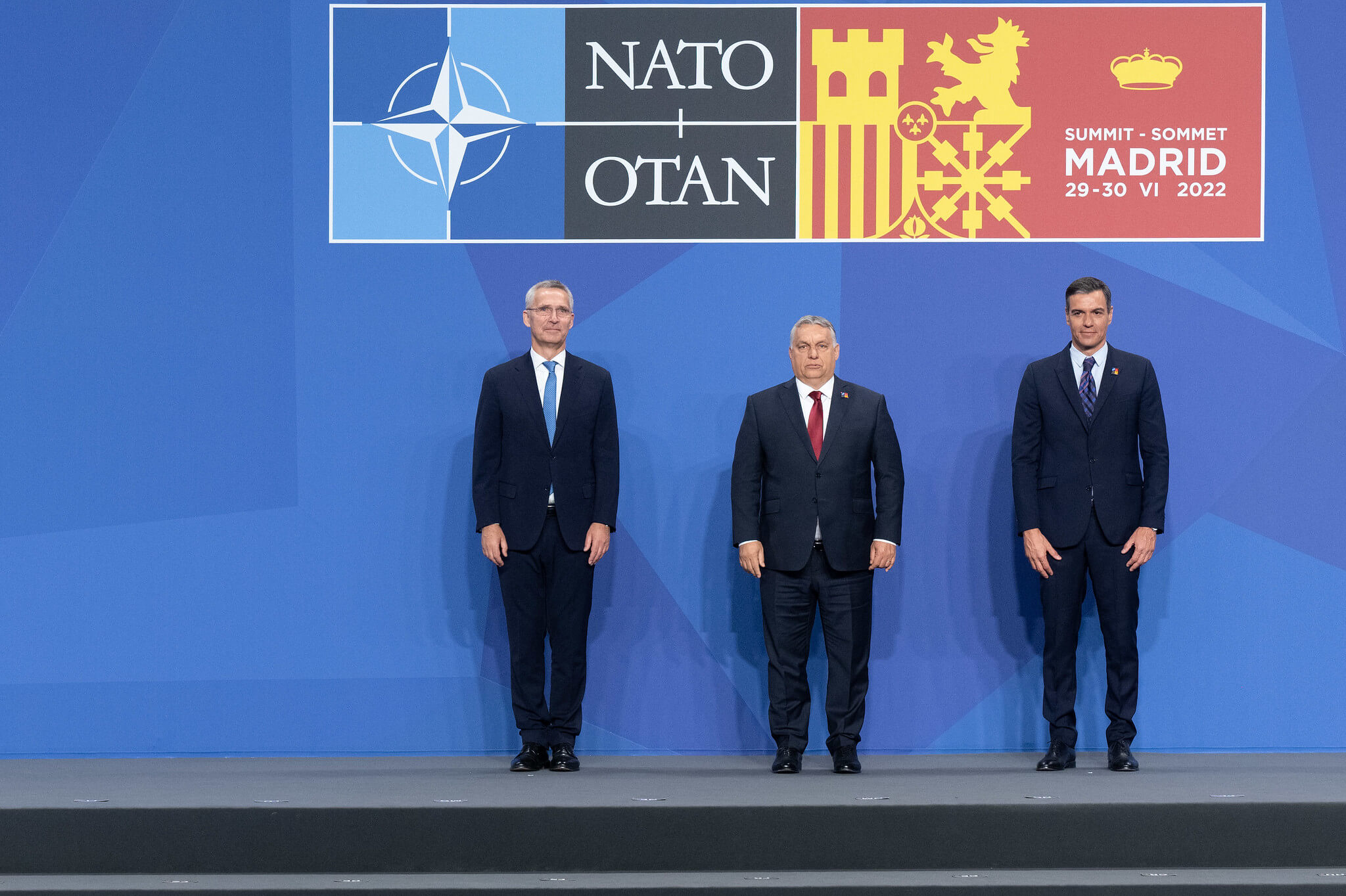
Moreover, during the NATO Summit in Madrid in June 2022, Hungary agreed on Finland and Sweden joining the Alliance and participated in the launch of NATO’s Innovation Fund, aimed at investing in nascent technologies that have the power to transform NATO’s future security.
One tension concerns a different perception of NATO’s supposed identity
Not only the Hungarian government has demonstrated its support for NATO. In 1997, prior to Hungary’s integration into NATO in 1999, a referendum was held during which 85.3 per cent voted in favour of joining NATO.
Tensions between Hungary and NATO
Despite Hungary’s overall positive stance towards NATO, there are some tensions between the two.
One tension concerns a different perception of NATO’s supposed identity. For instance, during the NATO Madrid Summit, Hungary was the only country that objected – and thus also blocked – the establishment of a Center for Democratic Resilience within NATO.
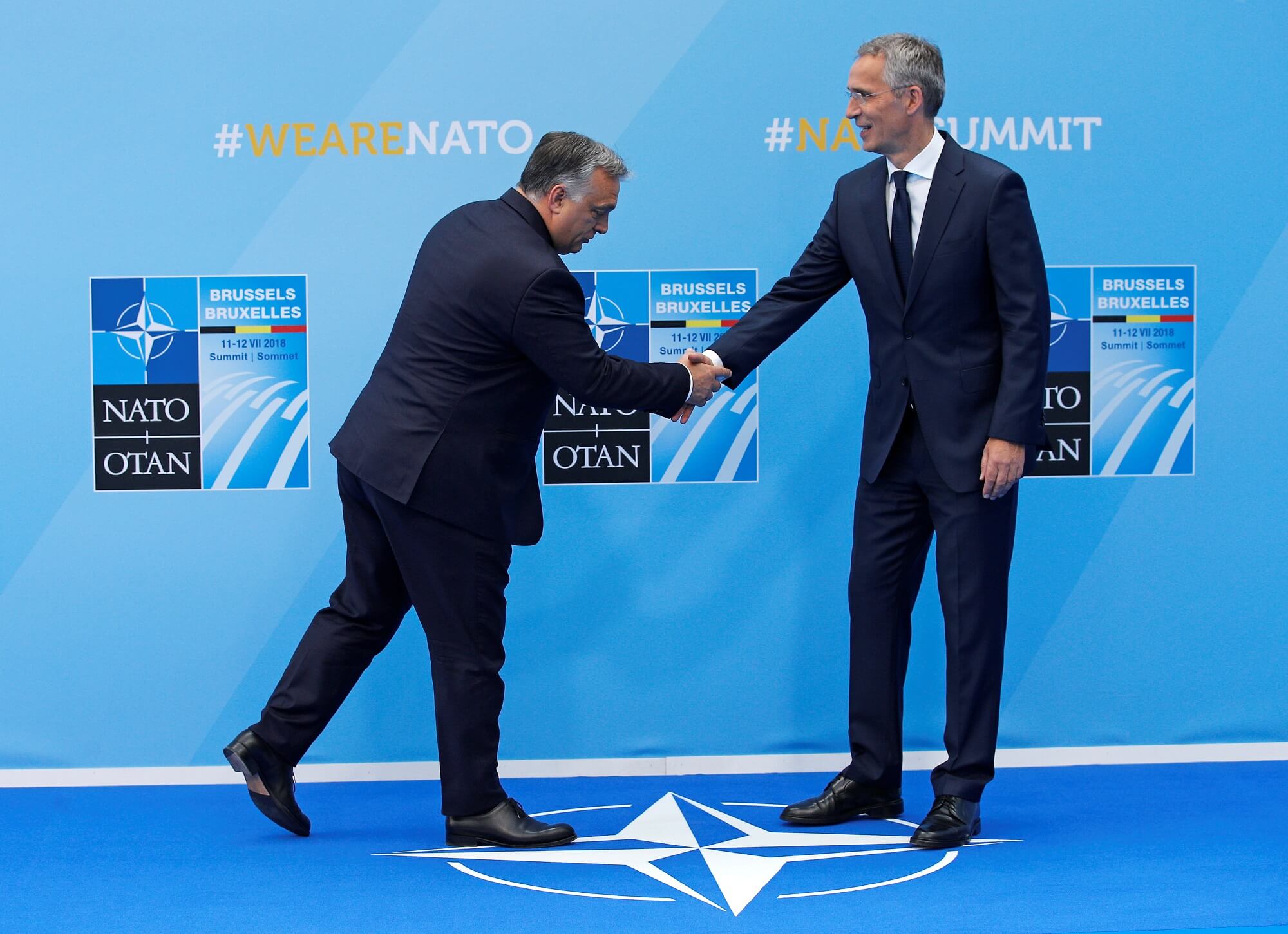
Another tension stems from Hungary’s wish to be perceived as aloof from the war, with the emphasis on ‘perceived’. The common thread in the attitude that the Hungarian government conveyed in the past few months was that it really does not want to get involved in the war, with statements such as: “This is not our war, but we will help those coming to us” and “Hungary stands on Hungary’s side.”
However, Hungary is not as aloof as it maybe wants to be perceived. Hungary is a NATO member state that has condemned Russia’s invasion of Ukraine, agreed with NATO’s new Strategic Concept that refers to Russia as the most significant threat to the Alliance’s security, backed multiple EU sanction packages targeting Russia, provided some support to Ukraine, and participates in several NATO activities and initiatives. Moreover, when Russia adopted a list of ‘enemy countries’ to which it will only settle any debts in rubbles and which made approval from a Russian government commission mandatory for any corporate deals, it concerned all EU countries, including Hungary.
This does not mean that Hungary’s energy dependency on Russia and Orbán’s relatively friendly stance towards the country are no reason for concern. NATO is built on the idea that a secure and peaceful Europe is “based on common values of individual liberty, democracy, human rights and the rule of law”.





1 Comments
Load comments
Hungary clashes with EU, but hat about NATO?
Great and clear analysis which shows the subject from multiple angles.
Add new comment