

‘New Ordinary’ of ‘Winners’: South Africa as part of BRICS



In May of 2019 the ANC will undoubtedly win the general elections in South Africa, but in the run-up to these elections it is evident that the politics of race and identity will take centre stage and act as a cover to do nothing to effectively transform the enormous inequalities that will continue to exist in South Africa. South Africa's BRICS partnership seems now stronger than ever as the 'Rainbow Nation' shares the 'my country first' credo supported by the politics of authoritarian leadership.
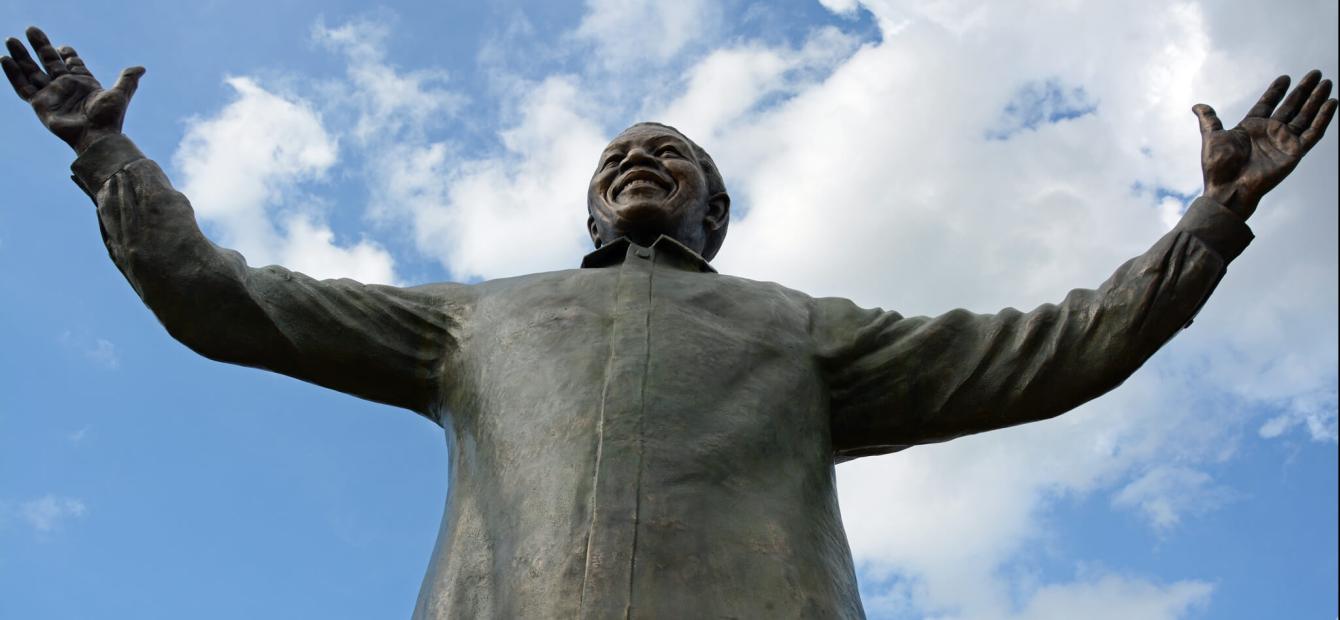
There was a time, after the first democratic elections in South Africa had voted Nelson Mandela into his presidency in April 1994, when people around the world spoke of ‘The New South Africa’
Apartheid lives on
South Africa’s third president Jacob Zuma appeared to foreshadow Donald Trump in his attitude to the rule of law, his complete disregard for decorum and his racist, tribalist and male chauvinist sentiments. The genie that was unleashed by Zuma, in which once again it became the accepted norm in South Africa to discuss and describe all issues in terms of race or tribe, has effectively resurrected the mind-set of apartheid ideologues. It enabled the ideas of the ignoble son of Amsterdam and architect of apartheid, Hendrik Verwoerd, to continue to determine and define public debate and the contours within which political discourse is conducted in South Africa. Ironically, twenty-five years after the ending of the apartheid state and the arrival of democratic freedom, a new generation of politicians seems more than prepared to unleash the terms, identities and categories of the past. Othering, in culturally essentialised terms is allowed again and the spirit of J.M. Coetzee’s Waiting for the Barbarians seems to be back in town: ‘from the oppression of such freedom [democracy] who would not welcome the liberation of confinement [essentialising]?”
The chances that the elections will lead to a more equitable distribution of wealth in the country are slim at best
In the face of South Africa’s inclusive constitution, King Goodwill Zwelathini wishes once again to restrict access to the land on the basis of race and ethnic identity.
In May of 2019 the ANC will undoubtedly win the general elections in South Africa, but in the run-up to these elections it is evident that the politics of race and identity will take centre stage and act as a cover to do nothing to effectively transform the enormous inequalities that will continue to exist in South Africa. The chances that the elections will lead to a more equitable distribution of wealth in the country are slim at best. With this, South Africa seems to set and follow the example of the ‘New Ordinary’ in the broader geo-political arena of this era. The US presidency is obsessed with being serious about ‘America First’
In all this nationalist and masculine rhetoric from around the world, there is not much room, if any, for political perspectives that draw attention to the plights of the weak, the down-trodden, the poor, the marginalised, the ‘losers’ in this global competition, rhetorically red in tooth and claw. It is this ‘winning’ that is written about in the history books as public memories, as Nigerian writer Chinua Achebe famously referred to an old African proverb
‘Economy First’ for South Africa
Although it may seem quite a shift from where South-Africa came from in 1994, in the current context of BRICS it can be easily interpreted as ‘The New Ordinary’. In the BRICS and global context of ‘glorified hunters’, South Africa followed suit under Mbeki and Zuma with no place for ‘RDP’, ‘reconciliation’ or ‘forgiveness’. When South Africa’s president Cyril Ramaphosa opened the BRICS Business Forum in Johannesburg on 25 July 2018 he still perfunctory spun Nelson Mandela’s legacy for democracy, peace, solidarity, international cooperation and respect,
South Africa shares with China and the other BRICS members the politics of strong leadership and narrow ties between economic and political stakeholders
As the major BRICS achievement after ten years of collaboration Ramaphosa highlighted the New Development Bank as a leading instrument in realizing the Forum’s trade agenda. In line with this several months later in October at the Investment Conference he further presented South Africa as the gateway and leader of the African Continental Free Trade Area
Not all BRICS countries are likely to shift their economic focus to (South) Africa, but for China (the only really growing partner in investments in the region) this is certainly a beckoning perspective, although perhaps no further encouragement was needed to continue its already massive investment in the continent. While at its start the BRICS partnership was generally considered to be a paper tiger, expert opinions have changed over time, and by some it is now even aspiring to become one of the world’s powerhouses.
BRICS seems to provide a stable platform and unity against the destabilising and isolationist chaos that Donald Trump’s administration pours over the world
In South Africa state capture has been the major characteristic of its political economy under the Zuma presidency
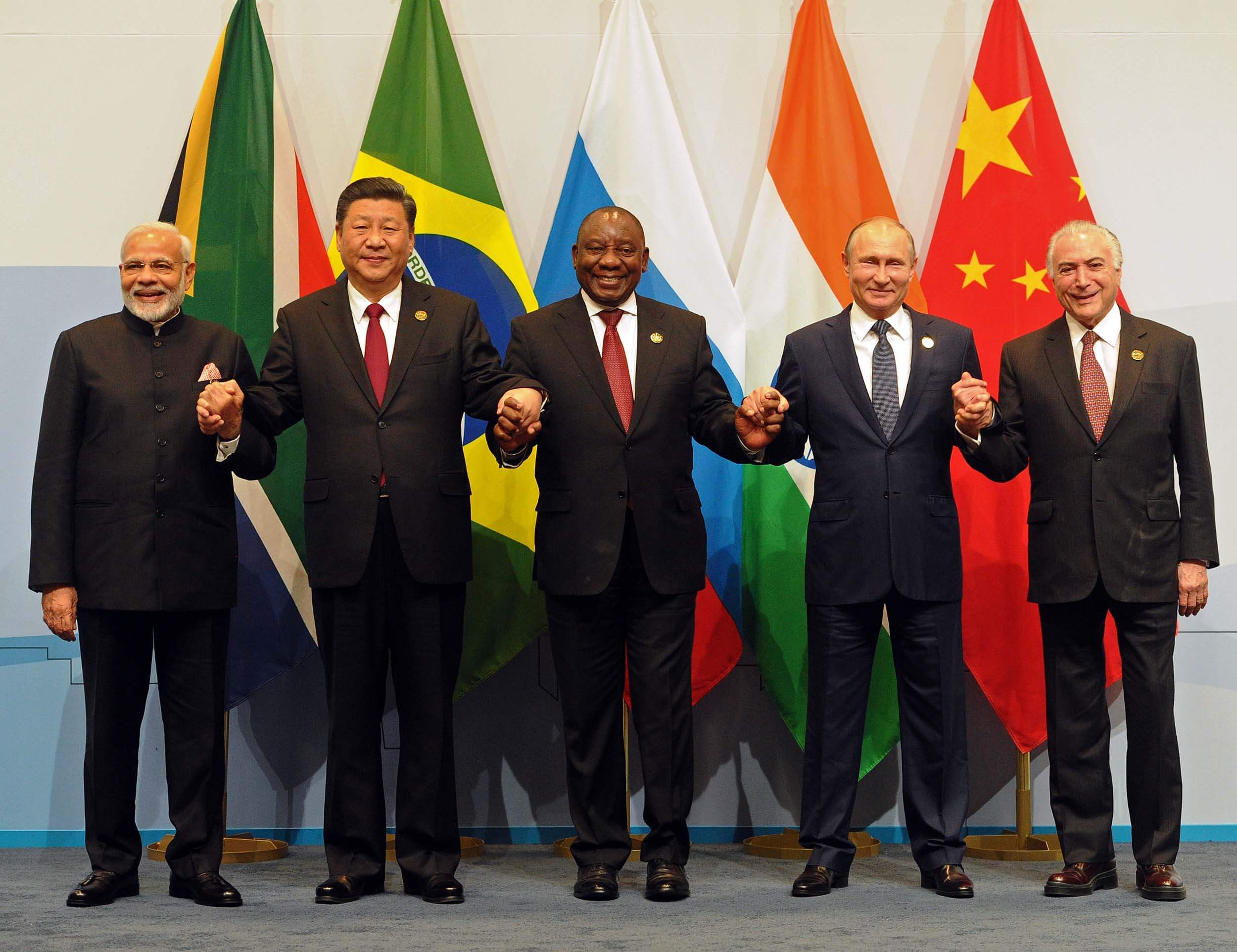
The over-all picture is that of ‘economy first’, supported by a strong, even elitist political leadership. Although he dedicates lip service to social justice themes every now and then, Ramaphosa, himself one of South Africa’s major entrepreneurs in the mining sector
A coalition of winners
The irony of the history of BRICS at this point in time is that it is now actually stronger than it ever was before because all the heads of state seem to share this global nationalist paradigm of ‘winners’ with ‘my country first’ as its credo, which has drawn them paradoxically together in unprecedented ways. Now BRICS seems to provide a stable platform and unity against the destabilising and isolationist chaos that Donald Trump’s administration pours over the world
For the time being bad news for those hoping for, and aspiring to, a global order that is based on equity, equality and social justice
With regard to the various domestic issues that are at play in the individual BRICS countries, it is interesting to note that the domestic political agendas and the shared BRICS agenda seem to be treated in isolation from each other; domestic affairs and BRICS strategies do not seem aligned, and hardly mutually reinforcing. This may explain why there is ‘international scepticism’ about the prospects of BRICS as a major player in the global economy
So far we have presented a rather grim picture of South Africa as an emerging stagnant political economy







0 Comments
Add new comment