

Afghanistan: Still caught up in an overreaction to terrorism

Libya, Mali, Afghanistan and Syria have been hotbeds of conflict for years on end. In each of these conflicts, the West is involved, either directly or indirectly by means of NATO or UN missions. In this Clingendael Spectator series on Western interventions, the current status and the future of the conflicts will be analysed. First stop: Afghanistan, that is still caught up in the biggest overreaction to terrorism in history. Do current negotiations offer some momentum for peace?
Almost two decades since the beginning of the current international intervention in Afghanistan, it is easy to forget how we got there. Let’s rewind. The starting point is 9/11. Nineteen men affiliated with Al Qaeda hijacked four planes. Fifteen of the hijackers were citizens of Saudi Arabia; two came from the United Arab Emirates; one from Egypt and one from Lebanon. Zero – it is worth repeating – zero came from Afghanistan. What follows is the start of the biggest overreaction to terrorism ever.
How we got there
Both the high-level targets and the unprecedented scale of this attack demanded a quick response. Seven days after the attacks, the United States Congress passed new legislation
The US launched Operation Enduring Freedom on 7 October 2001 with its principal ally, the United Kingdom (UK). Later, other allies joined this counter-terrorism offensive, which was only shut down thirteen years later by US President Barack Obama. The legal basis for Operation Enduring Freedom remains unclear as the mission had no specific United Nations Security Council (UNSC) mandate. While two UNSC resolutions, 1368
On the one hand, this may not have been an impediment as Article 51, under Chapter VII of the UN Charter
The military mission that did get a clear UN mandate (from resolution 1386
ISAF can be described as a stabilisation mission as it helped to establish and maintain order, initially only in Kabul and surrounding areas and later in the entire country. For thirteen years, until the end of the mission in December 2014, ISAF ran parallel to Operation Enduring Freedom. At its height, the ISAF mission consisted of more than 130,000 troops coming from 51 NATO and partner countries.
Current status
All this started in 2001 following a terrorist attack. Fast forward 18 years and there is still an international military mission in Afghanistan: The NATO-led Resolute Support Mission (RSM).
In the early years following 2001, the ambitious state building project was going to create the ‘Switzerland in the Hindu Kush’. The country was relatively stable and the Taliban was not expected to rise from the ashes of the easy military victory.
Without any prospect of victory, the international community’s commitment to Afghanistan soon started to shift towards an eagerness to get international troops out of the country and generally decrease the international presence. In particular, three parallel transitions – economic, political and security – were going to give the country a much needed boost in ownership, maturity and sustainable development. For the international community, they at least partially also represented something else: a ticket out of Afghanistan.
Losing the war
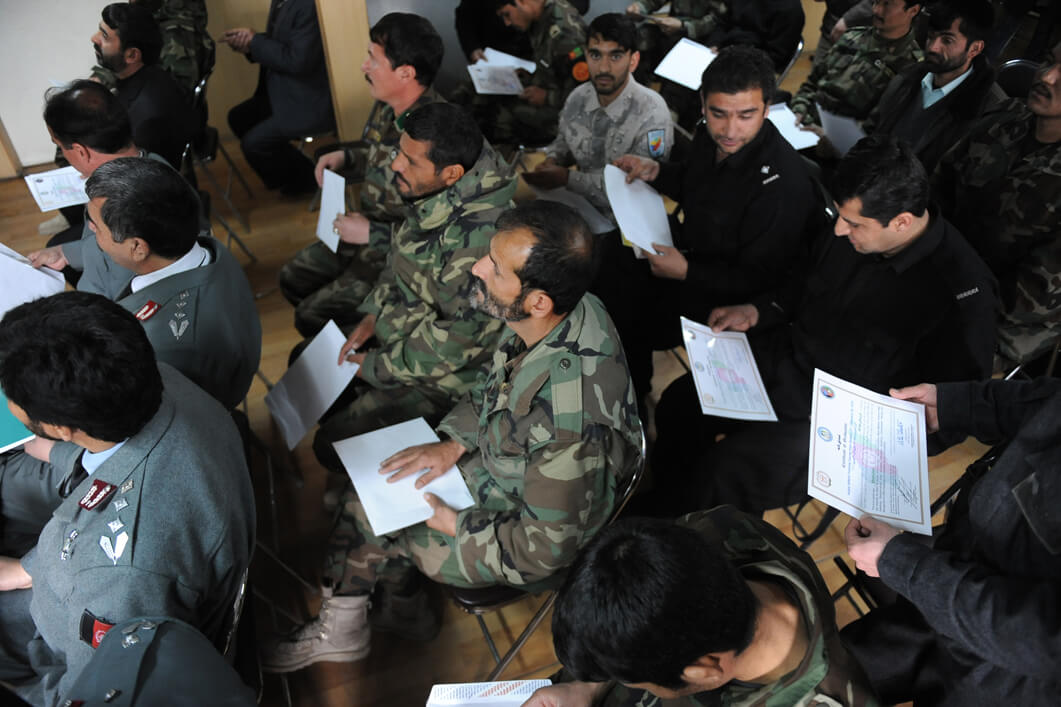
The security transition (2011-2014) is the clearest example, which ended the ISAF mission and resulted in the drawdown of most international troops. As mentioned, it shifted the focus of the international support role from direct combat to training, advising and assisting under the RSM. As a result, the ANDSF did become more independent in their combat operations, something which in recent years has also become visible in terms of the number of casualties. In this case, more ownership tragically means more Afghan deaths. President Ghani mentioned in the beginning of 2019 that a staggering 45,000 members of the security forces had been killed since he came into office in 2014.
My argument has always been that the security transition was too quick and based on the wrong motives. Instead of evaluating the security and conflict dynamics on the ground, this transition was mainly motivated by political interests of Western capitals far removed from the battlefield. While it is clear that the international (combat) troops could not stay forever in Afghanistan, it also seems to be the case that the hastened troop drawdown is partly responsible for the comeback of the Taliban.
Aid dependency remains
The economic transition has proven a tough challenge. Poverty levels have hardly changed since 2001 and even saw an increase after 2011. While Gross Domestic Product has reached more than 20 million US dollars, economic growth has been more or less stagnant since 2012.
International donors are trying to increase ‘on-budget’ support (assistance provided directly through the government’s core budget). However, in 2017 this type of support had only reached 56 per cent – in fact even a decrease from the previous year. At the same time, large portions of on-budget support such as the Afghan Reconstruction Trust Fund (ARTF) do not really represent Afghan ownership as the important decisions about what to do with those funds are still taken by the World Bank. The bottom line is that Afghanistan remains a highly aid-dependent country.
Political fragmentation around peace
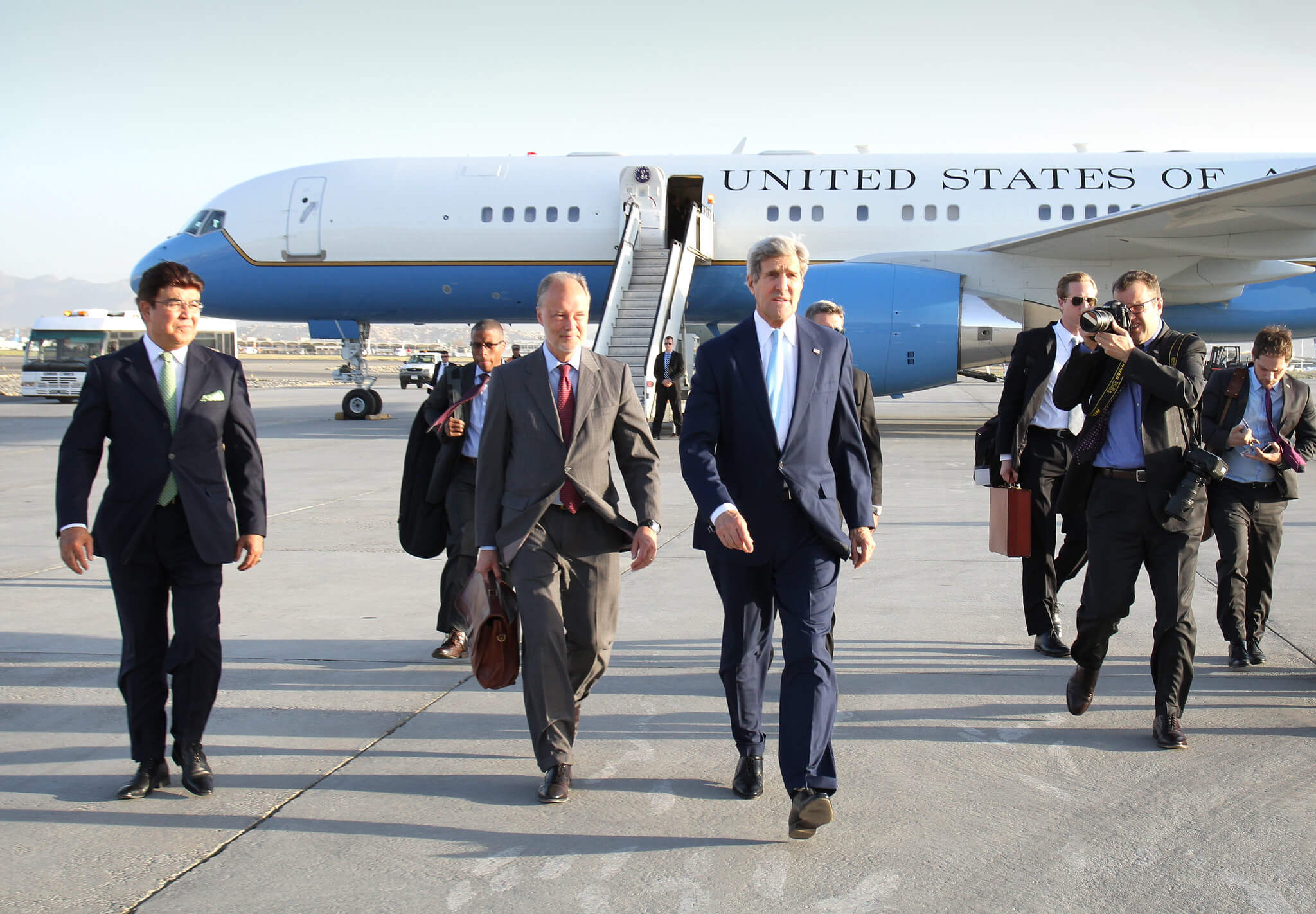
The political transition occurred even less smoothly. After an interim government and two consecutive terms of president Karzai, a National Unity Government was basically invented by the Obama Administration after the fraud-ridden presidential elections of 2014.
At the same time, democratisation remains also, quite logically given the time frame we are working in, a huge challenge. Elections are constantly postponed, sometimes for a couple of years. Fraud has been a concern in all of them. The country is basically still run by the former warlords and other traditional power brokers of the time before and immediately after the Taliban regime. While having one of the biggest youth bulges of the world, the young population has, two decades after 9/11, not translated into a new generation of politicians. Power is still much more with individual strongmen (indeed still all mostly male) than with institutions such as the lower and upper houses of parliament. In many ways, the promise of democracy has so far been an empty shell, especially for those that think direct or indirect representation will help to break through the engrained power configuration of the political establishment.
Future perspective
Abandoning Afghanistan should not be an option, especially if we take the lessons from history seriously and if we are committed to promises made to the Afghan people. Those promises are also part of mission creep: while perhaps not part of the initial justification to attack and invade Afghanistan, they increasingly became part of the political rhetoric of the state building project in the country. Similarly, the international mission has become part of a broad development programme that is about much more than only preventing Afghanistan from again becoming a safe haven or launchpad for terrorist groups. There is no denying these broader development goals, regardless of how they have crept into the original missions.
Foreign troops are, however, not necessarily a long-term component of this broader development mission. They cannot stay forever, and their withdrawal may even have positive consequences, for peace and Afghan ownership. In an earlier article in the Clingendael Spectator, I already discussed three basic options for the west’s withdrawal from Afghanistan.
However, in the end it is not about what the support ultimately looks like, but more about whether a formal peace process can deliver a political solution for this conflict. The primacy of a political solution has been clear for many years, but the lack of a clear political strategy aimed at reconciliation has hampered the support role of international missions in Afghanistan for most of the past two decades. The biggest failure of the entire international mission is that it was unable to broker opportunities for peace and reconciliation earlier on. As a result of the political impasse, each year that goes by around ten thousand civilians are killed or injured.
Incompatible national and regional interests
While there is now some momentum for peace, expectations should still be low about an agreement that can effectively bring peace and reconciliation. The problem lies in the hugely complex situation of two parallel chess boards for peace. On the intra-Afghan chessboard, various groups need to reconcile and agree on a way forward in a context that is marred by political divisions, traditional rivalries, structural center-periphery gaps and a lack of national identity.
On the international chessboard, a huge number of regional and international power holders need to agree on the final intra-Afghan agreement, while they bring wide-ranging and often competing political agendas to the table. The list of stakeholders is almost endless but includes at least: Pakistan, Iran, the five Central Asian republics north of Afghanistan, China, India, the United States, the European Union, Russia and Turkey. Some chess pieces are moving forward but others seem to be stuck or going in circles. While everybody would probably agree that the only sustainable outcome for peace and reconciliation is an ‘intra-Afghan agreement with regional support’, the strong divisions at both national and regional level currently turn this objective into a political pipedream. As long as there is no breakthrough, we continue to be caught up in the biggest overreaction to terrorism in recent history.

0 Reacties
Reactie toevoegen