

EU’s Gaza War response: A tale of contradiction and division

In the face of worst-ever Israeli–Palestinian violence, Europe’s selective moralism has also led to strategic blindness.
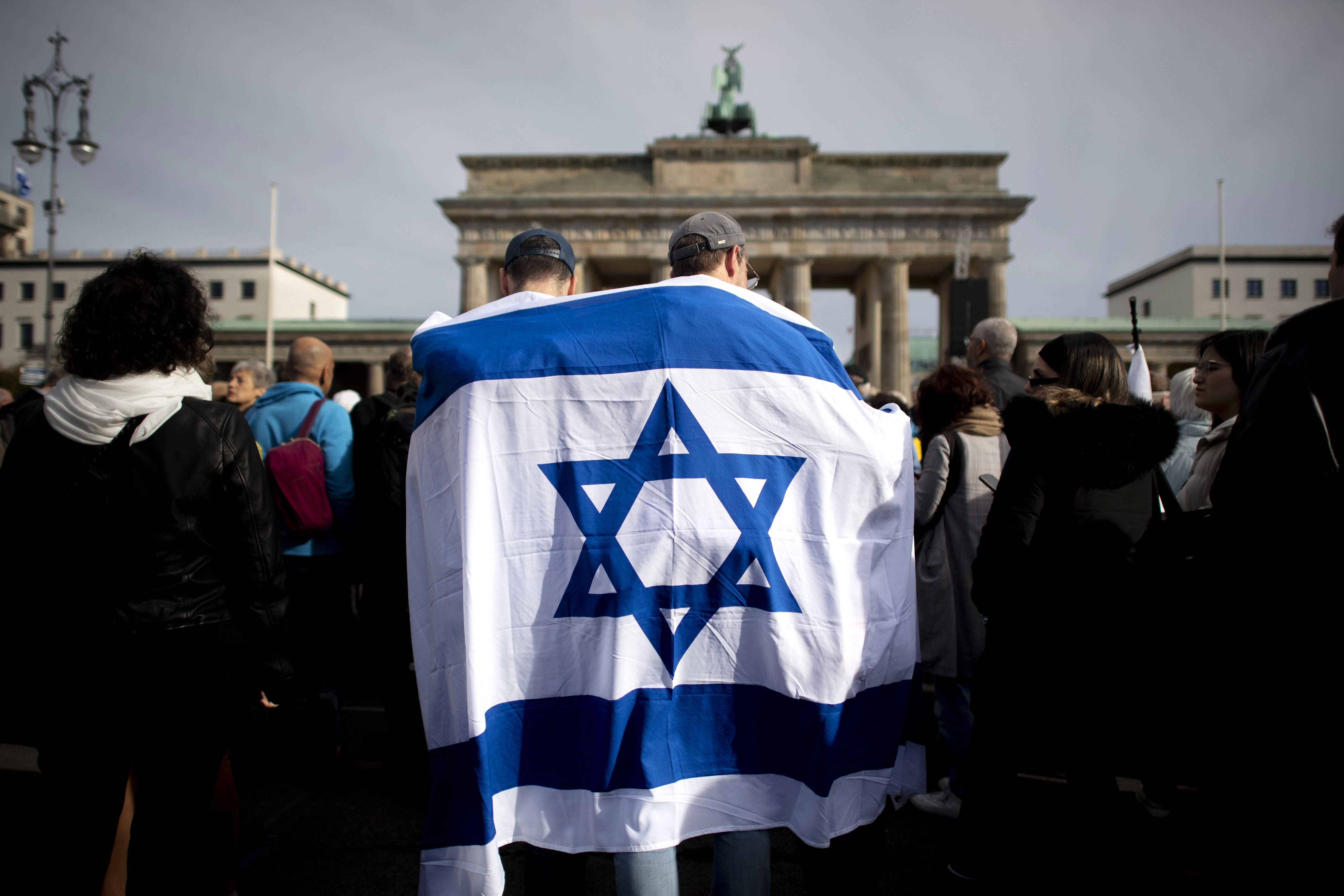
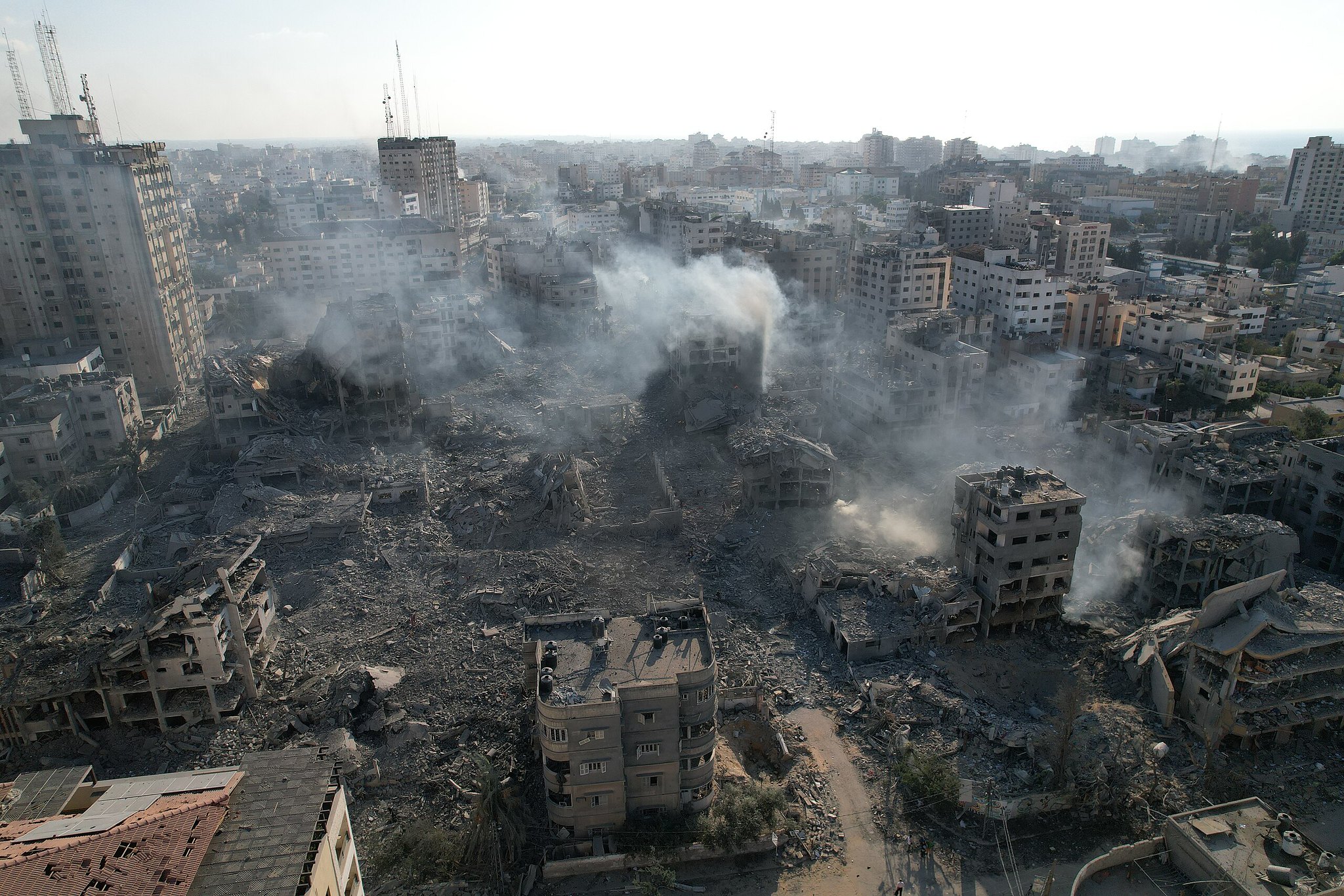
Since the Hamas attacks on 7 October 2023 and the start of Israel’s retaliatory offensive in the Gaza Strip, European Union member states have broadly split into three camps. At one end are those who have professed to stand ‘on the side of Israel’, flying its flag on government buildings, backing its military campaign and avoiding criticism even after the Israeli army flattened most of Gaza and killed thousands of Palestinian civilians. The Czech Republic, Austria and Hungary stand out in this camp, followed by Germany.
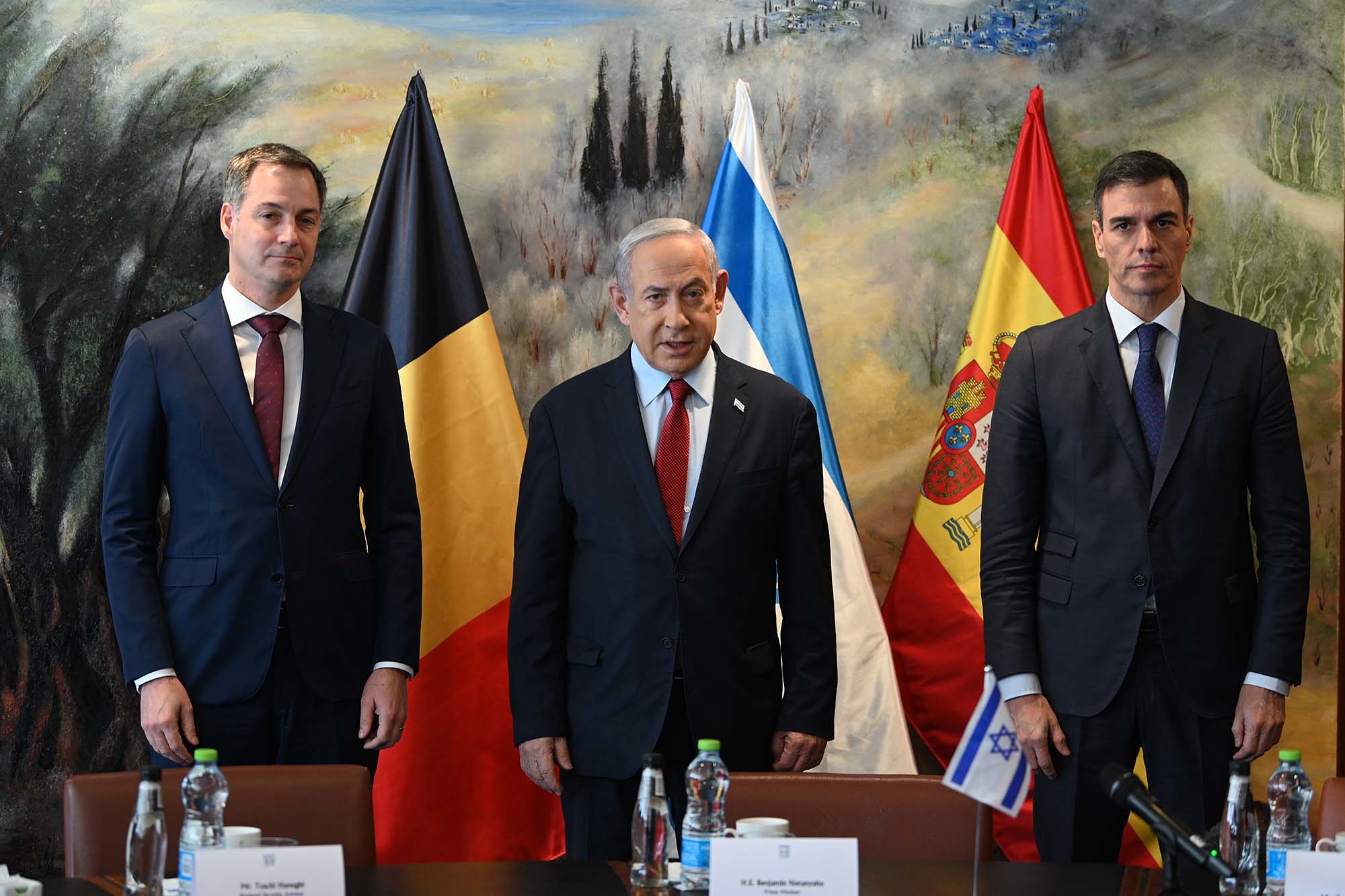
At the other end of the spectrum are governments that proclaim to stand ‘on the side of peace’ and, while strongly condemning Hamas, have been calling for a ceasefire and openly criticising Israel for violating international humanitarian law. Belgium, Spain and Ireland are the most vocal members of this moderate camp, followed by France and several others.
The third, middle camp, is made up of those who are somewhere in between the first two groups: siding with Israel, but in less absolute terms than the first camp.
It would be wrong to label the moderate camp as ‘pro-Palestinian’. The fact is that there is no pro-Palestinian camp at the level of EU governments: none of them has hoisted Palestinian flags or primarily condemned the Israeli occupation or its devastating Gaza offensive, as many countries in the so-called Global South have done. The only vocal exception may be Spain’s Deputy Prime Minister Yolanda Díaz of the left-wing Sumar party who has denounced “Israeli apartheid” and called for sanctions and an arms embargo against Israel.
Encouraging rather than restraining Israel
The EU’s overall position is the result of a power balance between the Israel-aligned, moderate and in-between camps. In fact, the common EU statements agreed by the twenty-seven member states since 7 October are somewhat closer to the positions of the Israel-aligned camp.
But despite the EU’s efforts to project unity, votes on the United Nations General Assembly’s Gaza resolutions on 27 October
In addition to divisions between and within member states, the crisis has also split the leadership of EU institutions
The European response has not been confined to gestures and statements, but also action. Germany
In spite of that, it should be noted that political positions do not necessarily reflect public opinion. For example, according to an October opinion poll
Divisions Among EU Leadership
In addition to divisions between and within member states, the crisis has also split the leadership of EU institutions. European Commission President Ursula von der Leyen (a German Christian Democrat) has personified the Israel-aligned approach: in the days after 7 October, she projected the Israeli flag on the Commission’s headquarters (previously done only for Ukraine), stressed Israel's "right to defend itself – today and in the days to come”
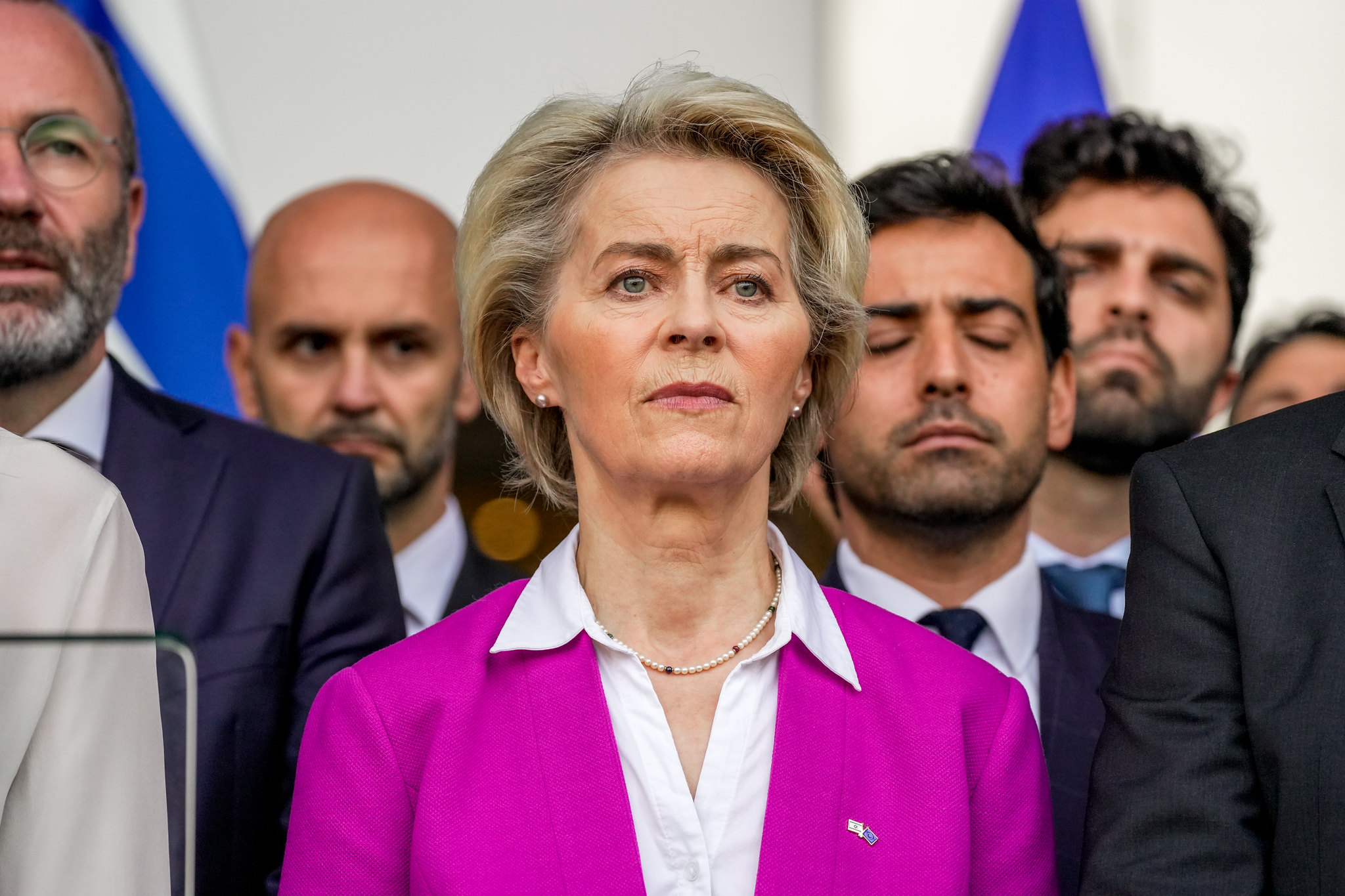
In contrast, European Council President Charles Michel (a Belgian liberal) and the EU High Representative for Foreign Affairs Josep Borrell (a Spanish socialist) have tried to steer the EU in a more moderate direction. Borrell, who has most embodied the moderate camp at the EU level, has often spoken more frankly about the realities of the conflict than other international leaders. Besides condemning Hamas, he has described the crisis as “the consequence of a thirty-year-long political and moral failure of the international community (…) to make the two-state solution a reality”.
Furthest on the opposite Israel-aligned end of the spectrum has been EU Commissioner Olivér Várhelyi, who oversees relations, including financial aid, with the EU’s neighbours. After the Hamas attack, the Hungarian commissioner unilaterally announced the suspension of all EU development aid to the Palestinians
In supporting Israel, European leaders such as Von der Leyen have toed the Biden administration’s line rather than promote a more balanced and international law-based approach, traditionally associated with Europe. In fact, Joe Biden has on occasion been more critical, for example when calling out Israel’s “indiscriminate bombing”.
Moral and strategic failure
The impulse among a significant part of Europe’s political elite to align with Israel is driven by a sense of civilisational attachment and historical responsibility as well as less openly pronounced resentments toward Arabs and Muslims. 7 October has supercharged these sentiments at the expense of concern for Palestinian lives, international norms and even Europe’s material interest in regional stability. Identity politics has trumped both liberal, international law-respecting foreign policy and interest-based realpolitik.
The Israel-aligned crowd usually couches its support for the Gaza offensive in moral terms. But the justified moral indignation at Hamas’ brutality is accompanied by staggering moral complacency toward Palestinian suffering. Prior to the Hamas attacks, politicians in this camp never protested Israel’s decades-long occupation, systematic human rights violations or the sixteen-year blockade of the Strip. No wonder their current discourse sounds as if the conflict only began on 7 October, ignoring the context they refused to address even before.
Selective moralism also leads to strategic blindness
Once again, Von der Leyen is emblematic of this. As the European Commission president, she has repeatedly eulogised Israel, even under its most
The alignment with Israel is also justified, especially in Germany and to an extent in Europe as a whole, by the historical responsibility for the Holocaust. In itself, this invocation is more than appropriate: 7 October was the worst massacre of Jews since the Holocaust, followed by a wave of antisemitic incidents in Europe and around the world. What is on display, however, is a stunning distortion of historical consciousness. When the memory of the Holocaust is used to downplay or justify mass killing and collective punishment of civilians in Gaza and to silence voices of protest, it is the ultimate betrayal of its historical lessons.
If Germany was serious about its history, it should be the first not only to condemn the Hamas atrocities but also to protest the Gaza hecatomb and warn against genocidal incitement by a range of Israeli politicians and public figures.
But selective moralism also leads to strategic blindness. It obscures the likely unattainability of the goal to eliminate Hamas, a movement deeply rooted in Palestinian society.
Unconditional backing for Israel also contradicts Europe’s strategic interests. The greater the horror in Gaza – and the stronger Israel’s sense of international impunity – the higher the risk of a full-blown war with Hezbollah and of a wider regional conflict, which Europe is keen to avoid.
The EU’s apparent double standards are undermining its soft power, the main source of its influence in the world. And Western cover for Israel’s blatant violations of international humanitarian law discredits the global rules-based order, an underlying factor of European security. The statements of German Chancellor Olaf Scholz – who repeatedly claimed that Israel was acting by international law, while it was holding the entire Gaza population under siege and wiping out whole families and neighbourhoods with airstrikes
Ukraine versus Gaza
Western backing for the Gaza war has also cancelled out months of diplomatic outreach to persuade countries in the Global South to align with the Western position on the war in Ukraine. Efforts to convince the world that European and American support for Ukraine against Russian aggression was based on universal principles of international law rather than the West’s geopolitical agenda were squandered when the West veered off those same principles in Gaza.
Europeans themselves are deeply divided over how to compare the two high-intensity wars raging in their neighbourhood. Where the moderate camp highlights the need for coherence based on international law, the Israel-aligned camp draws a parallel between Israel and Ukraine as two Western democratic allies under attack. Once again, the contrasting positions of EU leaders illustrate the fundamental differences between the EU camps.
As a side note, hypocrisy over Gaza is not an exclusive feature of the West
In an effort to steer the EU towards a more moderate position on Gaza, Charles Michel has emphasized that the EU must be “a steadfast advocate for peace and respect for international law, as in the case of Russia’s war of aggression against Ukraine”.
In contrast, Von der Leyen has equated Israel with Ukraine: “Vladimir Putin wants to wipe Ukraine from the map. Hamas, supported by Iran, wants to wipe Israel from the map. Shelter democracies we must,” she told the American Hudson Institute in October. In this view, the identity of Israel as a Western, supposedly democratic, ally is put above international law.
Where EU moderates try to address the criticism of double standards, the Israel-aligned camp self-righteously doubles down on them. In doing so, it helps discredit the case for Ukraine in the non-Western world. As a side note, hypocrisy over Gaza is not an exclusive feature of the West. If the Arab regimes that had recently normalised relations with Israel (the United Arab Emirates, Bahrain and Morocco) or pursued such normalisation (Saudi Arabia) really cared about the thousands of children killed in Gaza, they would have threatened to freeze their ties with Israel unless it stops the onslaught and commits to the two-state solution. Instead, they have sent reassuring signals that normalisation will continue once the war is over.
No ‘day after’ plan
Despite European divisions over Israel’s military offensive and whether or not to call for a ceasefire, there is one important area where EU leaders have been relatively united: the ‘day after’ in Gaza. People split by ideology can sometimes still agree on forward-looking solutions. A month into the war, Von der Leyen and Borrell articulated very similar principles for the future of Gaza: no Hamas control over Gaza, no Israeli reoccupation, no reduction of Gaza’s territory, no forced displacement of Palestinians from Gaza and no sustained blockade of the enclave. Instead, the Palestinian Authority (PA) should govern Gaza and there should be a renewed effort to achieve the two-state solution.
However, there are two major problems here.
First, the principles have not been translated into a diplomatic plan. If the goal is to bring Gaza under PA control, it requires a serious effort to identify what this would entail, engage all relevant actors and flesh out a plan. This is one area where the EU, as the largest donor to the PA, could be a real player. Such a plan could offer a diplomatic path out of the crisis and help build conditions for a sustainable ceasefire.
But more than three months into the war, the Europeans have not come up with anything concrete. In December, Borrell presented a non-public note to EU foreign ministers “on the stabilization and future of Gaza”.
The EU should be open to arrangements that have the widest support and legitimacy among Palestinians
The second problem is, in a way, the opposite of the first: the assumption that Hamas will be removed from Gaza and the PA in its current shape will take over. By excluding Hamas without having a diplomatic plan to bring back the PA, the Europeans are locking themselves into a scenario that may prove to be a fantasy. It also implicitly supports Israel’s maximalist war aims to eradicate the movement in Gaza.
Instead, the EU should come to terms with the strong likelihood that Hamas will survive and that any governing authority in the Strip will require its consent. The militant movement will certainly remain part of the wider Palestinian political landscape, probably with significantly stronger popular support than before.
Some Palestinians are proposing to establish a government of technocrats that would rule both Gaza and the West Bank with the backing of all Palestinian factions, including Hamas, but without their direct participation.
However challenging such proposals are, they are more grounded in reality than the scenario of returning the current, unpopular PA into Gaza on the back of Israeli tanks and in total opposition to Hamas. Rather than trying to engineer Palestinian politics according to Israeli and Western preferences, the EU should be open to arrangements that have the widest support and legitimacy among Palestinians. This offers a better prospect to reunite Gaza and the West Bank under a single, broadly backed and truly ‘revitalised’ Palestinian Authority.
So far, the European response to the Gaza crisis has been a moral and strategic disaster. Going forward, the EU has a chance to partially redeem its record by contributing to a legitimate political solution for Gaza and by pushing for a serious peace effort. Even for its own sake, it should not fail again.
This article was previously published in The Cairo Review of Global Affairs.
The Clingendael Spectator aims to reflect on and discuss the war in Gaza and the Middle East conflict from different perspectives, recognising how sensitive and polarised this discussion tends to be. This contribution by Martin Konečný, which provides an interesting overview of the divergent positions of European countries, will thus be followed by other contributions to further enrich the discourse.





0 Comments
Add new comment