

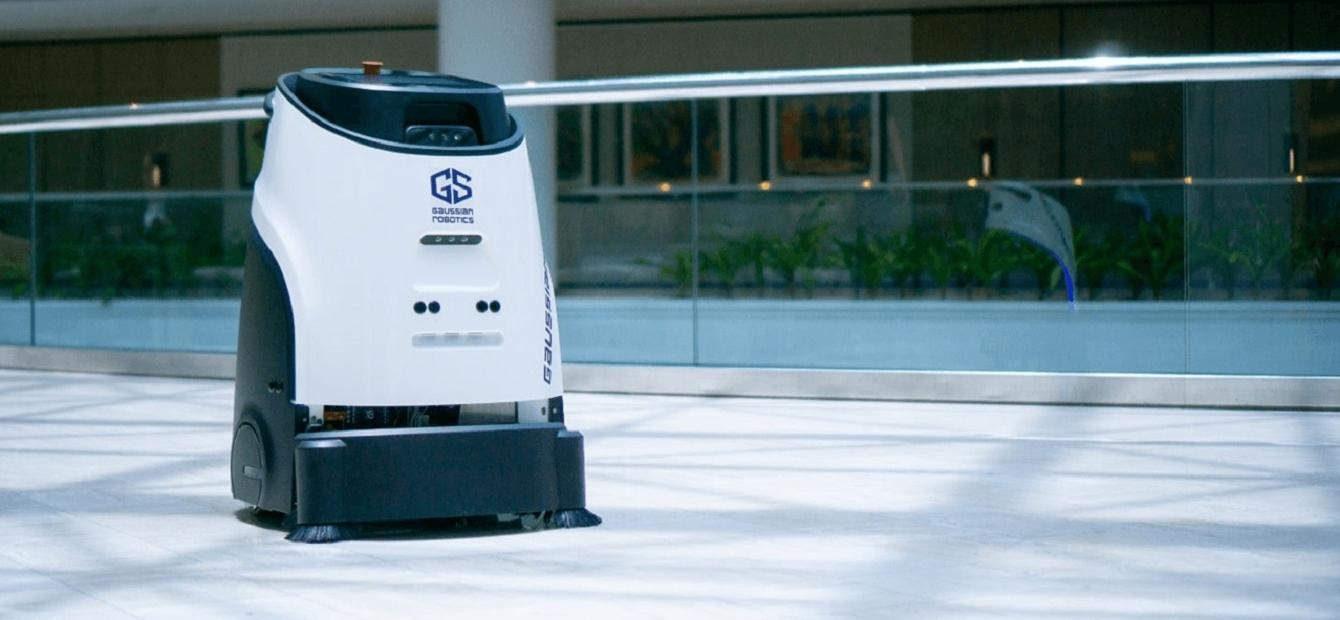
Are Chinese cleaning robots a security threat?

In 2019 the Dutch government made a clear decision: no more naivety in their cooperation with China.
One of the assumptions behind the investment screening mechanism is that Europe has a technological lead over China and that this leading position needs to be defended against attempts by the Chinese government to buy or copy European technologies.
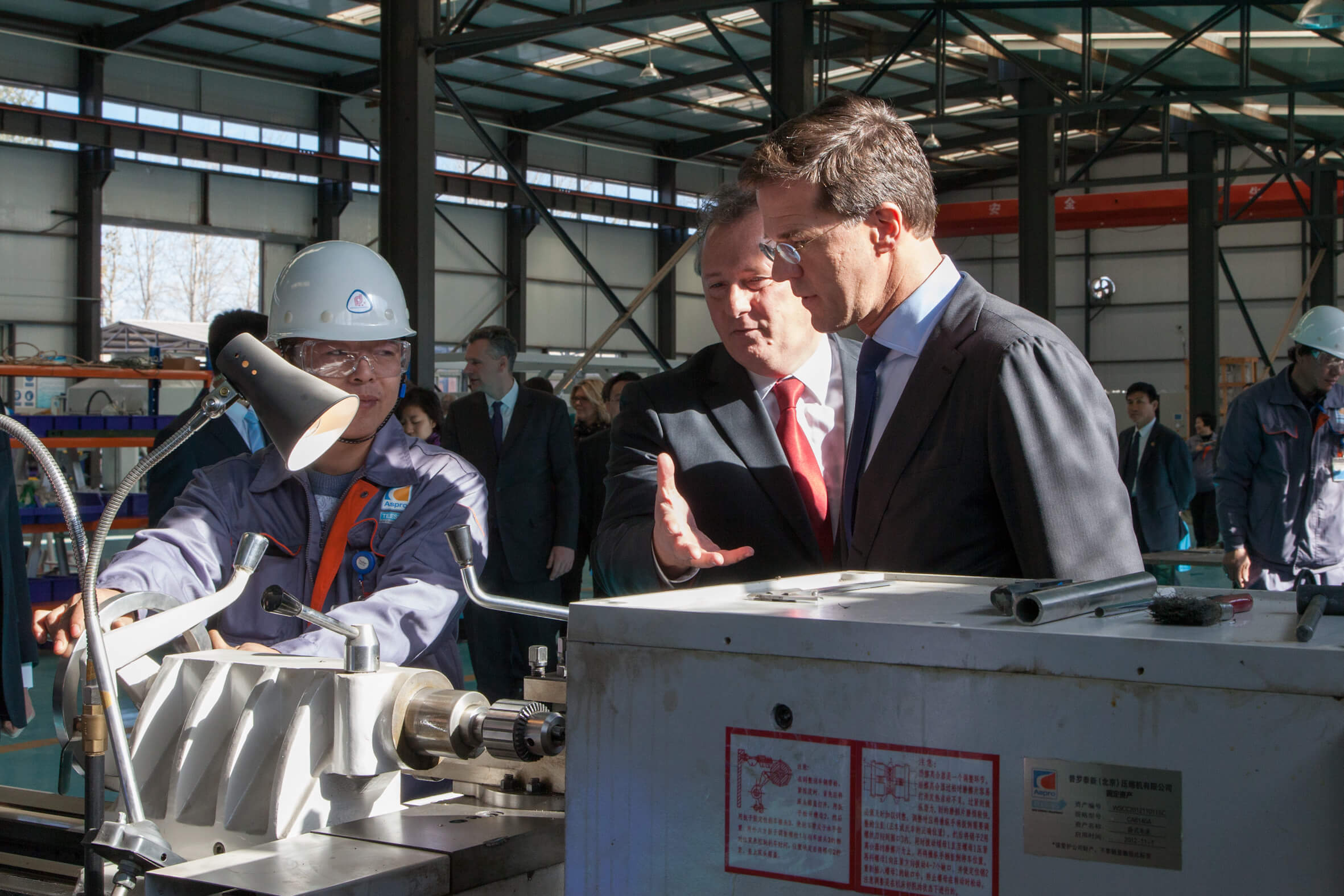
Using the case of industrial cleaning robots from China, this article shows how the roles are reversing and that Europe risks becoming increasingly dependent on Chinese technologies. Europeans will need to learn what the Chinese had to learn a long time ago: how to bring in the technology Europe needs, while minimising the accompanying national security risks.
How China caught up
It all began when the Chinese government carefully opened the door for foreign companies, which were previously locked out of the Chinese market, with the economic reforms in 1978. The entry of foreign firms into the Chinese market was strongly regulated.
The foreign technologies that were exchanged during cooperation with foreign partners needed to be “truly advanced” and “appropriate to China’s needs”.
In critical sectors with strategic technologies, such as the telecom and financial sectors, foreign investors could only get a minority share in a joint venture (JV) with a Chinese state-owned enterprise (SOE). See Textbox 1 for an example from the telecom sector about how the Chinese government managed to catch up using the above-described policies.
Textbox 1. How the Chinese telecom sector developed with government support
Until the mid-1980s China was dependent on Western technology for its telecom network. Until 1984, when the Chinese government invited Bell Telephone Manufacturing from Belgium to start a joint venture (JV) with a Chinese state-owned enterprise: Shanghai Bell. One year later, already three Chinese initiatives existed that could produce similar technologies that were important for telecom networks, using reverse engineering. These technologies were not yet at the same level as its Western competitors, but the first steps were made.
Other Western firms were also invited to start JVs with Chinese state-owned companies to avoid that Bell would get a too powerful position in such a crucial market. Chinese firms like ZTE and Huawei started to cooperate with these joint ventures to gain technological know-how. This way they learned from the Swedish Ericsson, the Finnish Nokia, but also the American Lucent.
The moment these Chinese firms had learned to produce a new product, the Chinese government increased the tariffs for such products that were produced outside China. Furthermore, the Chinese government stimulated these Chinese telecom companies to develop their own 3G standard. The Chinese government waited on purpose with rolling out a 3G network until this Chinese 3G standard was developed (and China was therefore rather late with 3G). The 3G market was subsequently divided among Chinese firms. That moment, Chinese telecom infrastructure firms took over the Chinese market.
However, they were not yet ready for the international market. Huawei understood this and decided to hire international consultants from PwC and IBM to help Huawei adapt its management systems to the international market. The rest is history.
In 1995, the Chinese government introduced a catalogue for the guidance of foreign investments. This catalogue contained three lists with economic activities in which foreign investments were either encouraged, restricted or prohibited.
The Chinese government aims to outpace the West in the field of artificial intelligence
In 2016, the balance shifted from a positive list (activities that were encouraged) to a negative list (activities that were restricted or prohibited).
However, the ambitions of the Chinese government reach further than just becoming less dependent on foreign technology. The Chinese government aims to outpace the West in the field of artificial intelligence (AI) and become the global innovation centre for AI by 2030. To that end, the Chinese Council published the so-called Next Generation of Artificial Intelligence Development Plan in 2017.
Is Europe prepared for this next step, where advanced Chinese technology enters the European market?
The next step: the case of Gaussian Robotics
A recent joint KPMG/Clingendael report on industrial cleaning robots
The report shows that the Gaussian robot is more advanced in terms of autonomous problem-solving than most – if not all
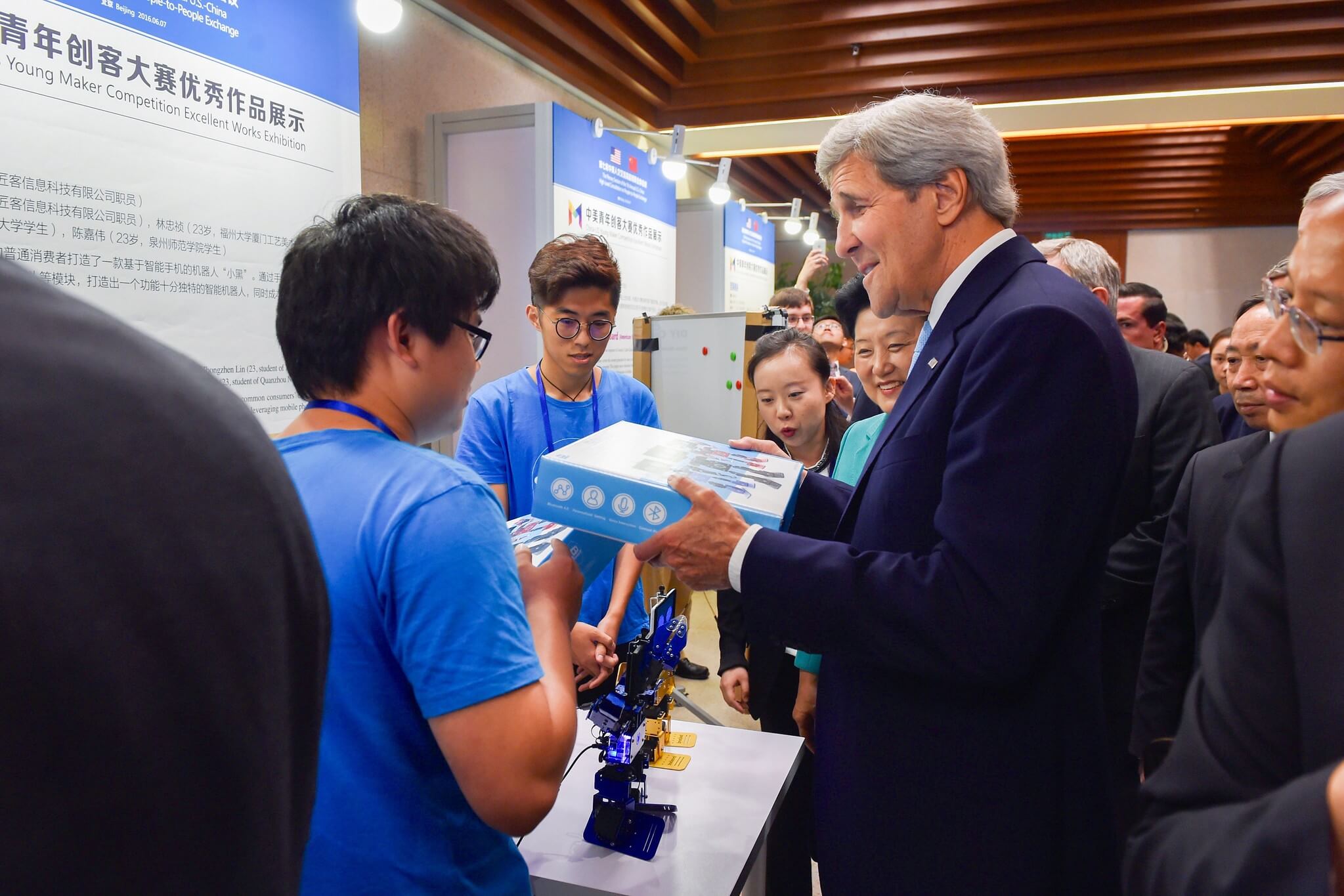
When customers and companies choose advanced Chinese cleaning robots over European brands, the market share of European companies will decline. Within this financial scope, they have to invest in Research and Development.
If Gaussian also opts to increase its market share in Europe using a price strategy – similar to what Huawei and ZTE did when they entered the European market for telecoms – this could lead to a situation in which the competitors of Gaussian will throw in the towel one by one. Customers of industrial cleaning robots will then be left with no choice (but the Chinese robot) and less control over their data.
European legislation is currently insufficient in protecting European data collected by foreign companies in Europe
Cleaning robots collect data while they perform their work at airports, universities, companies and governmental buildings. To function optimally, they are equipped with cameras and other sensors that collect data. Depending on the type of camera in the robot, it could make detailed recordings of its surroundings and the people in it.
This can be sensitive, personal or even classified information. Consider for instance what kind of information could be collected when a cleaning robot is used to clean at a military base, a hospital or a high-tech firm with top-notch technology.
Data is leaving the robot, as well as the cleaning location, to be converted into information.
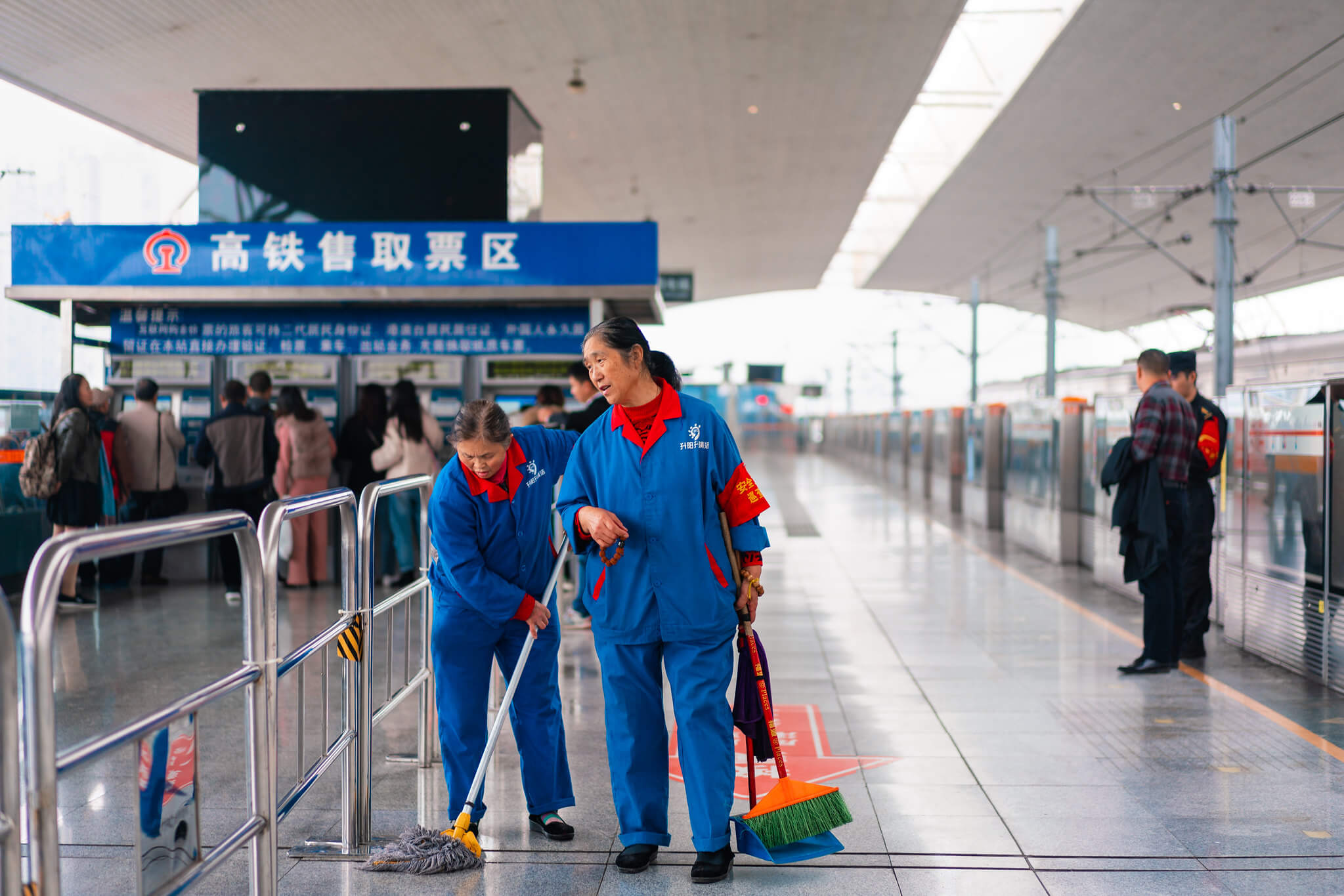
Yet, there is no clarity so far concerning the ownership and control of data collected by US (or other foreign) companies in Europe, that is also stored in Europe.
Furthermore, the data collected by cleaning robots do not seem to be protected by the GDPR yet. At least, that is the conclusion from Brain Corp,
Conclusion
It might be painful, but it is important to acknowledge that European companies no longer belong to the top of some of the high-tech sectors. Europe will have to learn how to deal with China as a supplier of high-quality technology and, in particular, how to manage and limit the associated security risks.
Europe could take an example from China and let the European investment screening mechanism work in two directions. One, restricting or prohibiting non-European activities in strategic technologies in which Europe has a leading position.
The challenge for Europe now seems to be more complicated than the challenge for China back then. Because, on the one hand, Europe needs to cooperate in some areas with Chinese high-tech companies to be able to quickly catch-up.
On the other hand, Europe needs to be careful that the use of this more advanced Chinese technology will not negatively impact the areas in which Europe is leading. For example, the cleaning robots could theoretically be hacked in order to spy on the European high-tech firms that might make use of these robots.
In the 1980s, when China was dependent on foreign telecom infrastructure, the country was just as vulnerable for espionage from foreign companies. However, China did not need to worry about industrial espionage back then. Besides, China did not need to worry about retaliation on other internationally operating Chinese firms when it prohibited or restricted foreign economic activities in certain sectors, because Chinese firms were hardly operating abroad at that time.
A possible way to tackle these challenges for Europe can be found in China’s





1 Reacties
Load comments
Robotics
Very Interesting Article
Reactie toevoegen