


Geopolitics? Not a useful concept for the China challenge

Both the United States and the European Union are framing their relationship with China in terms of an inevitable ‘geopolitical competition’.
Whether viewed through the EU’s prism of ‘systemic rivalry’ or the notion of a ‘new Cold War’, the era of cordial relations with China seems to have given way to narratives of Realpolitik. How – and why – did this shift of narrative on China occur?
It is important to realise that the West did not make this policy shift in one go. Western states have reacted differently to the shock associated with the ‘failure of engagement’ with China. The US, in particular under presidency of Donald Trump, argue that China harbours the intention to replace the US as a global hegemon. The EU and its member states have gradually come to a similar conclusion, but each member state at its own pace.
There are serious empirical and normative reasons for doubting the analytical utility of geopolitical competition
From the European perspective (as recently argued by David Criekemans
Although the US and EU share their diagnosis of the ‘China challenge’, it is often argued that they disagree on how to deal with it. I argue, however, that broad acceptance among the political leadership – and the respective foreign policy communities – of the notion that global affairs are returning to a state of geopolitical competition renders transatlantic disagreement unsettled by setting the scope for the debate on China.
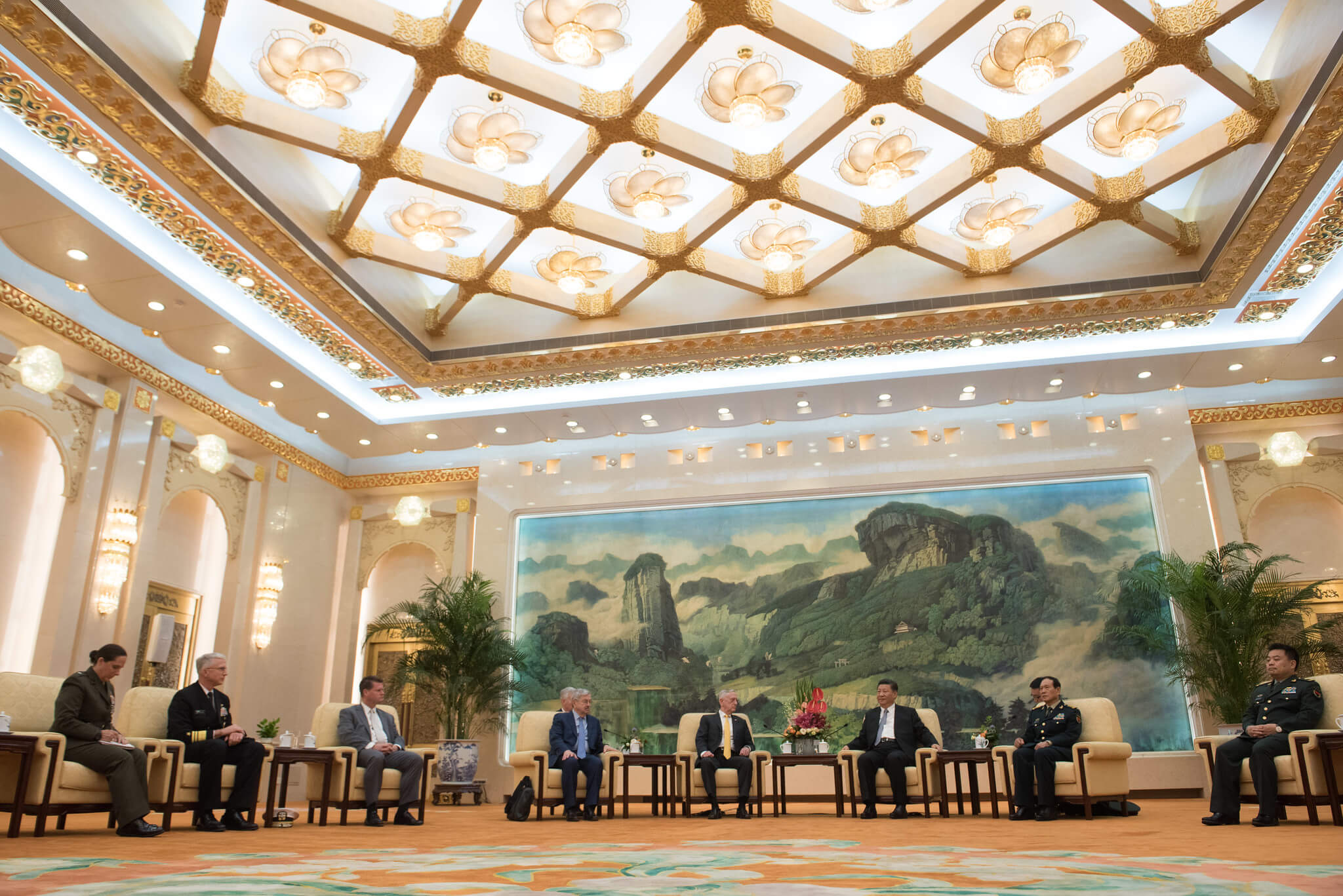
The recent EU joint communication on ‘A new EU-US agenda for global change’ conveniently illustrates this point: it refers to EU-US disagreement on the right course of action, but ultimately casts China as a geopolitical object of Western policies.
There are serious empirical and normative reasons for doubting the analytical utility of geopolitical competition. Limiting Western policy to this simplistic organising principle carries cognitive risks for dealing with all the practical challenges related to China. At worst, it may even create new problems and challenges, both with China and the rest of the world.
What geopolitics?
So why has the concept of geopolitics gained traction in the West? Defining geopolitics is not easy, as Stefano Guzzini has demonstrated in his academic work on the return of geopolitical rhetoric after the end of the Cold War.
For the vast majority of relevant affairs between the US, China and the EU, the territorial logic of geopolitics is conspicuously absent
In International Relations (IR) scholarship, geopolitics has a long and mixed pedigree, and has been particularly influential for explaining Realist accounts of power transition and states pursuing their national interests in an ‘anarchic’ environment. Graham Allison’s recent work Destined for War may be taken as a good example of how geopolitical and Realist assumptions dovetail in popular accounts of China’s rise.
Guzzini suggests that the study of geopolitics is based on a nationalistic notion, and thereby conservative in nature. In addition, it is geared towards military policy options.
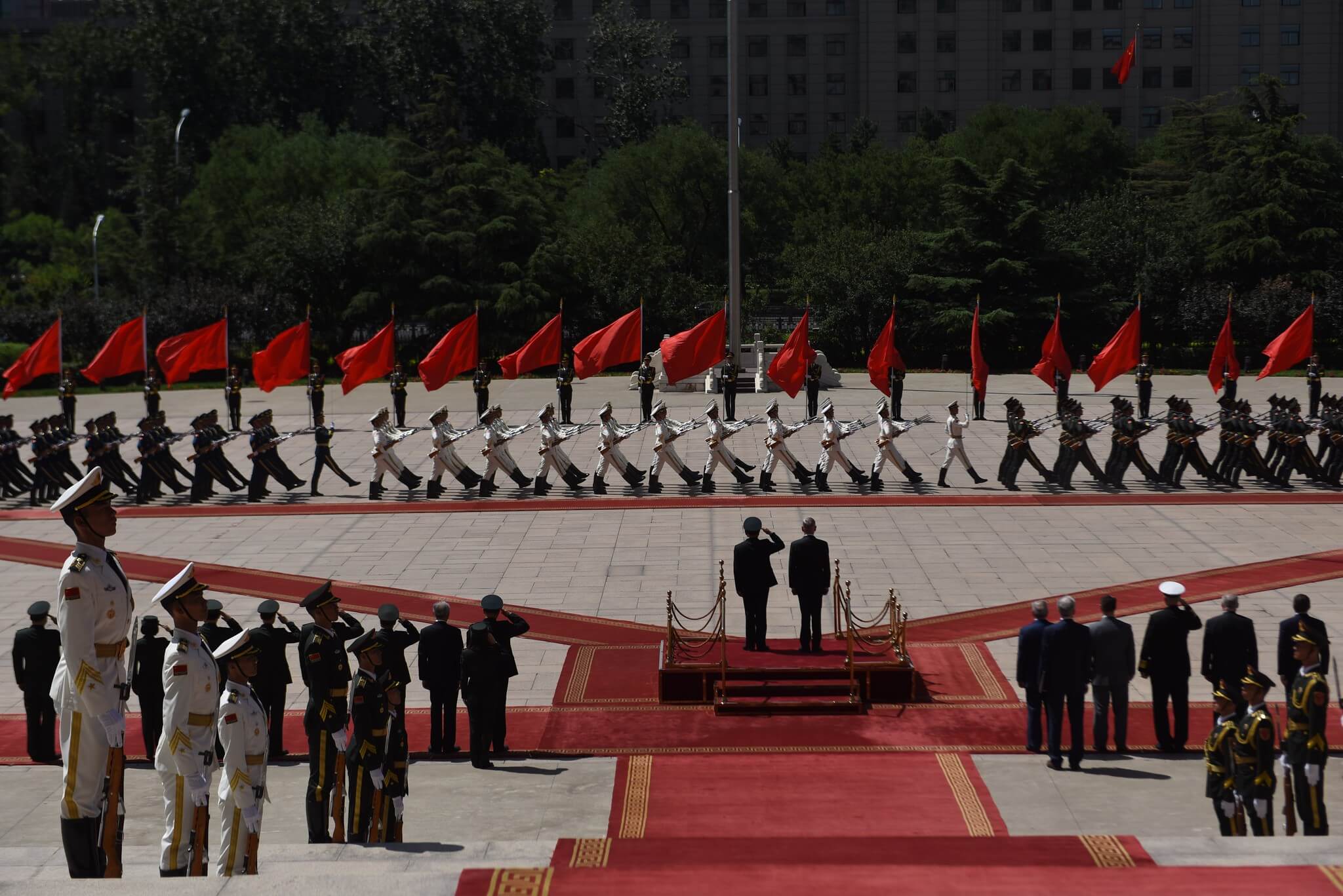
Has geography really increased in importance, and should military power be the ultimate goal and judge of international politics? Of course, there are areas where there is no doubt that geography is important, such as regional security competition between the US and China in East and Southeast Asia (particularly the South China Sea).
However, for the vast majority of relevant affairs between the US, China and the EU, the territorial logic of geopolitics is conspicuously absent. Indeed, this worldview entails little to no useful recommendations on issues ranging from Huawei, semiconductors, trade deficits, market access, education and research policy, human rights, or diverging views on multilateralism.
To lump all challenges related to China together as ‘geopolitical competition’, as a strategic puzzle which the West must solve (‘the China challenge’), is empirically and ethically problematic
Instead, social conflicts over rules, standards, norms and access to networks of economic and social exchange are currently relevant issues for the relationship with China. Most issues at stake are therefore by their very nature embedded in broader global dynamics which are unlikely to be sustainably addressed without multilateral solutions.
To lump all challenges related to China together as ‘geopolitical competition’, as a strategic puzzle which the West must solve (‘the China challenge’), is thus empirically and ethically problematic.
Why geopolitics?
Given the weakness of geopolitics as an analytical tool, it is puzzling that it has gained so much traction among Western commentators and policymakers. Guzzini provides an answer here: geopolitical rhetoric is likely to emerge as an ‘easy answer’ during an identity crisis, provided that elites involved in the policy process identify with such logic.
Arguably, both in the US and in Europe, such an identity crisis has become apparent. For some, the ‘failure of engagement’ with China has been a traumatic experience, and has undermined belief in the appeasing power of multilateralism and globalisation.
Both the prisms of ‘engagement’ and ‘geopolitical rivalry’ are too limited, and do not offer a practical approach for dealing with challenges posed by China
The rise of populism in both the US and Europe most probably strengthened popular support for a geopolitical, more nationalistic rhetoric and policy agenda. In turn, this rise has boosted legitimacy for strong state interference, necessitated by the systemic crises of inter alia COVID-19 and climate change.
Against this background, the turn towards the language of power, strategic sovereignty and national interests becomes understandable. Still, this geopolitical turn remains highly problematic, since it offers a distorted view of world politics. Besides creating a similar set of blinders as ‘engagement’, from which discussion of China policy must now depart to be recognisable to policymakers and the public, the militarist and nationalist gaze of geopolitics is also ethically problematic.

This is because this perspective on world politics turns every action of China into an infringement of ‘our’ (Western) territory, whether this infringement is geographical (for instance the Western Balkans), economic (the ‘level-playing field’), or normative (‘European values’).
All other factors that could equally well (or even better) explain China’s actions (such as domestic pressures, intra-leadership struggle or the activities by substate actors) are either ignored or entirely refitted to suit the geopolitical prism. As a result, the room to reach diplomatic solutions decreases and the risk of wasteful expenditure of resources to patrol these fictional territories increases.
We should therefore conclude that both the prisms of ‘engagement’ and ‘geopolitical rivalry’ are too limited, and do not offer a practical approach for dealing with challenges posed by China. What is the alternative?
The network alternative to geopolitics
Adopting a new approach to China would certainly not mean closing one’s eyes to the dog-eat-dog worldview of China’s Communist Party (CCP) and the risks this entails to Western interests and values. For a start, policymakers would do well to take post-Cold War IR scholarship on the consequences of globalisation and interdependence as a baseline for thinking on China.
China is not immune to the impact of globalisation, and is also not able to exploit the complex interdependent world without incurring serious social costs
Globalisation is a robust and enduring phenomenon which fundamentally alters the incentive structures states face. By necessity, China is not immune to the impact of globalisation, and is also not able to exploit the complex interdependent world without incurring serious social costs.
If we accept that China’s challenges to ‘our’ way of doing things (whether related to development, human rights or otherwise) are a result of the globalisation-induced growth of its economic, military and diplomatic capabilities, it should be obvious that a return to the nationalism and territorialism of geopolitical rivalry is a logical fallacy.

It may be possible for the US to increasingly exclude China (like it did with Iran), but the competitive pressures produced by global networks of economic exchange and domestic politics will ensure that China, the US and the EU will remain highly interconnected. Any talk of ‘decoupling’ or geopolitical competition would therefore become pure rhetoric, and of little practical relevance.
But when ‘engagement’ has largely failed, and ‘geopolitical rivalry’ is both risky and impractical, what concept should guide policy towards China instead? The best option seems to adopt a so-called ‘networks approach’ to China. IR research on the importance and relevance of networks and China’s role in these networks highlights three key considerations, which are entirely absent from the geopolitical perspective.
Empirical tests show that China has a long way to go to challenge US dominance in global financial, production and security networks and may never reach this stage
First, the controlled exercise of power in a densely networked world requires high levels of domestic political control of networks and strong domestic institutions.
It might therefore end in high social costs, such as states or other actors exiting a network to escape its influence. Finally, empirical tests show that China has a long way to go to challenge US dominance in global financial, production and security networks and may never reach this stage.
Network competition instead of geopolitical competition
When we look at China’s relationship with the EU and the US through the lens of network competition, the limits of the territorial logic of geopolitics become obvious. This is particularly clear when analysing foreign policy ideas and projects, such as the Indo-Pacific,
These three ideas and projects each build on the evocative language of territory in different ways and to various degrees, but they are visibly focused on the establishment of network control.
China is incurring substantial social costs
The Indo-Pacific may have real geopolitical qualities since the US and regional actors are likely to use it to constrain Chinese advances in the South China Sea. At the same time, however, it reflects the American imperative to deepen their security network in Asia in response to China’s naval expansion.
For countries like France, Germany or The Netherlands (and the EU as well), the Indo-Pacific may be attractive as a concept since it promotes prevailing global rules and norms (for example the Conference on the Law of the Sea) which safeguard the networks of commerce they depend on.
The recent (and rather vague) label of the Liberal International Order arguably represents an attempt to rally support for those networks and social institutions (such as human rights treaties and norms) that are contested by China. The comparison of this overarching concept with its Chinese corollary (the so-called ‘Community of Shared Future for Mankind’), illustrates that the competition between China and the West is about shaping the future of international order in its entirety, rather than staking out separate competing territorial and normative blocs.

It should be clear that the spectre of geopolitical competition may encourage or even force states around the globe to choose sides. Still, the direction of this choice will likely depend on the networks they depend on.
This lack of geopolitical content is also apparent in China’s Belt and Road Initiative, although there is no shortage of policymakers and pundits who will argue the exact opposite. Currently, a growing body of research not only challenges American accusations of the Belt and Road Initiative as a vehicle for geopolitically-informed ‘debt-trap diplomacy’, but also the idea that this is a coherent strategy run by Beijing to challenge American and European dominance.
Although bombastic policy pronouncements at ostentatious occasions like the Belt and Road Forum may give the impression of the dawning of a Eurasian heartland centred on China, numerous studies cast doubt on this interpretation.
The lack of central government control over investment flows, project curation, and a laissez-faire attitude to corporate responsibility and international development standards, all mean that China is incurring substantial social costs (ranging from increased international scrutiny to local pushback).
What plagues contemporary global affairs is not geopolitical competition, but rather the frictions produced by the inability and unwillingness of states to come up with governance solutions
The practical picture emerging from the Belt and Road Initiative is therefore neither a straightforward expansion of Chinese influence across oceans and continents, nor even a pooling of influence along with key geographic features. Instead, it mainly emphasises the difficulty of a rising power (no matter how large) to integrate into global networks of development and finance.
Conclusion
As China challenges the West economically, displays draconian domestic conduct and advances its positions in the South China Sea and Hong Kong, the narrative of a new ‘Great Game’ ruled by Realpolitik and geopolitics is making a comeback in the rhetoric of Western leaders.
This article has argued that the geopolitical turn towards China is based on a vision with dangerous consequences. In the wake of geopolitically-informed notions such as the Indo-Pacific and the Liberal International Order, which demarcate the entirety of the international order and China’s immediate environment as a no-go zone for China, both sides are left with little room for manoeuvre and at serious risk of expending valuable resources in the service of spurious strategies.
What plagues contemporary global affairs is not geopolitical competition, but rather the frictions produced by the inability and unwillingness of states to come up with governance solutions to the major issues of our time. Besides the climate crisis, global mistrust and technological threats, the United Nations Secretary General António Guterres tellingly mentioned ‘’epic geopolitical competition’’ as one of ‘’four horsemen […] [that] can jeopardise every aspect of our shared future’’.










0 Reacties
Reactie toevoegen