

Why the European inconsistency on Taiwan is a concern

China’s long-running territorial disputes regarding Taiwan and the South China Sea have become two of Asia’s biggest flashpoints. This Clingendael Spectator series delves deeper into these issues, offering insights beyond the headlines.In this first episode, Xiaoxue Martin of the Clingendael Institute analyses how EU countries are becoming more outspoken about Taiwan but at the same time remain divided over the EU’s Taiwan policy.
Taiwan’s geopolitical position shows an intriguing paradox. Even though Taiwan’s number of official allies
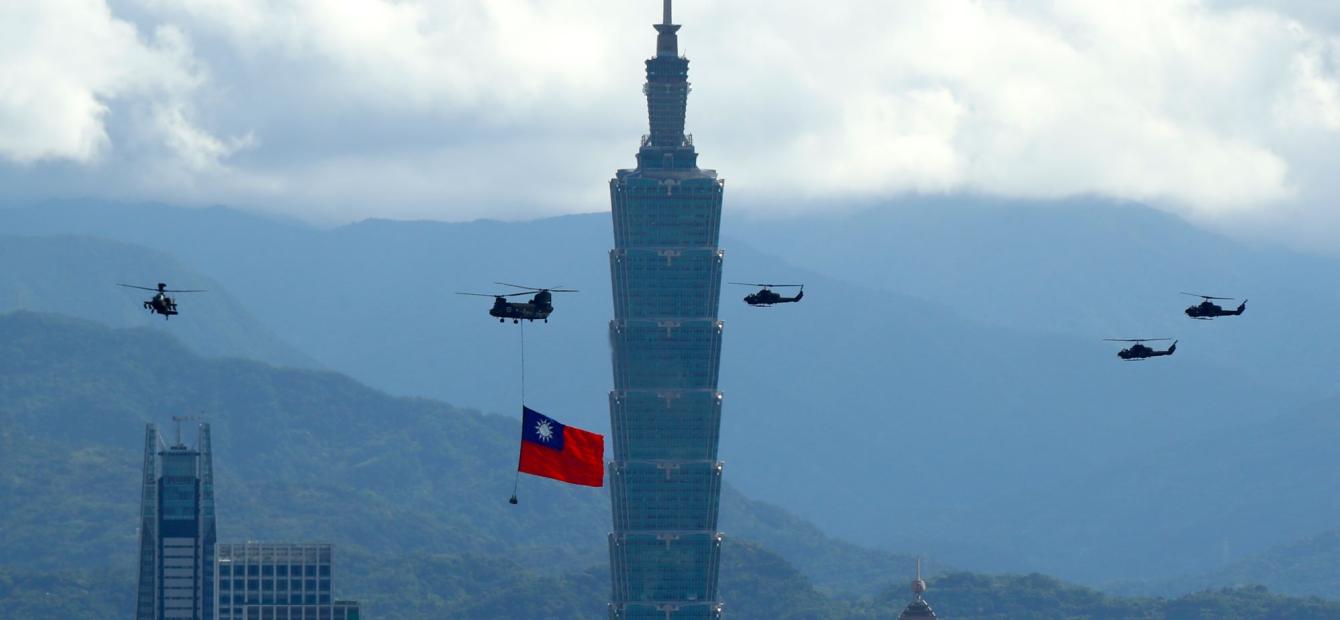
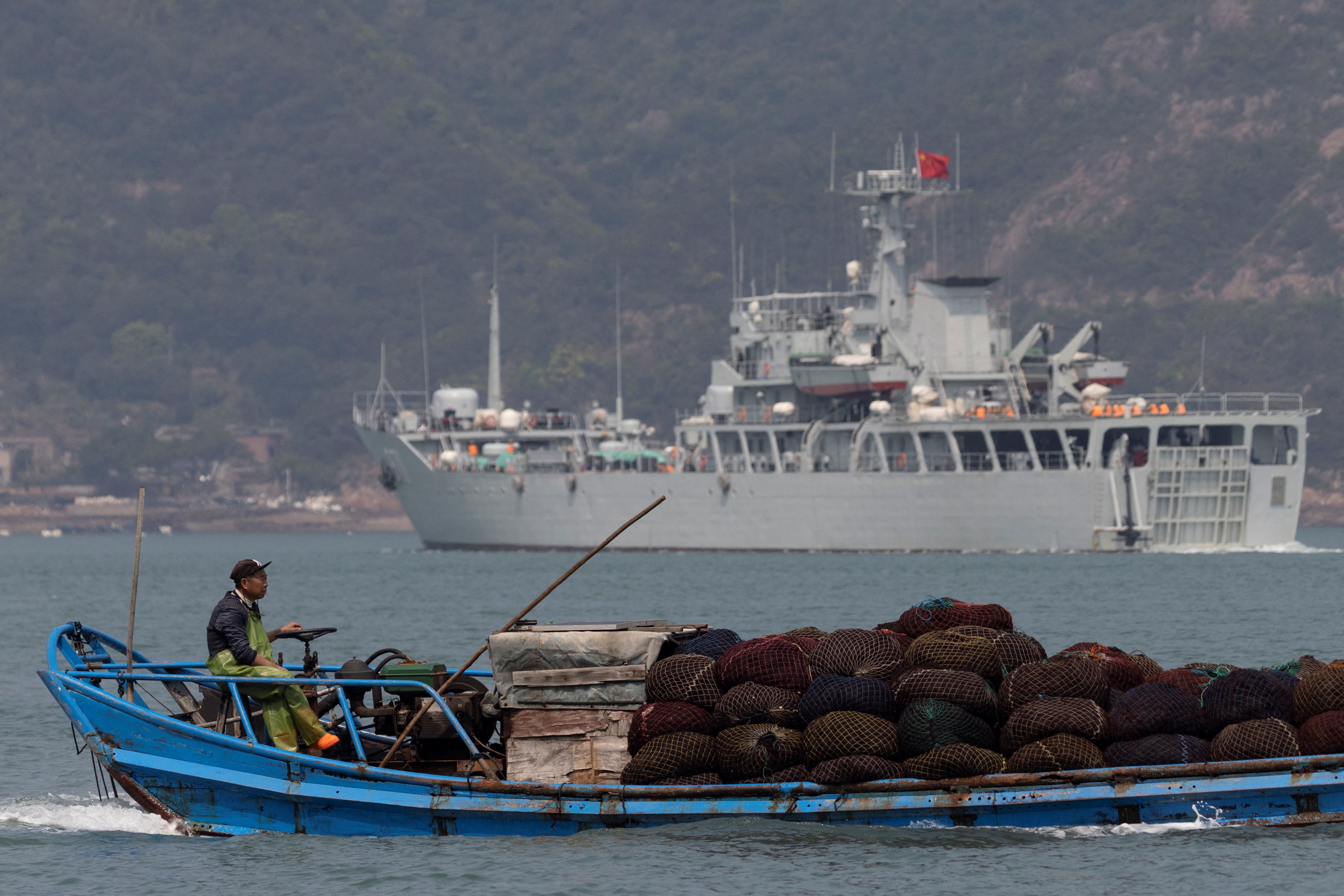
While EU member states still recognise China and not Taiwan in official policies, in practice, their relationships with Taiwan have been growing stronger over the last few years. The current Taiwanese government enthusiastically encourages this. It is confronted by a growing threat from China, which has been stepping up its military activities, including staging military drills as recently as April.
Macron and Von der Leyen both seemed to tell different stories
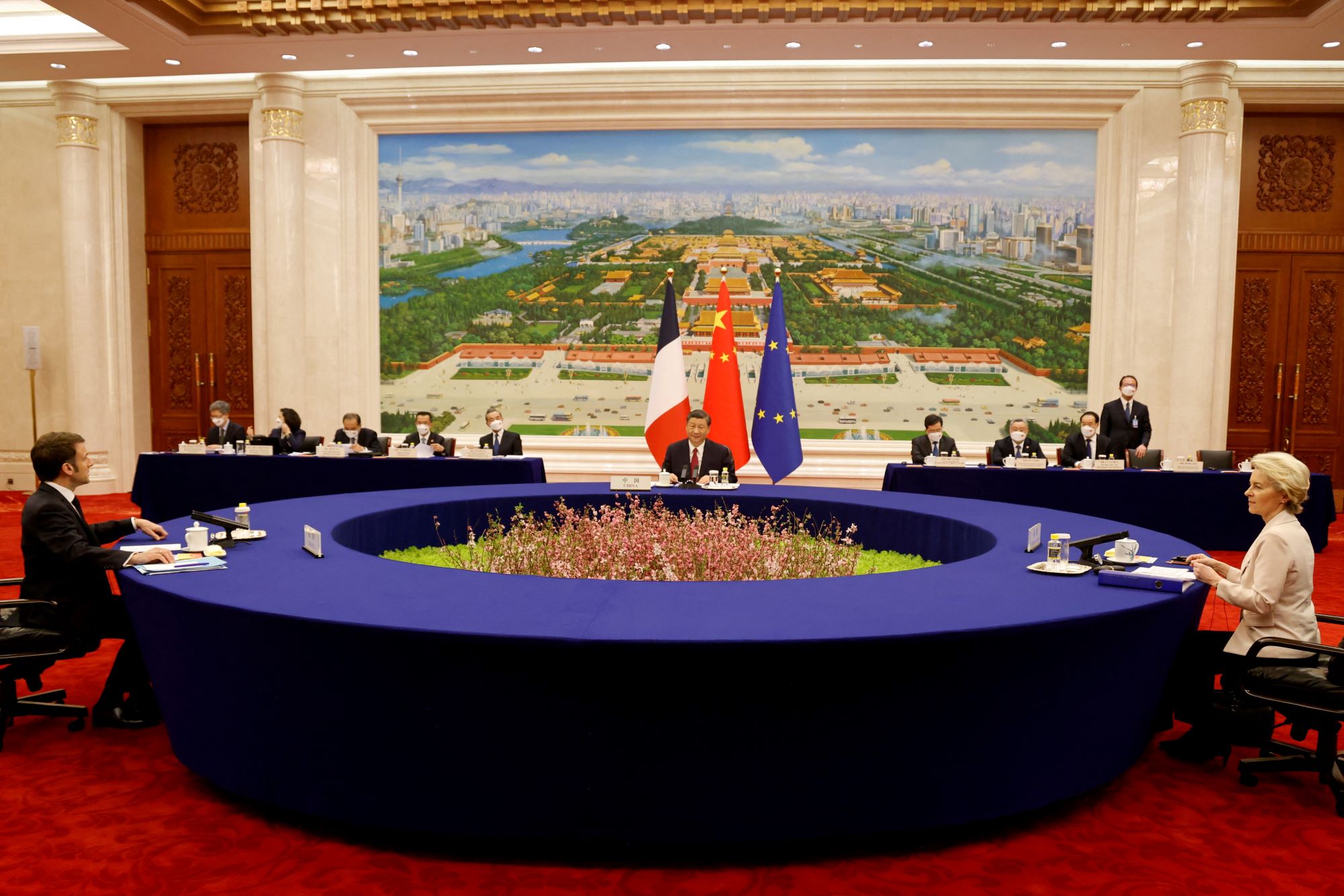
However, the EU’s policy on Taiwan remains ambiguous, also on how to handle any potential escalation between China and Taiwan. This was made clear once again during the joint visit of French president Emmanuel Macron and European Commission president Ursula von der Leyen to China in early April, where both seemed to tell different stories.
Macron expressed reluctance for Europeans to become involved in any potential conflict between China and Taiwan. This seemed to suggest that China would face no consequences from France in case of a conflict,
In the same month, Germany’s foreign minister Annalena Baerbock stated during a visit to Beijing that “a military escalation in the Taiwan Strait (...) would be a worst-case scenario globally and affect us as one of the biggest industrial nations in particular”.
This raises various questions. How and why has the relationship between the EU and Taiwan changed in the first place? And what are the differences and similarities in how the EU and its member states relate to Taiwan, and what does this mean for the relationship?
The Chinese threat
There are multiple motives for the growing engagement between the EU and Taiwan. Firstly: China. Tensions between China and Taiwan are rising as China’s influence in the world grows, and Taiwanese are finding the idea of reunification less and less attractive. Europeans are increasingly voicing their concerns to discourage China from using its growing power to take over Taiwan. This is illustrated in the way the EU’s discourse about China and Taiwan has changed, which is significant because the EU, to a large extent, determines the parameters of the European-Taiwanese relationship.
Like most countries, the EU has its own One China policy and recognises only one legal government in China, the one in Beijing. At the same time, the EU has labelled China not only a partner, but also an economic competitor and systemic rival that requires a de-risking strategy.
Two shock events
Secondly, two shock events have changed the European perspective on Taiwan. The first is the COVID-19 pandemic. Taiwan managed the virus outbreak exceptionally well but faced obstacles in sharing its knowledge with other countries due to China’s obstruction of its participation in international fora like the World Health Organization.
The second shock event is Russia’s invasion of Ukraine, which heightened Europe’s awareness of the possibility and impact of war initiated by a great power, and increased sympathy for Taiwan’s situation. China’s decision to hold on to its ‘no limits’ friendship with Russia and refusal to acknowledge Russia’s violation of Ukraine’s sovereignty, further disillusioned the EU.
Europe increasingly recognises Taiwan as a valued like-minded partner
The Taiwanese government used both shock events to bring attention to the pressure it faces from China and underline what it has to offer to the world. During the pandemic, Taiwan managed to put itself in the spotlight through diplomatic acts like donating masks, as part of the slogan ‘Taiwan can help, and Taiwan is helping’.
Taiwan’s economic relevance
Thirdly, Europe has become more aware of Taiwan’s vital role in the world economy. Researchers at the Rhodium Group calculated that a conflict in the Taiwan Strait could jeopardise over two trillion dollars in economic activity.
The European Union is eager to seek closer cooperation with Taiwan to strengthen its own chip manufacturing industry, as evidenced by listing Taiwan as a partner in the proposed European Chips Act last year.
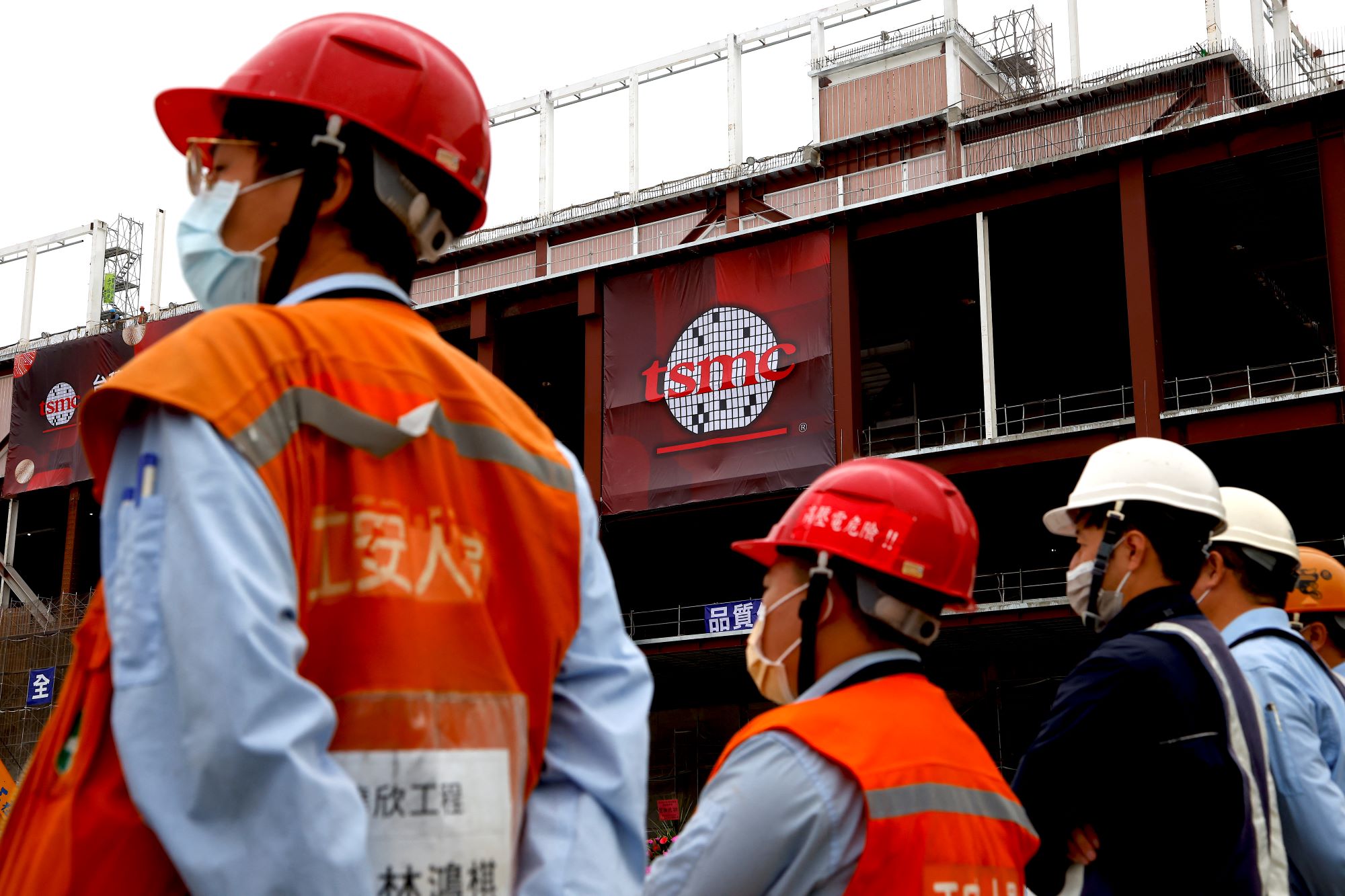
Taiwan is also eager to seek economic cooperation with the EU; for more than a decade, it has been pushing for a Bilateral Investment Agreement (BIA) with the EU. After all, the economic relationship goes beyond semiconductors, encompassing trade in ICT, machinery, transportation equipment, chemicals and other manufactured goods. While the EU is Taiwan’s largest foreign investor, led by the Netherlands, and Taiwan was the EU’s 14th trading partner worldwide in 2020,
Several members of the European Parliament called for a BIA, but the European Commission has indicated that it is not in a rush to make it happen.
However, even with the European Commission’s reluctance to enter into a BIA, the Union and Taiwan steadily continue to exchange ideas and cooperate, from rhetorical support to cooperation agreements and mechanisms to ministerial, parliamentary, business and civil society visits.
Cases of proactive EU member states
The number of representative offices between Europe and Taiwan has been growing as well, with the announcement of a new Taipei Representative office in Milan being the latest example.
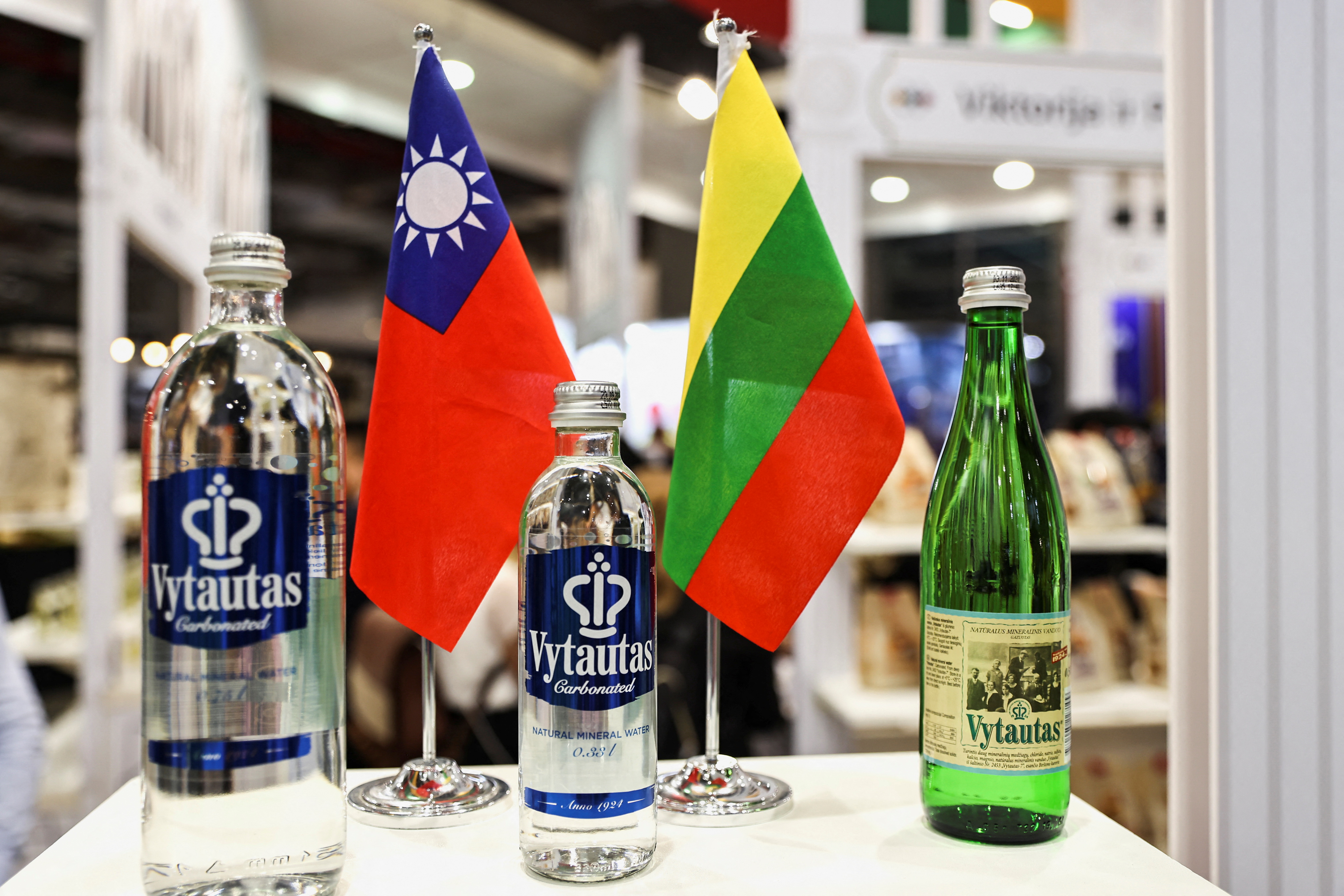
Central and Eastern European countries have been especially proactive in expressing stronger political support for Taiwan, with Lithuania being a well-known example. Despite relations with China already deteriorating, Lithuania opened a ‘Taiwanese Representative Office’ in Vilnius, rather than the more commonly used ‘Taipei Representative Office’, which China viewed as a provocative move. In response, Chinese representatives claimed the office “openly creates the false impression of ‘one China, one Taiwan’ in the world” and recalled their ambassador from Lithuania.
China took economic measures as well. Lithuanian importers and exporters increasingly face problems in doing business with China, resulting in Lithuania’s government accusing China of economic coercion.
This disagreement has escalated into an EU-wide trade dispute, with a case currently being handled by the World Trade Organization as companies from other member states were affected as well. The dispute served as a clear example to the entire EU of China’s coercive tactics when it feels its red lines are being crossed, hoping to deter countries from supporting Taiwan. Nonetheless, Taiwan has only grown closer to Lithuania since, both politically and economically.
The Czech Republic has been making headlines as well. In January 2023, president-elect Petr Pavel spoke with Taiwanese president Tsai Ing-wen over the phone and expressed his hope to meet in person in the future. China, who had warned the Czech Republic against taking the call, condemned this action. While the Czech Republic still does not have formal diplomatic relations with Taiwan, Pavel’s action marked a breakthrough in their relationship and a departure of the pro-China foreign policy outlook of Pavel’s predecessor.
The Czech Republic’s plans to deepen economic cooperation with Taiwan do not yet seem deterred by Chinese protests. Tellingly, in March, the Czech Republic sent its biggest delegation to Taiwan so far, roughly 150 people.
Some member states warn against increasing involvement with the country to avoid provoking China
Lithuania and the Czech Republic are not alone in their efforts, as Taiwan has risen on the agenda in other EU member states as well. Countries like Germany also have been sending and receiving more delegations, as well as signing agreements, calling for Taiwan’s participation in organisations like Interpol, and warning more frequently against changing the status quo.
Scepticism
Although there are various examples of European countries providing economic and symbolic support to Taiwan, some member states, or groups within them, also warn against increasing involvement with the country to avoid provoking China. For others, Taiwan is not even on the agenda at all.
Bulgaria is an example of an EU member state with no significant political or economic ties to Taiwan.
The consequences of the EU’s inconsistent response
The different views regarding Taiwan within the EU’s institutions as well as between and within member states show that a consensus on the relationship with Taiwan remains absent. The EU and its member states also have no consistent response to the question what they should do in case of a conflict between China and Taiwan.
In the event of escalation, the US will expect the EU to provide support
This lack of agreement has serious consequences. Most importantly, it weakens the EU’s ability to discourage China from escalating. The EU could and should play a bigger role in preserving peace across the Taiwan Strait, but this requires a unified position.
Moreover, in the event of escalation, the US will expect the EU to provide support, whether through sanctions, military actions or other means. President Macron’s comments on Taiwan, however, show how this could clash with the EU’s efforts for strategic autonomy and its wish to chart its own course. The EU should be a mitigating factor in the relationship between the US, China and Taiwan, and for this Europeans must find a consensus on how to navigate these tensions.
While Europe’s military role in a potential conflict in the Taiwan Strait may be limited compared to that of the US, several European countries are recognising they can still actively contribute to preventing escalation in non-military ways. This includes issuing warnings against unilateral changes to the status quo, engaging economically and organising dialogues and visits to and from Taiwan involving policymakers and other actors.
Furthermore, the lack of consensus might harm Europe’s economic prospects and hinder Taiwan’s potential as a partner for its semiconductor industry. The divisions also leave room for the more pro-Taiwanese EU member states to act rashly on their own in a way that might harm European interests and increase tensions. The EU is already embroiled in a trade dispute with China over a member state’s actions towards Taiwan, and it should avoid further such conflicts at all costs.
Thus, while there is a growing appetite in Europe for engagement with Taiwan, some are more keen than others. These differences must be effectively managed through debate between the member states if Europe wishes to stop the flashpoint from igniting.






2 Reacties
Load comments
EU Foreign Policy
Uitstekend artikel over dit specifieke onderwerp. De oplossing, namelijk overleg en overeenstemming tussen de 27 lidstaten, ligt voor de hand. Helaas geld dit voor het buitenlands beleid van alle 27 lidstaten. De kern van dit probleem is dat er geen mechanisme en urgentie bestaat om de EU Council te dwingen tot een permanent overleg over een gemeenschappelijk buitenlandse en veiligheidspolitiek (CFSP). Alleen op basis hiervan kan "Strategic Autonomy" en een EU veiligheidsbeleid worden vastgesteld en geimplementeerd.
Eén-China beleid
Wat in mijn opinie ontbreekt in deze analyse is, dat de situatie in Taiwan sinds de jaren-'70, toen het Eén-China beleid werd ontwikkeld, volledig is veranderd. Toen waren er twee republieken en dictaturen, PRC en ROC, die beide een Eén-China beleid nastreefden, zij het onder verschillende leiding, communistische cq. nationalistische. Sindsdien is Taiwan langzaam ontwikkeld tot een democratie waarin onze 'Westerse' waarden, zeker op gebied van behoorlijk bestuur, door Taiwan zijn omarmd. Waar de Nationalisten in de jaren-'70 zich Chinees voelden, voelen zij zich nu Taiwanees, met eigen democratische en liberale waarden.
Bij veranderde omstandigheden moet men zijn plan en beleid aanpassen. Mijn stelling is dat het Eén-China beleid niet meer van deze tijd is en aangepast moet worden naar de situatie van nu. Interessant daarbij is om zich te verdiepen in de geschiedenis van Taiwan, dat slechts 200 jaar onderdeel is geweest van het Chinese keizerrijk (en 40 jaar Nederlandse kolonie!), waardoor de claim van de Volksrepubliek op Taiwan slechts kan steunen op een zeer beperkte historische onderbouwing, ook al is men in de Volksrepubliek een andere mening toegedaan.
Reactie toevoegen